 In December, 1814, the Active dropped anchor at Whangaroa, near the
Bay of Islands, New Zealand. Would the missionary dare to land among the
thousands of savages who lined the shore? At this very place some time earlier
an English ship, the Boyd, had anchored. Swarms of fierce natives
in war canoes had come out and captured it; and, of the crew of seventy people,
two women and a boy were sold into slavery while the other sixty-seven were
killed and eaten in horrible cannibal orgies. The missionary knew all about
this dreadful incident and realized that, if he landed, his life would be
in extreme jeopardy. Nevertheless, he did land. He talked with some of the
chiefs and mingled among the swarthy natives. Moreover, he spent the night
on shore, sleeping in the open among the warriors whose innumerable spears
were stuck upright in the ground.
In December, 1814, the Active dropped anchor at Whangaroa, near the
Bay of Islands, New Zealand. Would the missionary dare to land among the
thousands of savages who lined the shore? At this very place some time earlier
an English ship, the Boyd, had anchored. Swarms of fierce natives
in war canoes had come out and captured it; and, of the crew of seventy people,
two women and a boy were sold into slavery while the other sixty-seven were
killed and eaten in horrible cannibal orgies. The missionary knew all about
this dreadful incident and realized that, if he landed, his life would be
in extreme jeopardy. Nevertheless, he did land. He talked with some of the
chiefs and mingled among the swarthy natives. Moreover, he spent the night
on shore, sleeping in the open among the warriors whose innumerable spears
were stuck upright in the ground.
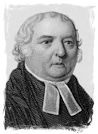
Who was this man with the dauntless heart, and what was the secret of his gallant spirit? He was Samuel Marsden, and the secret of his mountainous courage is to be found in a mountainous text -- Luke 2:10. "I was under no apprehension of fear," he says. "We prepared to go ashore to publish for the first time in New Zealand the glad tidings of the gospel."
"Fear not," says the text.
"I was under no apprehension of fear," says Marsden.
"I bring you good tidings," says the text.
"We prepared to publish good tidings," says Marsden.
"Fear not: for, behold, I bring you good tidings of great joy, which shall be to all people."
Like the angel in Luke 2:10, Samuel Marsden was the messenger of a mighty declaration, the bearer of good tidings of incomparable import, the herald of good news from heaven to earth.
I. He Was the Bearer of Good Tidings to All People
Samuel Marsden was born at Farsley, Yorkshire, England [other sources give place of birth as Horsforth, near Leeds, Yorkshire, England], July 28, 1764, of pious parents who were attached to the Wesleyan Methodist denomination. After a grammar school education, Samuel joined his uncle, a tradesman at Horsforth. But he was not satisfied to follow a business career; he had discovered the sublimities of redeeming grace, and he was yearning to devote his life to the Christian ministry, that he might make known to others the "good tidings" so precious to his own soul.
He became a student at St. John's College, Cambridge, where he came under the influence of Charles Simeon, seraphic preacher of an impassioned evangelicalism and of missionary outreach. Though bitterly assailed, Simeon's fervent preaching and conversation circles at Cambridge exerted an enormous influence upon successive generations of students, and, through their lives, issued in a stream of evangelical doctrine and devotion that reached the very ends of the earth. One of the students thus influenced, at a later date, was the sainted Henry Martyn who, upon reaching India, fell on his knees in a deserted temple and prayed, "Now, my Lord, let me burn out for Thee!"
Under the influence of Charles Simeon's life and ministry, Samuel Marsden came to a profound conviction of the need of all mankind for the saving gospel and the responsibility of all Christians to "speed away with the message of light to the lands that are lying in darkness and night." When, therefore, he was offered a chaplaincy in what was then designated "His Majesty's Territory of New South Wales," he accepted, convinced that the appointment would enable him to herald in distant dark regions the "good tidings" which as his great text expressly declares, "shall be to all people."
II. He Was the Bearer of Good Tidings of Salvation
Marsden was ordained early in the year 1793 and proceeded to Hull, where he was to take passage in a convict transport, the only conveyance then available for the far distant colony. "Young as he was," says Dr. Mason Good, "he was remarkable for firmness of principle and intrepidity of spirit, a strong judgment, and, above all, a mind stored with knowledge and deeply impressed with religious truth, which promised the happiest results." On April 21, of that year he was married to Miss Elizabeth Tristan [most sources say Fristan], who proved to be a very devoted wife and a companion singularly qualified to share his aspirations and to inspire his highest endeavors.
Marsden was aware that the "good tidings" of which he was a herald had salvation as their object. The angelic voice specifically delineated the content of the "good tidings" by declaring: "Unto you is born a Saviour." This evangelical and evangelistic note was vibrant alike in the announcement of the angelic visitor and in the proclamations that fell from the fervent lips of Samuel Marsden. This is forcibly and beautifully illustrated by an incident that took place on the Isle of Wight. At that time England and France were at war, and Marsden's ship was waiting at Portsmouth for the arrival of the fleet with which it was to sail to New South Wales. During this period of waiting Marsden preached a sermon in the parish church at Brading on the Isle of Wight. To discover the far reaching consequences of that sermon, under the operation of the Holy Spirit, it will be instructive to witness a touching incident that took place five years later.
In the year 1798, Legh Richmond, the recently arrived minister on the Isle of Wight, was called to the bedside of a young woman who had not long to live. Her name was Elizabeth Wallbridge, though she came to be known as "the dairyman's daughter," and the rare loveliness of her Christian piety was a source of wonder to all the islanders. The members of the family were assembled in the room when the minister arrived.
"Oh, sir," said the dairyman's daughter as she looked up at the minister, "I have such a wonderful Saviour. I am in His hands, and I do believe that He will never leave nor forsake me. In this hope I live and in it I wish to die."
"Sir," sobbed the girl's mother, "we were sinful and miserable until dear Betsy, this dear girl, brought Christ Jesus home to her poor father and mother and sister."
"No, dearest mother," said the girl, "say rather, Christ Jesus brought your poor daughter home to tell you what He had already done for her soul and could do for your soul." Then turning to the minister she inquired, "Would you like to know, sir, how this remarkable change in our lives came about?" She began,
About five years ago Mr. Samuel Marsden, who was about to embark for New South Wales as a chaplain and missionary, was announced to preach at Brading. Out of curiosity and a desire to show off my new gown, I attended the service. He took as his text, 'Be ye clothed with humility.' When he came to describe the garment of salvation, I felt powerfully aware of the nakedness of my own soul. I looked at the minister, and he seemed to be a messenger sent from heaven to open my eyes. I looked at my gay dress and blushed for shame on account of my pride. I looked at my heart, and it appeared full of iniquity. Mr. Marsden represented Christ as Wisdom; I felt my ignorance. He held Him forth as Righteousness; I was convinced of my own guilt. He proved Him to be Sanctification; I saw only corruption. He proclaimed Him as Redemption; I felt my slavery to sin. He concluded with a fervent plea to sinners to put on Christ and flee from the wrath to come. Oh, sir, I shall rejoice evermore for that day and that dear man's sermon and that I did put on Christ, though I made no outward confession at the time.
"Christ as Wisdom -- I felt my ignorance."
"Christ as Righteousness -- I was convinced of my guilt."
"Christ as Sanctification -- I saw my corruption."
"Christ as Redemption -- I felt my slavery to sin."
"I shall forever rejoice for that dear man's sermon and that I did put on Christ."
Some time later the dairyman's daughter passed away, still witnessing for her Lord. "The Lord deals very gently with me," she murmured. "Blessed Jesus, Precious Saviour, His blood cleanses from all sin. His name is Wonderful. Thanks be to God who giveth the victory."
When Samuel Marsden dismissed the service and left the pulpit that Sunday in September, 1793, he knew nothing of how the Spirit of God had used the message to the salvation of Elizabeth Wallbridge. He may have felt discouraged by the lack of visible results. What a joy it will be for him, on the day of Christ's appearing, to discover an entire family saved as the fruitage of one sermon stressing the good tidings of salvation. O ministers, Sunday school teachers, personal workers, whatever the text and whatever the occasion, point people to Christ! Join Samuel Marsden in publishing "glad tidings" of free, abundant, endless salvation. Then you, too, will receive a "crown of rejoicing" -- the soul-winner's crown -- on the day of Christ's appearing.
III. He Was the Bearer of Good Things of Liberty to Captives
Marsden's ship sailed with the fleet on September 30, 1793. His Journal reveals the depression of his spirit as he contrasted the warm fellowship of devout Christian friends at Cambridge and the irreligiousness in evidence on a ship bearing convicts to their distant place of banishment. He writes: "Once I could meet the people of God and assemble with them in the place of prayer and praise; but now I hear nothing but oaths and blasphemies." He was eager to point the crew and the convicts to the Lamb of God and asked the captain for permission to hold services on board. At first this was refused, but prayerful persistence eventually won out, and thereafter Marsden conducted services regularly throughout the long voyage. His zeal for souls is indicated by the following entry in his Journal:
Thursday, December 12, 1793. I have been reading of the success of David Brainerd among the Indians of North America. How the Lord owned and blessed his labors to the conversion of the heathen. The same power can effect a change upon those hardened, ungodly sinners to whom I am about to carry the words of eternal life.
When a person goes forth as a missionary, he is making a momentous experiment. He is literally putting his faith into the fire to see whether it is gold or stubble, for if he does not witness souls saved, lives transformed, and social evils ameliorated, he is bound to question the adequacy of his gospel and the validity of his Christ. It was well for Samuel Marsden, and for those to whom he was to minister, that he carried the true gospel, that he had abounding confidence in its power and that he kept before him the miraculous success of Brainerd among the idolatrous, besotted Indians of the Susquehanna.
In March, 1794, he and Mrs. Marsden settled in Paramatta, near Port Jackson, New South Wales, and entered upon their trying labors. The population consisted almost entirely of criminals banished from England. The state of morals was utterly depraved; oaths ribaldry and audacious lying were well nigh universal. "I am surrounded," says Marsden, "with evil-disposed persons, thieves, adulterers and blasphemers." He was not dismayed by the welter of wickedness that surrounded him. He was persuaded that the message he was privileged to transmit was equal to the needs of the vilest and most depraved, and he announced with confidence the "good tidings" proclaimed by Christ in the synagogue at Nazareth concerning "deliverance to captives." He thus describes his first Sunday in the colony:
I preached the gospel of deliverance from the captivity of sin ... As I was returning home a young man followed me into the wood and told me how he was distressed for the salvation of his soul. I hope the Lord will have many souls in this place.
Marsden usually arose about five o'clock and spent the early morning hours in prayer and study. On Sundays he preached first at Sydney, then walked fifteen miles to Paramatta to preach again. His preaching was plain, fervent, and very much to the point. In order to arouse a fitting appreciation of the "good tidings" of deliverance he laid much emphasis upon man's fallen nature and the tragic realities of sin. This led some to conviction and conversion, while others rejected his message and denounced him bitterly.
One day while walking along the bank of a river, he saw a convict plunge into the water. Marsden immediately plunged in after him and endeavored to bring him to land. The convict, however, contrived to hold Marsden's head under water and a desperate struggle for life ensued. Eventually Marsden succeeded in getting safely to shore and also in dragging the convict with him, whereupon the wretched man, overcome with remorse, confessed his reprehensible design. Having been incensed by the preacher's emphasis upon sin, he had determined upon revenge. He knew that the sight of a drowning man would summon the instant help of one who would defy any danger in the discharge of duty. Accordingly, he had thrown himself into the stream confident of drowning Marsden and then of making good his own escape. This convict came penitently to the Saviour, became a faithful Christian, and zealously made known to others the "good tidings" of the great deliverance which had so graciously visited his own soul.
IV. Marsden Was the Bearer of Good Tidings of Comfort to the Broken-Hearted
Marsden's plain gospel of sin and salvation was tempered by a tender solicitude. His capacity to sympathize with others in their suffering was doubtless enhanced by certain desolating sorrows which visited his own household. Mrs. Marsden took their first-born son, a promising child two years of age, with her one day in the gig on a round of calls among the sick and suffering. As a result of a sudden jump by the horse, the child was thrown out of the mother's arms and instantly killed. Another painful stroke was to follow. Determined not to hazard the safety of another child, Mrs. Marsden left her babe at home in the charge of a domestic while she went out to make some necessary calls. The little one strayed into the kitchen unnoticed, fell backwards into a pan of boiling water, and soon died. It was fortunate that the parents knew Him who is the source of all comfort who said that He came "to heal the broken-hearted."
While hating and denouncing sin Marsden's heart was drawn out in sympathy toward the wretched convicts, especially the women and children. By various methods he sought to alleviate their distresses and to communicate to them the comfort of the Divine Heart. Monsieur Perron, on a mission for the French government, wrote concerning Marsden:
He generously interfered in behalf of the poor sufferers in their distresses, established schools for their children and often relieved their necessities; and to the unhappy culprits, banished from their native soil, he ministered alternately exhortation and comfort.
Marsden was grieved at the forlorn condition of the female convicts who were thrust into frightful immoralities by the current standards of the colony and by the necessity of finding lodging wherever they could. He sought to relieve their hapless plight by the establishment of a suitable home in which they would no longer be exposed to such insidious temptations and where they could receive Christian instruction. Hundreds of these outcast women came to know the reality of divine comfort through the human comfort extended to them in their wretchedness by Samuel Marsden.
Although he was bitterly maligned by certain officials and his motives impugned, he continued his efforts, which eventually gained the support of the government at home and the hearty approval of such distinguished Christian philanthropists as William Wilberforce, Elizabeth Fry, and Lord Cambier. With the help of these friends he was able, upon returning to England in 1807, to induce the home government to send out three additional clergymen, three school teachers and four men to give instruction in mechanics and manufacturing. He was introduced to King George III and received a gift of five Spanish sheep from the King's flock to take to New South Wales. In these and other projects Marsden was a pioneer in the development of Australia as a great commonwealth.
His transcendent design, however, was always spiritual and the work for which he most deserves to be remembered did not directly concern the colony in which he had so zealously labored. "I believe," he said, "that God has gracious designs toward New South Wales and that His gospel, taking root there, will spread amongst heathen nations to the glory of His grace." He was thinking particularly of New Zealand and the Friendly Islands, into which no ray of gospel light had as yet penetrated.
V. He Was the Bearer of Glad Tidings of Peace
New Zealand is the name given to a group of two large and several small islands located just at the Antipodes. The extreme length exceeds one thousand miles and the mean width is 120 miles. The area is about the same as that of Great Britain and Ireland. In 1642 the Dutch navigator Tasman anchored off shore. Several of his men who ventured to land were killed by the savages. In 1769 Captain Cook made the first of seven visits to New Zealand, in the course of which he obtained much information concerning the country and conferred no small benefit on the inhabitants by the seeds, roots and animals he gave them. In 1772 Marion du Fresne anchored his two ships in the Bay of Islands. The captain and a boatful of his crew were captured, killed and eaten by the natives. In 1809 sixty-seven members of the crew of the Boyd were killed and eaten at Whangaroa. In 1816 the brig Agnes, with fourteen men on board, was stranded at Poverty Bay and all the crew except one were devoured. A whale ship was cast ashore at Wanganul in 1820 and, excepting two persons, all were committed to the ovens and then eaten. Dr. Thompson states:
It is difficult to convey an idea of the terror in which New Zealanders were held in these early days. Sailors groaning under scurvy and in sight of a country covered with vegetables the specific for that dire disease, preferred toothless gums to contact with cannibals. As a deer dreads the tiger so do all men dread the eaters of men.
The aborigines of New Zealand were the Maoris. In common with all Polynesians, they were firm believers in the power of magic, witchcraft, sorcery, and the evil eye. They lived under the cruel and unalterable law of tabu, which means something set apart as sacred and therefore not to be touched. Every calamity was traced to some violation of the tabu and called forth penalties. When a person died it was through the anger of Whiro whose tabu had been violated, and commonly the man's family would be stripped of whatever they had. If a canoe upset, it was because Tawhirimatea was offended, and the same penalty was exacted. When they were defeated in war, it was because Tu, the god of war, had been outraged by some infringement of tabus related to him. Dead bodies were tabu. Those persons whose special business it was to officiate in funeral obsequies could not handle food for a designated period of time, so they would gnaw their food from sticks fixed in the ground.
Life was very cheap in New Zealand. The Maoris engaged in war on the slightest provocation. They were cold-blooded and cruel. They often obtained revenge by punishing persons entirely innocent. They would kill, roast and devour men, women and even little children and "glory in their shame." The sick, infirm and aged were heartlessly abandoned to perish. Chastity was rare, if known at all. Conversation was obscene. The people were given to sorcery, murder, cannibalism and indescribable obscenities.
The Maoris differed from other Polynesians in that, besides feasting on enemies slain in battle, they specially fattened slaves for their feasts. A slave girl would be commanded by her master to fetch fuel, light a fire and heat an oven, whereupon she would be knocked in the head, cooked and eaten.
Such were the Maoris -- unspeakably degraded and yet a people of superior intelligence. On a number of occasions some of their most enterprising men traversed a thousand miles of water to visit New South Wales. Marsden made friends with them, entertained them in his home and formed the holy resolution to seek the salvation of a race for whom Christ died.
One of Marsden's daughters wrote:
My father had sometimes as many as thirty New Zealanders staying in his home. On one occasion a young lad, the nephew of a chief, died, and his uncle immediately made preparation to sacrifice a slave to attend his spirit into the other world. My father was away at the moment and our family was only able to preserve the life of the young New Zealander by hiding him in one of the rooms. When my father returned he reasoned with the chief, who consented to spare the slave's life.
While in England in 1807 and 1808 on his first and last furlough, Marsden stirred up many in the homeland to a serious concern for the evangelization of New Zealand. The Church Missionary Society and the Methodists were induced to inaugurate plans which eventuated in missionaries being sent out several years later. Since no ordained clergymen of the Church of England were ready to volunteer, it fell to the honor of three consecrated lay men -- William Hall, John King and Thomas Kendall -- to join with Marsden in opening up New Zealand to the gospel of peace, peace on earth based on peace within the human heart, peace among men erected on the foundation of "peace through the blood of His cross."
Marsden was at first inclined to believe that the savages had to be somewhat civilized before they would be able to receive the gospel. He later changed his mind on this point and declared: "Civilization is not necessary before Christianity. You will find civilization follows Christianity more easily than Christianity follows civilization." The Church Missionary Society specifically instructed its missionaries:
Do not mistake civilization for conversion. While you rejoice in communicating every other good, think little or nothing done till you see those dead in trespasses and sins quickened together with Christ.
While returning from England, Marsden became acquainted with a sickly, emaciated New Zealander named Ruatara who happened to be on the same ship. He had been cruelly treated by English sailors, who, under delusive promises, had induced him to sail with them to England and then, after having almost worked him to death, had left him in poverty and sickness to get back to his native land as best he could. Marsden nursed him back to health and won his aid in the grand design of Christianizing his people. He kept Ruatara in his home in Paramatta for six months under Christian instruction, then sent him to New Zealand with assurance that he would follow just as soon as possible.
It was not until his arrival in Paramatta following his furlough to England that Marsden learned of the massacre of the crew of the Boyd in the harbor of Whangaroa. He could find no captain of a ship adventurous enough to take him and his party to the land of cannibals, so it was that with his own funds he purchased the Active, the first of those missionary vessels which, like the John Williams and The Morning Star, have rendered such splendid service in the cause of Christ.
On November 19, 1814, Marsden embarked with a motley crew of Christians and savages, together with a few horses, cattle, sheep and poultry, and on December 19, landed at the Bay of Islands, close to the scene of recent bloodshed and horror. Ruatara was there to meet him. Knowing the ferocity of his people, he did his utmost to persuade his intrepid missionary friend not to land, but Marsden insisted on going ashore, saying: "It is high time to make known the glad tidings in these dark regions of sin and spiritual bondage." In all the annals of heroic enterprise, was there ever a braver deed?
As he stepped ashore, a weird scene was enacted. On the hill opposite the landing place a band of naked warriors, armed with clubs and spears, occupied a commanding position. After a pause a native advanced flourishing a red mat and crying, "Haromai!" ("Come hither!") The warriors then advanced. Some of them wore necklaces made of the teeth of their slaughtered foes, while others were adorned with strings of money they had plundered from foreigners they had murdered on that very beach. Seizing their spears they brandished them, screaming and yelling with savage fury. Every face was fiercely distorted and every limb employed in the wildest gesticulation. This was their war-dance. But their chiefs declared that it meant a welcome to one they considered a friend and a wonder-worker. This latter impression arose in part from the fact that they had never seen a horse; accordingly, when Marsden brought a horse from the ship, mounted and rode it, the people's amazement knew no bounds.
That night the fearless missionary slept among the Maori warriors on the ground. "I did not sleep much," he says in his Journal. As he lay awake that night there shone in the heavens above him one of the most striking constellations -- the Southern Cross. Then there arose another constellation -- the Southern Crown, that brilliant diadem of light, as if to assure him of the glorious issue of his labors. He was cheered by the remembrance that--
To patient faith the prize is sure
And they who to the end endure
The cross shall wear the crown.
Christmas Day fell on Sunday. Ruatara had erected a rude pulpit and had called a multitude of people together for a Christian service, the first ever held in New Zealand. The solemn silence was broken as the missionary party sang "Old Hundred." Then Marsden entered the pulpit to preach. And what was his text on this historic occasion? He says that he took for his text the angelic announcement made that first Christmas long ago: "Fear not: for, behold, I bring you good tidings of great joy which shall be to all people."
After settling three missionaries on the islands, Marsden returned to New South Wales, but his heart was still in New Zealand. The Active often went to New Zealand to take fresh laborers and returned to Paramatta with intelligent young Maoris to be evangelized and trained before being sent back to their people. Marsden made seven missionary journeys to New Zealand, in connection with which he made long tours through the islands. On one of these trips of evangelization he spent almost a year. He often stepped in between fierce, hostile tribes at war and made peace between them, but his highest endeavors were directed toward making peace between sinful men and a merciful Saviour.
VI. He Was the Bearer of Good Things of Great Joy
For years the missionaries had no converts to cheer, their difficult labors. They were exposed to great peril amid the internecine conflicts being waged around them and more than once had to flee for their lives. Eventually, the saving truth began to find lodgment in savage hearts, former cannibals became earnest Christians, houses of prayer and worship arose in many places and the "great joy" promised by Marsden's great text became their sweet portion.
Marsden's seventh and last missionary journey through New Zealand was a memorable one. Although 72 years of age and bowed with infirmity, he insisted upon visiting his beloved Maoris once more. Wherever he went he was greeted by the Christians with tears of joy, while the heathen population indicated their gladness by firing off muskets and performing their war-dance. One old chief sat gazing at him for a long time. When reproved by a bystander for his seeming rudeness, he replied: "Let me alone. Let me take a long last look, for I shall never see again the one by whose lips God sent to me the blessed news of salvation." Thousands came to greet him and he sought, as always, to make known the "good tidings" of a wondrous redemption. When he was about to reembark the Maoris carried him on their shoulders to the ship, a distance of six miles. As he viewed for the last time the shores of New Zealand and observed the miraculous changes effected by the gospel, the venerable patriarch exclaimed, "What hath God wrought!"
He returned to Paramatta and five months later, May 12, 1838, he went to "ever be with the Lord." As he lay dying someone spoke to him of the hope that is in Christ. In response he murmured, "Precious! Precious! Precious!"
Three years later Bishop Augustus Selwyn arrived to take charge of the work in New Zealand and wrote these words:
We see here a whole nation of pagans converted to the faith. Thousands upon thousands of people, young and old, have received new hearts, are offering up daily their morning and evening prayers, are valuing the Word of God above every other gift, and all, in greater or less degree, are bringing forth some fruits of the influence of the Holy Spirit. What a marvelous demonstration of the power of the gospel.
On March 1, 1907, the Governor of New Zealand unveiled a magnificent cross to the honored memory of Samuel Marsden. This type of memorial was suggested by the erection of "The Prayer Book Cross" near the Golden Gate at San Francisco, marking the spot on which Sir Frances Drake's chaplain held the first Protestant service on the Pacific coast of America. Marsden's cross in New Zealand is of Celtic design and bears the following inscription:
ON CHRISTMAS DAY, 1814
THE FIRST CHRISTIAN SERVICE IN
NEW ZEALAND
WAS HELD ON THIS SPOT
BY THE REV. SAMUEL MARSDEN
His text was the seraphic announcement of Luke 2:10, "Behold, I bring you good tidings of great joy, which shall be to all people."
Used with permission. From Giants of the Missionary Trail: The Life Stories of Eight Men Who Defied Death and Demons by Eugene Myers Harrison. Originally published by Scripture Press, Book Division, [1954].
>> More Samuel Marsden