 It
was a Sunday morning in the month of December, 1829. The missionary's prayer-time,
preparatory to the preaching service, was interrupted by the arrival of an
official messenger from Lord Bentinck, of Calcutta, bearing a document of
stupendous import, namely, the banishment by legal enactment of the practice
of Sati—one of the most horrible of all the depravities
associated with heathenism in any land. For more than 35 years the missionary
had raised his voice in fervent protest against the monstrous cruelties involved
in the custom of burning Indian widows in order that they might go into the
spirit land to continue to serve their husbands—a practice resulting
each year in the burning of unknown thousands of widows. Most appropriately,
the one who exerted the greatest influence in stirring up the Christian conscience
against suttee (sati), both in India and England, was asked to translate
into Bengali the decree embodying its abolishment.
It
was a Sunday morning in the month of December, 1829. The missionary's prayer-time,
preparatory to the preaching service, was interrupted by the arrival of an
official messenger from Lord Bentinck, of Calcutta, bearing a document of
stupendous import, namely, the banishment by legal enactment of the practice
of Sati—one of the most horrible of all the depravities
associated with heathenism in any land. For more than 35 years the missionary
had raised his voice in fervent protest against the monstrous cruelties involved
in the custom of burning Indian widows in order that they might go into the
spirit land to continue to serve their husbands—a practice resulting
each year in the burning of unknown thousands of widows. Most appropriately,
the one who exerted the greatest influence in stirring up the Christian conscience
against suttee (sati), both in India and England, was asked to translate
into Bengali the decree embodying its abolishment.
Quickly arranging with another to lead the service and preach, the overjoyed missionary took the official document and turned again to his prayer-closet. Opening his Bible at his favorite passage, Isaiah 54, he mingled Scripture reading and prayer in an ecstasy of thanksgiving. Turning to the task at hand, he spent the rest of the day making a careful translation of the historic document. Again, at sun down, he turned to Isaiah 54 and to prayer. After reading aloud from verse five, "Thy Redeemer ... The God of the whole earth shall He be called," and then verses eleven and thirteen, he prayed: "I thank Thee, Father, for this surpassingly sweet promise which Thou didst vouchsafe to me long ago, with its assurance of the ultimate banishment of all heathen devices and abominations, and of the ultimate winning of all hearts to Thy allegiance. Use even Thine unworthy servant to speed the day of fulfillment, the day when all the benighted sons of men shall become Thy people and all the kingdoms of this world shall become the kingdoms of Thy dear Son."
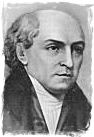
This man, with continents and empires upon his brain, was William Carey, a maker of shoes and a maker of history with a history-making text embedded in his soul: "Thy Redeemer ... The God of the whole earth shall He be called."
Who? "Thy REDEEMER."
Whose Redeemer? "THY Redeemer."
Is the promise assured? "Thy Redeemer ... SHALL HE BE CALLED."
Is the promise limited? "... OF THE WHOLE EARTH."
What is the promise? "Thy Redeemer ... The God of the whole earth shall He be called."
Historians are agreed that this man was one of the giants of Christian history.
George Adam Smith asserts, "It is no exaggeration to call Carey one of the greatest of God's Englishmen."
A. T. Pierson says of Carey, "With little teaching, he became learned. Poor himself, he made millions rich. By birth obscure, he rose to unsought eminence. And seeking only to follow the Lord's leading, he led forward the Lord's hosts."
"The Christian Church," according to J. D. Freeman, "owes more to William Carey and his mission than to any other man or movement since the days of Paul. He gave her a new horizon, kindled within her a new life and soul. Upon the trellis of the Mission Enterprise, the Church's vine has run over the wall. It has given her a southern exposure, through which she has felt at her heart the thrill of a new vitality, while bearing on her outmost branches a burden of precious fruit for the vintage of the skies."
William Carey was born in Paulers Pury, England, August 17, 1761. He early evidenced a singular interest in natural history. He made frequent excursions into the woods and across the fields, always on the alert to discover and identify a new bird or animal or plant. He was thrilled by tales of adventure, especially those associated with the magic name of the man who, sailing West, discovered a vast new world in 1492, which accounts for the fact that his companions nicknamed him "Columbus." Little did they imagine that he would become greater than Columbus, a discoverer of worlds which seem to have eluded the famous Italian, an adventurer who crossed the seas, not seeking to dispossess others of their gold, but to distribute as lavishly as possible "the unsearchable riches of Christ."
I. The Cobbler Discovers the Redeemer
The first words of Carey's great text are, "Thy Redeemer." Until he had met the Redeemer face to face and found out the merits of His grace, these words could have no reference to him. No discovery of consequence is possible until this discovery has first been made.
Approaching the age of 17 and realizing that it was high time to choose a trade, Carey turned to shoemaking. His father was not able to provide the accustomed payment for a seven years' apprenticeship. He sought, therefore, for a man who would give him work for his support while learning the trade. This led to the selection of Clarke Nichols of Piddington, this particular gentleman having the additional qualification of being a reputable and strict churchman. This was an important factor in the eyes of Carey's father. Although young Carey learned much about the shoemaking business, his new employer's influence was far from wholesome. The young apprentice was actually driven away from Christ and the Church by his association with Clarke Nichols, chiefly because of his fiery temper, his profane tongue and his Saturday night drinking sprees.
Carey's co-apprentice was John Warr, a devout young Dissenter or Non-conformist; that is, one who dissented from, and refused to conform to, the practices of the state church, the Church of England. Dissenters were often penalized and persecuted because of their refusal to attend the established church and their insistence upon having churches of their own wherein they might worship according to their understanding of God's Word and of God's will. John Warr's soul was exercised for the salvation of his fellow apprentice. "He became importunate with me," says Carey, "lending me books and engaging in conversation with me whenever possible." But Carey's heart was both hard and proud. He said later, "I had pride sufficient for a thousand times my knowledge. I always scorned to have the worst in discussion and the last word was assuredly mine. But I was often afterward convinced that my fellow-apprentice had the better of the argument, and I felt a growing uneasiness, but had no idea that nothing but a complete change of heart could do me any good."
His experience was similar to that of David Brainerd and Martin Luther, who, under conviction, saw that the root of their trouble lay in the heart.
"I had a very good outside but my heart was exceedingly sinful," said Brainerd.
"My austerities did not change my heart," said Luther.
"My heart was hard and proud," said Carey. "Nothing but a change of heart could do me any good."
Impressed not only by Warr's concern on his behalf but also by the spiritual beauty of his life, Carey agreed to attend some of the services at the Dissenters Church, where the Word of God was preached with the warmth and demonstration of the Spirit. Eventually he was brought under deep conviction and, at the age of 17, was ready to exchange the pharisee's self-righteousness for the publican's penitence and submission. Like Pilgrim, he entered the wicket Gate and set out for the Heavenly City. When John Warr led this lad to Christ, he had no idea that he was winning one who would sound the call of God to a sleeping church and add the jewel of India to the diadem of Christ.
Carey had experienced the inexpressible wonders of the New Birth. The Redeemer of "the whole earth" was now his Redeemer. The lad nicknamed "Columbus" had made a discovery of greater present and eternal import than the discovery of a new continent or an unknown sea. And having made this discovery, there would be no end to the discoveries that would break, with sunrise glory, upon his redeemed and adventuresome spirit.
The eminent scientist and inventor, Lord Kelvin, was once asked, "What is the greatest discovery you ever made?" His reply was, "The discovery of Jesus Christ as my Saviour and Lord." When another was asked the same question, he replied, "My greatest discovery was to find out how great a sinner I am and how great a Saviour is Christ." William Carey, the cobbler who turned discoverer, was of very much the same mind.
II. The Cobbler Discovers the Joy of Joining the Redeemer in Quest of Souls
In his beloved Isaiah, Carey found many references to "joy" and "singing." Two such references are to be found in the first verse of his favorite chapter, Isaiah 54. The thought is: "You are no longer estranged from God. Your heart is no longer desolate and barren. Therefore, sing!" The joy of knowing the Redeemer melts into the joy of sharing the Redeemer's passion and purpose, as set forth in the verses that follow.
Having tasted the sweetness and wonder of redeeming grace, Carey became concerned for his master and others whose lives gave such evidence of the need of regeneration and of new life in Christ. At first Clarke Nichols was obdurate; then he became ill, smitten down with a fatal malady. John Warr and William Carey found him at last humble and willing to listen as they read from God's Word, "He that heareth ... and believeth ... is passed from death unto life." Thus his death-chamber was transformed into the birthplace of his immortal soul, and Carey entered the radiant ranks of those whose preeminent joy is "to seek and to save the lost."
Have a good look at the scene in Clarke Nichols' death-chamber.
The bed speaks of death!
The Book speaks of life!
"He that believeth is passed from death unto life."
At the age of 19, Carey fell in love with Dorothy Plackett and they were married June 10, 1781. She was a faithful and devoted wife, though she fell far behind Carey in spiritual discernment and never shared his great missionary passion.
Immediately upon his conversion, Carey became an ardent student of the Scriptures. Eager to know exactly and fully what the Scriptures taught, he began an earnest study of the original languages of Scripture, Hebrew and Greek. His aptness and earnestness in discourse soon became known, and he was asked at various times and places to expound the Word. Having transferred his residence to Moulton, where he opened a school, he was asked by the small company of Baptists to be their pastor. The salary was about $50.00 a year. His chief support for his family came from his earnings as a cobbler and as a school teacher. Several years later (1789) he moved to Leicester, to serve as pastor of the Harvey Lane Baptist Church. He found the church in a state of disunion, dishonor and spiritual impotence, due largely to worldliness and resultant evils among the members. He prayed and preached most fervently, but conversions were impossible in such an atmosphere and the pastor was heartbroken. Eventually, in September of 1790, he determined upon a bold course of procedure — one that many churches in the twentieth century could doubtless follow to great advantage. He proposed that the church membership be dissolved, that a solemn covenant embodying New Testament faith, life and discipline be prepared, and that only those accepting this covenant be accepted as members of the newly-constituted church. This was done, the church was revived, worldly nettles gave place to the fruitage of the Spirit, and, in response to the preaching from the pulpit and witnessing in the homes, there were many blessed conversions. He led his own sisters, then his wife, and many others into the sublime experience of redemption. In his zeal for souls, he frequently made preaching trips to surrounding villages and laid the foundations of a number of churches.
Carey was now a radiantly happy man. He had entered into the joy of the Good Shepherd in bringing home the lost sheep. His heart was vibrant with the ecstasy which causes all heaven to rejoice "over one sinner that repenteth." He could "sing" and "break forth into singing" (Isaiah 54:1) in the celestial joy of sharing with others the mystic merit of the Redeemer's love.
III. The Cobbler Discovers That the Redeemer's Concern and the Church's Responsibility Are World-Wide
It was early morning and the cattle in the quiet Northamptonshire pasture were disturbed by the sound of footsteps in the lane. Turning their gaze in the direction from which the sounds came, the cattle saw a familiar figure and continued their grazing. He was the village cobbler, carrying a load of new-made shoes to market. He was oblivious of the cattle and even of the loveliness of nature in her summer gown. His thoughts were far, far away. As he walked, he said to himself, "Surely God means what He says. Surely He means for us who know Him to carry the message of redemption to all men everywhere."
Without a doubt, God means what he says!
When He says "GO," He means "GO!"
When He says "Go YE," He means "Go YE!"
When He says "INTO ALL THE WORLD," He means "INTO
ALL THE WORLD!"
When He says "PREACH THE GOSPEL," He means "PREACH
THE GOSPEL!"
When He says "Go ... TO EVERY CREATURE," He means "TO
EVERY CREATURE!"
Surely God means what He says!
With love for Christ burning in his soul, Carey kept reading and rereading Isaiah 54:5, "Thy Redeemer ... The God of the whole earth shall He be called." He also read in the New Testament of Christ's compassion for the lost sheep of all nations and of His command to preach the gospel to all the world. At a ministers' meeting he proposed that they consider "whether the command given to the Apostles to evangelize all nations is not binding on all succeeding ministers to the end of the world, seeing that the accompanying promise is of equal extent."
The command is, "Go and teach all nations."
The promise is, "Lo, I am with you." Has anyone the right to play leap-frog with the command and then hug the promise?
J. C. Ryland was merely expressing the universal attitude of the Church when he impatiently interrupted Carey and exclaimed, "Sit down, young man, sit down and be still. When God wants to convert the heathen, He will do it without consulting either you or me." Carey sat down, but a vision of far-away lands and of multitudes in darkness haunted his soul, and he could not be still. In season and out of season, in conversation and in sermon, he dealt with one all-absorbing theme, namely, the responsibility of the Church to launch out upon its long neglected, world-wide mission. For eight years he devoted his spare time to making maps of heathen lands, gathering data as to their location, size, population and religions, and to a studied presentation of the arguments supporting the view that the missionary enterprise is the Church's highest and holiest endeavor. The results of these years of research and thought he incorporated in a lengthy pamphlet entitled THE ENQUIRY. After picturing the desperate condition of the world where Christ was not known and enthroned, he put the trumpet of God to his lips and sounded the divine call to action. He closed with an appeal for persistent prayer, bold planning and sacrificial giving. Citing his three beloved heroes, he stated,
What a treasure, what a harvest must await such as Paul and Eliot and Brainerd, who have given themselves wholly to God's work! What a heaven to see the myriads of the heathen who by their labours have been brought into the knowledge of God! Surely it is worth while to lay ourselves out with all our might in promoting Christ's Kingdom!
The next episode in Carey's missionary crusade was his deathless sermon at Nottingham, May 31, 1792. The occasion was the annual meeting of the Baptist churches of that district. Carey was to preach the opening sermon. As he rose to speak that historic morning, the woe and misery of an anguished world were surging through the channels of a single heart. He turned the searchlight upon two mighty truths of Scripture, particularly as enunciated in Isaiah 54. First, the Redeemer's saving concern is as wide as humanity. "Thy Redeemer ... The God of the whole earth shall He be called." Second, the Redeemer's concern and the Church's responsibility are co-extensive. When God says "Thy Redeemer," He is speaking to the Church and, therefore, to every individual Christian. Spending most of his time on this second point, the cobbler-preacher rang out the challenge of God found in verses 2 and 3 of Isaiah 54: "Enlarge the place of thy tent, and let them stretch forth the curtains of thine habitations: ... lengthen thy cords and strengthen thy stakes ... thy seed shall inherit the Gentiles, and make the desolate cities to be inhabited." Carey was convinced that God was saying to the Church: "Rouse up from your complacency. Find larger canvas, stouter and taller tent poles, stronger tent pegs. Catch wider visions. Dare bolder programs. Rouse up and go forth to conquer for Christ even the uttermost parts and the isles of the sea."
Carey's soul was captivated by an epochal discovery. In consequence he was dreaming of continents and empires to be brought under the sway of Christ. He was thinking not just of England or of Europe, but of the world. How the familiar scriptural expression burned in his soul!
"God so loved the world!"
"Go ye into all the world!"
"Christ, the Saviour of the world!"
"God in Christ reconciling the world!"
"A propitiation for the sins of the world!"
"Thy Redeemer ... the God of the whole earth!"
All the passion of the inspired preacher's heart was poured out in two stupendous exhortations:
"Expect great things from God!"
"Attempt great things for God!"
Concerning the message, Dr. Ryland said,
If all the people had lifted up their voices and wept, as the Children of Israel did at Bochim, I should not have wondered at the effect; it would only have seemed proportionate to the cause, so clearly did Mr. Carey prove the criminality of our supineness in the cause of God!
But alas! the people did not weep! They did not even pause to pray! To them it was just another sermon, nice to listen to, but not to be taken too seriously. When Carey saw the people rising to leave as usual, he seized Andrew Fuller's hand and exclaimed in an agony of distress, "Are we not going to do anything? Oh, Fuller, call them back and let's do something in answer to God's call!"
That was a portentous moment in the history of Christ's redemptive purpose. Deep called unto deep. Fuller, too, heard "God's sigh in the heart of the world" and joined with Carey in demanding action. Before the meetings closed, a motion was passed to this effect: "Resolved, that a plan be prepared against the next Ministers' Meeting at Kettering, for forming a Baptist Society for propagating the gospel among the heathen."
Expecting great things from God, William Carey inspired others to join him in attempting great things for God.
This marks the birth of the modern missionary movement, which, during the succeeding century and a half, has sent many tens of thousands of consecrated heralds of the cross "into all the world" with a message of redemption and of social transformation through Christ.
IV. The Cobbler Discovers That the Redeemer Is Calling Him to Foreign Service
Several months after the Nottingham meetings, the proposed missionary society was formed, subscriptions amounting to about $65.00 were taken, and the group of subscribers looked around for missionaries, as well as for additional donors. They had also to decide in what field they would commence their missionary efforts. Their attention was forcibly directed toward India by contact with a Mr. Thomas who had returned to England after spending several years in India as a surgeon. He had also put forth considerable effort to spread the gospel and he had a stirring story to tell of conditions and missionary opportunities in India.
In the light of developing events, Carey kept asking the question, "What is now my part in this expanding enterprise?" With a wife and three children to support, should he not continue to shepherd the church now thriving at Leicester and to stir up missionary concern throughout England? Or did God desire him to become the leader of the overseas mission which he had so urged upon his brethren? Turning again to Isaiah 54, he discovered six startling words which immediately followed — indeed, were a part of his great text. These six words which stood out in letters of fire were these: "For the LORD hath called thee." The Holy Spirit confirmed in his soul that these words did constitute the divine call to him to cross the seas as a witness of the Redeemer's concern for a lost world. The Cobbler Who Turned Discoverer had made some phenomenal discoveries. None was more magnificent than this. "Columbus" was now highly resolved to sail the seas and to discover and claim for his Lord a vast new world of infinitely precious souls.
When Andrew Fuller, Secretary of the newly-formed missionary Society, read the account given by Mr. Thomas of conditions and gospel opportunities in India, he remarked that there was a gold mine in India, but it seemed almost as deep as the center of the earth. "Who will venture to explore it?" he asked. Carey was quick to reply, "I will venture to go down, but remember that you — you who remain at home — must hold the ropes." And by "holding the ropes" he was referring to the support of prayer and heart-concern, even more than of money. His offer was gladly and enthusiastically accepted by the Society. He and Thomas were appointed. But when his wife heard of it, she refused to accompany him. Carey was very devoted to his family, but his supreme devotion was to Him who said, "If any man love father or mother or wife more than me, he is not worthy of me." He made suitable arrangements for the support of his family, preached to his sorrowing congregation a farewell message on the Great Commission, and he and Thomas set out to raise funds and secure passage to India. There were many disappointments and protracted delays. Meanwhile, Mrs. Carey gave birth to her fifth child. One child having died, she now had four living children under nine years of age. Definite sailing arrangements were finally made and Carey, accompanied by Thomas, hurried home to make a final plea to his wife to accompany him. Let it be stated as "an everlasting memorial of her" that, on a single day's notice and with a baby not yet a month old, she consented to go on condition that her sister, Kitty, should go along as companion and helper. Thus, when Carey finally embarked for India, his wife and children, also Kitty and Thomas were on board with him.
William Carey was a missionary trail-blazer. As his holy enthusiasm spread, other missionary societies were formed in rapid succession. Besides those on the continent and in America, by 1834 there were 14 societies in Britain, the Baptist being the first. As Greenough has stated:
The light, which Carey kindled, spread from hill to hill like beaconfires, till every Christian church in turn recognized the signal and responded to the call. The consecrated cobbler was indeed "the Father of Modern Missions.
Carey deserves to rank among the noblest and best of England's immortal great, not only because of the incalculable boon to India and the world of the missionary movement which he launched, but also because that movement saved England's own soul. Englishmen first went to India as merchants to gain wealth, then as soldiers and adventurers to gain land, but with the coming of Carey and the emergence of a missionary passion, England began to feel that her true greatness was to be realized, not in economic or military conquest, but in giving to India "a Saviour, which is Christ the Lord."
What shall it profit a nation if it gains a vast empire and yet loses its own soul?
What shall it profit a people if they send their ships of commerce to the seven seas and yet suffer the shipwreck of their faith?
The missionary movement saved England's own soul!
V. The Cobbler Discovers That the Redeemer's Blessing Is Upon His Faithful Witnesses
After a tempestuous journey of five months, during which Carey made a diligent study of Bengali, the party reached Calcutta November 11, 1793. His first impressions served only to accentuate his heart's distress over India's need. Like Paul at Athens, he was moved by the people's deep-seated religious nature as expressed by the innumerable shrines, the offerings of food and flowers, and the incredible sufferings they readily endured in their quest for spiritual peace. With anguished soul he saw Indian devotees lying on beds of spikes, walking on spiked shoes, swinging themselves on flesh-hooks, gazing at the sun until they lost their sight, and in manifold ways inflicting torture upon their bodies. Most terrible of all was the practice of suttee [sati] or widow-burning. Against this barbaric custom he threw the weight of his utmost energy, until, as related earlier, it was finally abolished by legal action in 1829.
Carey's expectations of success in the mission were at first very sanguine. He felt assured that just as soon as he could converse freely in the vernacular, he would be able to lead large numbers "out of darkness into His marvelous light." But months lengthened into years without a single convert. This failure led frequently to tears and bitter self-reproach. Carey did not attempt to satisfy his qualms of conscience by imagining that his physical presence in a foreign land made him a missionary. He had come to India to win lost, wretched souls to Christ and nothing could compensate for failure in this endeavor. At times his faith became faint, but it always rallied through the recurrence of "the blessed hour of prayer." Several times his eager hopes were crushed by the dismal failure and lapse into idolatry on the part of some for whose conversion he had long labored. In the hour of midnight discouragement, he turned to his treasured Isaiah 54. As he read, "Thou shalt not be ashamed ... Thy Redeemer ... The God of the whole earth shall He be called," he discovered the note of certitude, and, leaning heavily on the divine faithfulness, he kept on "expecting great things."
How abounding was his joy when, after seven long years of travail of soul, he and Thomas found a convert ready to endure afflictions and to be publicly baptized. This was Krishna Pal, whose devotion to Christ found expression in these tender lines, which later became part of a frequently-used hymn:
O thou, my soul, forget no more,
The Friend Who all thy sorrows bore.
Let every idol be forgot.
But, O my soul, forget Him not.
Carey's cup of joy filled up and overflowed that blessed Sunday, December 28, 1800, when he was privileged to baptize his own son, Felix, and then Krishna Pal. Poor Thomas was so overwhelmed with joy that historic morning — "Sing, soul, sing!" he exclaimed. "Sing aloud! Unutterable is my gladness!" — that his mind was temporarily deranged and he was unable to attend the baptismal service.
Christ set them in the ecstasy
Of his great jubilee;
He gave them dancing heart and shining face,
And lips filled full of grace
And pleasure, as the rivers and the sea.
After all, Krishna Pal was only one. Why so great exultation?
Krishna Pal was only one, but was not one lost sheep esteemed of great value by the shepherd?
Krishna Pal was only one, but how diligently the shepherd sought the one lost sheep and how joyously he brought it home!
Krishna Pal was only one, but the angels in heaven took note and rejoiced together around the throne!
Krishna Pal was only one, but a continent was coming after him!
Prior to this signal event, Carey's heart had been tremendously encouraged by the coming of consecrated helpers, notably Marshman and Ward, and the mission had been moved to Serampore, which was in the territory held by the Danes and where they had greater protection and freedom of activity than in the confines of the East India Company.
There were for Carey many joys, many sorrows. Among the latter was the death of his five-year-old son, Peter. His heaviest cross was the condition of his wife, who became deranged in mind and continued in this state until her death in December, 1807. The following year he was married to a Danish lady, Charlotte Rumohr, who had been baptized in 1801 — the first European lady to bear this witness in India — and had shown exceptional zeal for the evangelization of the Indians. Despite her frailty of health, she was a true helpmate for Carey. Her spirituality, her intimate knowledge of Danish, Italian, and French, and her delight in the study of Scripture in these three versions, made her his invaluable companion in biblical translation-work. She had "a soul of fire in a shell of pearl." She passed away in 1821 and in 1823 Carey married Grace Hughes, who proved to be a devoted helpmate.
It was for Carey a severe sorrow when his son, Felix, turned from missionary labors to become a special government agent in Burma. Writing to England he sadly stated: "My son has chosen to be an ambassador of the King of England when he might have risen to the status of being an ambassador of the King of Kings."
Carey had exceptional linguistic gifts. With assiduity and remarkable success, he devoted himself to the study of Sanskrit, Bengali, Hindustani, and other native tongues. His excellence in this field made it possible for him to become Professor of Sanskrit and Bengali in Fort William College, Calcutta, at a salary of 500 rupees a month. It is an evidence of his selflessness that he devoted his entire salary to the work of spreading the gospel, keeping only a small portion for necessary expenses. As Carey stated, "We might have had large possessions, but we have given all to the Mission."
For 41 years Carey was the recognized leader of the growing Indian mission. Never in Christian history has there appeared a man with greater versatility of gifts or consecration more complete. He was India's pioneer in agriculture, horticulture, and in the promotion of vernacular education. He was the moving spirit of the Serampore Trio who set up and operated the first steam engine in India, introduced the large scale manufacture of paper, inaugurated the printing industry by the establishment of the great Mission Press, and built a college which still stands to train Christian leaders to engage in the conquest of India for Christ. He was interested in social reform as an expression of the Christian spirit and used his influence against suttee [sati] and the practice of casting babies into the Ganges as a sacrifice to the gods. It was Carey who founded the Christian Church in India, and, incredible as it seems, it was this same erstwhile cobbler who, with the help of associates, translated and printed the Word of God, either the whole or the most precious parts thereof, into 34 different tongues. In the book of Revelation, John tells of seeing an angel who gained authority over the nations, not by the might of armies, navies, and fleets of airplanes, but by the power of a Book that was "open in his hand." It was the privilege of Carey and his associates to put this incomparable Book into the hands of India's millions and to open its matchless message to their wondering hearts.
VI. The Secret of the Cobbler's Success
Where shall we turn to find the secret of a life so remarkable? What are the causes adequate to explain such stupendous achievements? The basic answer is to be found in the recognition that Carey was a veritable "Columbus." What he was and what he did are to be computed, not in terms of achievements but as discoveries. He did not achieve his salvation; he discovered it, as a pearl of great price, a treasure of the field. His so-called achievements were but the out-working of the fragrance and power of the indwelling Redeemer. His virtues and qualities of greatness were but the fruitage of "constantly abiding" in the Vine. Just as the branch might say of the cluster of grapes that hangs thereon, "It is not of me!" so the Christian says of success, "It is not of me! It is the vintage of abiding in my abounding Lord."
Much in Carey's career finds its explanation in his unconquerable persistence. His sister, Mary, said: "Whatever he begins, he finishes." This trait is illustrated by an incident of his youth, related with accustomed felicity by Dr. Boreham. In his eager quest for knowledge of wild life of every sort, young Carey climbed a tall chestnut tree in search of a coveted bird's nest. Before reaching it, he slipped and fell. Again he tried and failed. On the third attempt he fell and broke his leg. A few weeks later, the limb still bandaged, he slipped away and returned with the nest.
"You don't mean to tell me that you climbed that tree again!" exclaimed
his mother.
"I couldn't help it, mother," he replied. "Really, I couldn't.
When I begin a thing, I must go through with it!"
Carey himself said that whatever success attended his efforts in India was due to the fact that he was a plodder. Having begun a great work for God, having put his hand to the plow, nothing could cause him to let go or look back.
Carey was a man of amazing faith. He did not expect financial support beyond passage money to India. Whatever came, either from the homeland or from his stipend as professor, was turned into the general funds of the Mission. He believed implicitly that the Lord who sent him would supply him. By faith he set out for "a place which he should after receive for an inheritance," being responsible for the support of seven souls. By faith he turned his face away from the homeland, never to return, and "sojourned in a strange land" for 40 years. By faith he overcame a multitude of adversaries and presented unto God "a more excellent sacrifice" whereby "he being dead yet speaketh." By faith he foresaw the day when the gospel of Christ would relegate Krishna, Kali and Siva to the oblivion into which it had swept Jupiter and Venus and Isis long ago.
Nothing was more characteristic of Carey than his consuming concern for souls. This zeal constantly manifested itself while he was still in England. When a neighbor remonstrated with him for spending so much time preaching, to the neglect of his shoe business, he replied, "My real business is to preach the gospel and win lost souls. I cobble shoes to pay expenses." More than once the pupils in his school saw their teacher burst into tears, as during a geography lesson he pointed to a map of the world, or to a globe he had made with odd pieces of leather, and exclaimed, "The people living in these areas are pagans! They are lost, hundreds of millions of them, not knowing the blessed Saviour!" Whether in England or India, Carey had a hot heart for souls. His heart was hot with gladness over the converted and hot with compassion over the unreached.
A hot heart for souls!
The surest expression of a redeemed spirit!
The indispensable qualification of a missionary
The transcendent attribute of those whom heaven calls great!
His humility and the sweetness of his devotion to Christ stand out in Carey's life from the time of his conversion until his coronation. In a letter to Dr. Ryland, January 30, 1823, he writes, "I have long made the language of Psalm 51 my own--'Have mercy upon me, O God ... according unto the multitude of Thy tender mercies blot out my transgressions.' Should you outlive me, and have any influence to prevent it, I earnestly request that no epithets of praise may ever accompany my name. All such expressions would convey a falsehood. To me belong shame and confusion of face. I can only say, 'Hangs my helpless soul on Thee.'"
During his last illness, Carey said to Alexander Duff, "Mr. Duff, you have been saying much about Dr. Carey and his work. After I am gone, please speak not of Dr. Carey, but rather of my wonderful Saviour."
By Carey's explicit instruction his grave marker was to contain nothing more than his name, the date of his birth and of his death, and two lines from Isaac Watts, his favorite hymn writer:
A wretched, poor and helpless worm,
On Thy kind arms I fall.
His soul was set for its final voyage and its last great discovery. At sunrise June 9, 1834, William Carey discovered the unimagined and inexpressible glories which the Redeemer has in store for His own. He entered into "the heritage of the servants of the LORD" and into the fulfillment of the promise of Isaiah 54:8, "With everlasting kindness will I have mercy on thee, saith the LORD thy Redeemer."
While honoring the memory of the consecrated cobbler who was so mightily used of God, let it be remembered that Christ is still in urgent need of heralds of His redemptive passion and that it is the incomparable privilege of every saved and surrendered soul to be a discoverer of new worlds to be won in the Redeemer's name.
Used with permission. From Giants of the Missionary Trail: The Life Stories of Eight Men Who Defied Death and Demons by Eugene Myers Harrison. Originally published by Scripture Press, Book Division, [1954].
>> More William Carey