Born Blantyre, Scotland, March 19, 1813
Died Ilala, Africa, May 1, 1873
"The end of the exploration is the beginning of the enterprise."
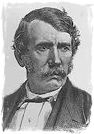 Beginnings.
A boy came to gladden a humble home of Central Scotland in the raw month
of March, in the year of our Lord, 1813. It was a time when the acorns were
being planted everywhere. Seven years before this boy was born, the Haystack
meeting at Williamstown had inaugurated the foreign missionary movement of
North America.
Beginnings.
A boy came to gladden a humble home of Central Scotland in the raw month
of March, in the year of our Lord, 1813. It was a time when the acorns were
being planted everywhere. Seven years before this boy was born, the Haystack
meeting at Williamstown had inaugurated the foreign missionary movement of
North America.
The year before Livingstone's birth, William Carey's great printing-house in Serampore was consumed by fire. The loss caused Carey to walk in the smoking ruins tearfully exclaiming: "In one short evening the labors of many years are consumed. How unsearchable are the ways of God! The Lord has laid me low, that I may look simply to Him." Yet this great loss to pioneer missions became, under God, a great blessing. Throughout England missionary fires were kindled, and "unexampled liberality animated all classes" (William Carey, Missionary Annals Series, p. 51).
At the time of David Livingstone's birth not more than a dozen English missionary societies had been formed. In 1810 the American Board of Commissioners for Foreign Missions came into being. Six years later the Wesleyan Missionary Society was organized, and in 1819 the Methodist Episcopal Missionary Society was formed.
A Time of Political Unrest and of Exploration. Not only was David Livingstone born at the day-dawn of modern missions, but he also grew up in the midst of a spirit of inquiry and of exploration. Six years before he started for Africa, England had abolished the slave-trade in all British possessions. The Chinese Opium War was soon to be waged. The minds of adventurers had for years been turning to the Dark Continent, the last of the great regions of the world to be explored. "Into the kingdom at such a time, and for such a time, Livingstone came" (Picket Line of Missions, p. 25).
His Preparation. A providential preparation of David Livingstone for his great work will be found in the hereditary influences which shaped his life. These enabled him to say: "The only point of family tradition that I feel proud of is this, — one of these poor islanders — one of my ancestors, when he was on his deathbed, called his children around him and said: 'Now, lads, I have looked all through our history as far back as I can find it, and I have never found a dishonest man in all the line, and I want you to understand you inherit good blood. You have no excuse for wrong-doing. Be honest'" (Picket Line of Missions, p. 24).
A Religious Experience. Another element in his preparation will be found in his religious experience which enabled him at an early age to form this purpose: "I will place no value on anything I have or may possess, except in its relation to the Kingdom of Christ. If anything I have will advance the interests of that Kingdom, it shall be given up or kept, as by keeping or giving it I shall most promote the glory of Him to whom I owe all my hopes, both of time and eternity. May grace be given me to adhere to this!"
A Cultivated Mind. Again, such was his natural intellectual strength and activity that at the age of ten he was impelled to save enough out of his first week's wages to buy Ruddiman's "Rudiments." He mastered Latin in the evening after his factory work was over, and amid the roar of the machinery be was able to concentrate his mind on the book laid open on the spinning-jenny.
A Born Naturalist. A further preparation resulted from his aptitude for scientific pursuits, and from his passion for exploration. While he was yet a boy he used to scour the country, romping over the hillsides with his brothers in search of botanical, geological, and zoological specimens.
A Sound Body. Further, his outdoor life and his enthusiastic participation in athletic sports aided in the development of the rugged constitution, the foundation for which was laid in rich Highland blood.
Doctor of Medicine. A medical training was an indispensable equipment for a life which was to be hidden for years in the fever jungles of Africa, and it surely was a providential leading which impelled Livingstone to tarry until he had earned a medical diploma, so that he was enabled to say, "With unfeigned delight I became a member of a profession which with unwearied energy pursues from age to age its endeavors to lessen human woe" (Picket Line of Missions, p. 28).
A Missionary Enthusiast. But above all, the hand of Providence is seen in that immediately after his conversion he was led to join the missionary society in the village, and thus he became familiar with the lives of such men as Henry Martyn and Carl Gutzlaff. Here also he met Robert Moffat, who told him that he had "sometimes seen in the morning sun the smoke of a thousand villages where no missionary had ever been" (Picket Line Missions, p. 27).
The Missionary Call. After reading Gutzlaff's "Appeal" in behalf of China, Livingstone resolved to give his life to work in that country. He gave as his reason "the claims of so many millions of his fellow-creatures, and the complaint of the want of qualified men to undertake the task" (David Livingstone, Missionary Annals Series, p. 8). Henceforth his "efforts were continually directed toward that object without any fluctuation." But the Opium War effectually closed the door of China, and the appeal of Moffat for the thousand African villages constrained Livingstone to devote himself to that continent. The purpose once formed, he never swerved from it. Anxious to begin at once the work which be saw in dim outline before him, he remained in England, and further prepared himself with scrupulous care. He was not to be hurried, yet when he was finally ready nothing could keep him back.
The Last Farewell. One scene must have been deeply graven on David Livingstone's heart. It was that one which, varied in outward form, is always the same in its real pathos whenever a young man or young woman "breaks home ties" to become a messenger of Christ to the dark places of the earth. On the evening of November 16, 1840, Livingstone went home to Blantyre to spend the last night with his parents. The Liverpool boat left early in the morning, and there was so much to talk about that David proposed that they sit up all night. But the mother, anxious for the sleep and rest of her boy, would not listen to this. David and his father talked until midnight of the prospect of Christian missions, and "they agreed that the time would come when rich men and great men would think it an honor to support whole stations of missionaries, instead of spending half their money on hounds and horses" (Personal Life of David Livingstone, p. 52). The last breakfast at home was eaten at five o'clock in the morning. After the meal, David read the one hundred and twenty-first and one hundred and thirty-fifth Psalms, and led the little group of father, mother, and sister in prayer.
Biographers are strangely silent concerning the parting scene with the mother. Doubtless after the manner of godly women, her tears of anguish were shed in the secret place where one who never wrote, save on the sand, was the silent but real comforter.
The gray-haired father walked to Glasgow with David to catch the Liverpool steamer. "On the Broomielaw, father and son looked for the last time on earth on each other's faces. The old man walked slowly back to Blantyre with a lonely heart, no doubt, yet praising God" (Personal Life of David Livingstone, p. 52).
Livingstone, the Missionary. David's face was now set in earnest toward the the Dark Continent.
Before beginning a brief survey of his work in Africa, it may be well to consider some of the characteristics of Livingstone the missionary.
During his lifetime Livingstone was much misunderstood and his missionary purpose was questioned. When he began his second and third journeys it seemed to many that the missionary was being swallowed up in the explorer; but while Livingstone was a many-sided man — geographer, botanist, zoologist, astronomer, doctor, explorer — he was a missionary first of all, and as such he must ever be ranked among the first of that illustrious company. The fidelity of Livingstone to his early missionary convictions is now universally recognized.
He Knew the People. Soon after he reached Africa he spent six months among the natives, and apart from all European associations, that be might get an insight into the inner life of the people. Concerning this experience, he says: "To endure the dancing, roaring, and singing, the jesting, gambling, quarrelling, and murdering of these children of nature, was the severest penance I had yet undergone in the course of my missionary duties" (David Livingstone, Missionary Annals Series, p. 34). Yet only in this way was he able to get that thorough knowledge of native life which was of such service to him throughout his career.
The People Knew Him. Livingstone always exerted a peculiar influence over the natives. Before he had been in Africa a year, his gentleness of heart, his real love of the people, and his fearless manner, had so won them that he was able to do what to others was impossible. Time after time, as he went from tribe to tribe and found himself in peril at the hands of savage chiefs, he was able to save himself and others by a single word, a smile or an appropriate gift.
His Preaching Simple. Amid all his journeyings, Livingstone was in the habit of preaching at every opportunity. His favorite themes were, "The Abounding Love of Christ," "The Real Fatherhood of God," "The Glories of the Resurrection," "The Last Judgment." His preaching was simple, straightforward, illustrative, and effective. Knowing the people, he was able to discourse on a level with their understanding. He never "preached over their heads."
A Right Motive. Livingstone would not be drawn into that subtle snare of the tempter, the desire to make a good report for the edification of the Church at home. He did not strive for nominal adherents. He writes: "Nothing will induce me to form an impure Church. Fifty added to the Church sounds fine at home, but if only five of these are genuine what will it profit in the Great Day? I have felt more than ever lately that the great object of our exertion ought to be conversion" (David Livingstone, Missionary Annals Series, p. 25).
He was willing to endure the severest trial of the Christian — being misunderstood by those for whom he was giving his life. "Remember us in your prayers," said he, "that we grow not weary in well doing. It is hard to work for years with pure motives, and all the time be looked upon by most of those to whom our lives are devoted as having some sinister object in view. Disinterested labor — benevolence — is so out of their line of thought, that many look upon us as having some ulterior object in view; but He who died for us, and Whom we ought to copy, did more for us than we can do for any one else. He endured the contradiction of sinners. We should have grace to follow in His steps" (David Livingstone, Missionary Annals Series, p. 26).
A Fruitful Ministry. Notwithstanding his great care in admitting to the Church only those whom he believed to be the children of God, yet just a year after he went to the field he wrote to his father: "The work of God goes on here notwithstanding all our infirmities. Souls are gathered in continually, and sometimes from among those you would never have expected to see turning to the Lord. Twenty-four were added to the Church last month, and there are several inquirers" (David Livingstone, Missionary Annals Series, p. 14).
No Mere Adventurer. To understand the missionary's work, and how the missionary became an explorer, one must follow the map closely, and understand something of the geographical, political, and religious conditions of the times. From his letters, Livingstone has made it perfectly plain that he did nothing by chance. There was an adequate reason for everything he did, although often one must look for that reason, not in any outward circumstance, but in that unseen and most real cause, the guidance of the Spirit of God.
Outline of His Life-work. Livingstone's work in Africa may be divided into three periods. First, as a regular missionary under the London Missionary Society, 1840 to 1856. Second, as an explorer of the Zambezi and its tributaries, at the head of a government expedition, 1858 to 1864. Third, as an explorer under the direction of the Royal Geographical Society, 1865 to 1873.
A Missionary under the London Missionary Society
Residence in Kuruman. When Livingstone reached Cape Town, in 1841, he went at once, by direction of the London Missionary Society, to Kuruman, the mission station of Moffat. He was instructed to remain there until Moffat should return from England, after which he was to form a new station farther north. During his residence at Kuruman, Livingstone formed the idea that there was not enough native population there to justify the missionary society in concentrating its labors at that point. The accuracy of his judgment may be ascertained by a glance at a recent map of South Africa, which will show that Kuruman is near the storm center of the late South African War (half way between Kimberley and Mafeking). The native population once centered there is slowly being crowded from South Africa.
Livingstone conceived the idea that the policy of the missionary society ought to be one of expansion. He thought that just as the early Church, after preaching the gospel in a city or country, moved on rapidly, leaving a train of converts throughout Asia Minor, so ought the Church in South Africa to establish native stations rapidly throughout extensive regions, and not to concentrate its entire working force in a single place. While in England, Livingstone had thought of Kuruman as the center of a great missionary institute, which should be a light to Africa, but in view of the fact that the population seemed likely to decrease rather than to increase, he soon abandoned this idea.
A New Station—Mabotsa. Taking two native Christians from Kuruman, he went north seven hundred miles in company with a brother missionary. This was a prospecting tour for the discovery of a right location for a new mission. Two hundred and fifty miles northeast of Kuruman he established the mission at Mabotsa, and purchasing a parcel of land upon his own responsibility he erected a hut eighteen by fifty feet, hoping that the directors of the London Missionary Society would approve. He wrote in his characteristic way that if they did not approve, he was at their disposal "to go anywhere, provided it be FORWARD" (Personal Life of David Livingstone, p. 76). His plan now was to make Mabotsa the center from which native missionary agencies should radiate over Africa. In his thinking he marked out for himself a life-work like that of Moffat, and developed a plan for the establishment of a training seminary for native workers.
His Marriage. At this time he married Mary Moffat, the daughter of Robert Moffat, the great missionary. "The young couple spent their first year at Mabotsa, where besides a good house, schools, and church, Livingstone had made an excellent garden."
Founds New School at Chonuane. Leaving a native helper in charge of this station, Livingstone journeyed eastward in response to an invitation from Mokhatla, chief of a native tribe. Surprised at the unusual density of the population, Livingstone decided to found a school at Chonuane.
Impressed by the Vastness of Africa. By this time he became deeply impressed with the idea of the vastness of Africa, and the necessity of beginning a more statesmanlike enterprise to reach the people. Amid his labors as a missionary, he had been striving to get a thorough knowledge of the country. In doing so he had been procuring specimens of entomology, and of geology; he had been making astronomical observations, and had been preparing charts; and in sending these specimens and notes to friends in England, he followed each point of information by the question which was burning into his soul, "WHO WILL PENETRATE THROUGH AFRICA?" (Personal Life of David Livingstone, p. 99).
Moves Because of Drought. It finally became necessary for Livingstone to move from Chonuane on account of drought. He therefore went forty miles westward to Kolobeng which was situated on a river. The country thereabouts was adapted for irrigation, and Livingstone proposed to establish a mission there that would not be affected by drought. The jealousy of the Boers, however, greatly hindered Livingstone's plans for establishing the mission. Moreover the water which he had hoped to utilize in irrigation soon failed.
Lake Ngami. Invited by Lechulatebe, chief of the people in the region of Lake Ngami, Livingstone decided to visit the people of this lake region. Moreover he was impelled by a desire to see Sebituane, the great chief of a tribe north of Lake Ngami. On the first of June, 1849, he set out from Kolobeng on this difficult journey. August 1, 1849, the beautiful waters of Lake Ngami were first seen by European eyes. In reaching this lake it was necessary to cross the South African Desert. Again and again, well-appointed expeditions had essayed to reach the lake, and had been compelled to turn back. It is not strange, therefore, that Livingstone's feat in reaching Lake Ngami should have astonished Europe.
Attempt to Reach Sebituane. But the dauntless explorer was not content with this achievement. He endeavored to press north to reach Sebituane, yet because of the opposition of Lechulatebe, whose jealousy was aroused, he was compelled to turn back. A second attempt was made, but again he was thwarted in his plans, this time by fever.
Must Seek a New Location. The case now clearly outlined itself to Livingstone. Cut off from the east in missionary effort by the Boers, on the south by inadequate population, on the north and west by fevers which raged around Lake Ngami, he determined, whatever the cost, to go northward to seek a healthier spot. He had heard of a well-watered country to the north and west, with a passage to the west coast.
Must Seek a Passage to the Coast. At this time the great ruling idea of his life was born. On August 24, 1850, he wrote to the the directors of the London Missionary Society: "We must have a passage to the sea on either the eastern or western coast. I have hitherto been afraid to broach the subject on which my perhaps dreamy imagination dwells ... Without promising anything, I mean to follow a useful motto in many circumstances, and try again" (Personal Life of David Livingstone, p. 122).
Death of Daughter. Returning to Kolobeng, Livingstone found that his infant daughter had become the victim of an epidemic then raging. He wrote, "Hers is the first grave in all that country marked as the resting-place of one of whom it is believed and confessed, that she shall live again" (Personal Life of David Livingstone, p. 123).
Sebituane's Country. After burying his child, he turned his steps northward and westward, for the third attempt to reach Sebituane. This attempt was successful. On this journey, as on the preceding one, he was accompanied by his wife and children. Sebituane was friendly to Livingstone, and was considered by him to be the best chief he had met in Africa. This chief promised to select a suitable missionary station, and to co-operate with Livingstone in every way. But soon after this, Sebituane was seized with inflammation of the lungs, and he died within a fortnight. This circumstance, together with other untoward events, convinced Livingstone that it would be impossible to secure a suitable missionary station in Sebituane's country, so that he was compelled reluctantly to retrace his steps all the way to Kolobeng.
The Regions Beyond. Upon his return to Kolobeng, friends urged him to remain and settle down. Livingstone replied: "If I were to follow my own inclinations, they would lead me to settle down quietly with the Bakwains, or some other small tribe, and devote some of my time to my children; but Providence seems to call me to the regions beyond" (Personal Life of David Livingstone, p. 136).
Sends Wife and Children to England. His previous experience had convinced Livingstone that he must not again take his wife and children into this fever-stricken country. He had now reached that supreme crisis in the life of a missionary when the wife and children must return to the homeland. He accompanied his family to the Cape, bade them farewell as they sailed for England, and with a heavy heart again turned his face to the north, towards the great interior. As in early days he left his boyhood home, so now, for the redemption of the Dark Continent, he gave up the home he had made in Africa. From that day forward, Livingstone, like Him whom he served, was in the most literal sense, homeless. He was never able to bring his family together again. What the separation cost him may be inferred from the following extract from one of his letters:
"My Dearest Mary: How I miss you now, and the children! My heart yearns incessantly over you. How many thoughts of the past crowd into my mind! I feel as if I would treat you all much more tenderly and lovingly than ever. You have been a great blessing to me. You attended to my comfort in many, many ways. May God bless you for all your kindness! I see no face now to be compared with that sun burnt one which has so often greeted me with its kind looks. Let us do our duty to our Savior, and we shall meet again. I wish that time were now. You may read the letters over again which I wrote at Mabotsa, the sweet time you know. As I told you before, I tell you again: they are true, true; there is not a bit of hypocrisy in them. I never show all my feelings; but I can say truly, my dearest, that I loved you when I married you, and the longer I lived with you I loved you the better."
Threefold Purpose. Livingstone's purpose was now threefold: First, to find a healthful location for a mission north of Lake Ngami. Second, to open up a way for commerce to the west coast, since the distance of the proposed mission station from the Cape would be too great to permit of communication with that point. Third, by introducing legitimate commerce, to do away with the slave trade which was an insurmountable barrier to successful missionary operations. It soon became evident that he was to be baffled in his search for a healthful location. He therefore concentrated his energy upon the second and third points in the program which he had laid out for himself.
A Path to the West Coast. After a terrible journey of seven months, involving imminent starvation and endless exposure, Livingstone at last reached the Portuguese settlement of St. Paul De Loanda, on the west coast. Thirty attacks of fever had so weakened him that he could hardly mount his ox, but if the journey was at great cost, the rewards also were great (Picket Line of Missions, p. 44). "The story of incredible hardship, sickness, hunger, constant wading through swollen streams, delays and harassing exactions of hostile tribes," enabled him to gain the sympathetic ear of the Christian world. Moreover, by a single act of moral heroism at Loanda, he became "the best known, best loved, and most perfectly trusted man in Africa" (Picket Line of Missions, p. 46). Immediately after reaching Loanda, he was prostrated by a very severe illness. The perils of the journey had so weakened him that he was "a skeleton almost consumed by dysentery and famine." An English ship in the harbor at Loanda was about to sail for the homeland. In his great weakness he longed for the air of the Scottish highlands, and for the sight of his beloved Mary and the children. He knew that he would be royally welcomed at home, and there was no one to urge him to stay. But Livingstone prepared his reports, his charts, his observations, and putting them aboard, he watched the ship set sail, and he prepared for a two years' march, "two thousand miles long, through jungle, swamp, and desert."
"Why did he not go home?" There is just one answer. He had promised his native helpers that if they would journey with him to the coast, he would see them back to their homes. "His word to the black men of Africa was just as sacred as it would have been if pledged to the Queen. He kept it as faithfully as an oath made to Almighty God" (Picket Line of Missions, p. 46).
Through the Heart of Africa from the West to East Coast. Of the journey through the heart of Africa, from Loanda on the west coast, to Quilimane on the east coast, it is impossible in brief compass to speak. Everywhere and all the time Livingstone preached to the natives and healed the sick of their diseases. On this journey he discovered the wonderful Victoria Falls, and two magnificent mountain ranges which were free from the fever and the deadly tsetse fly. By crossing the continent he performed a feat never before accomplished by a European, and amid all the difficulties of the journey, as the royal astronomer, Maclear, has said: "He has done that which few other travelers in Africa can boast of: He has fixed his geographical points with very great accuracy, and yet he is only a poor missionary" (Personal Life of David Livingstone, p. 184).
First Visit to England. Sixteen years after Livingstone left England, he returned for a brief visit. He found himself "almost the most famous man in London" (Picket Line of Missions, p. 47). Presented to the royal family, given the freedom of cities, welcomed by Lord Shaftesbury, given a gold medal by the Royal Geographical Society, "for the greatest triumph in geographical research effected in our times," lionized everywhere he went, Livingstone "made it a rule never to read anything of praise," (Personal Life of David Livingstone, p. 414) and in the midst of his triumph he was planning to plunge once more into the darkness of Africa. In a most impressive address at Cambridge, he said to the students: "I beg to direct your attention to Africa. I know that in a few years I shall be cut off in that country, which is now open; do not let it be shut again! I go back to Africa to make an open path for commerce and Christianity; do you carry out the work which I have begun. I LEAVE IT WITH YOU" (Personal Life of David Livingstone, p. 244).
An Explorer Representing Her Majesty's Government
Returns to Africa in Government Employ. As soon as he could arrange his affairs, and after placing his children in school, Livingstone, with his wife and young son, set sail. This time Livingstone wore a gold band around his hat (the blue cap by which he was afterward identified throughout the length and breadth of Africa), indicating that he had been made an official representative of Her Majesty's government. He had been appointed Consul to Quilimane, and commander of a government expedition for the exploration of the eastern and central portions of Africa.
The Extent of the Exploration. A glance at the map [in the book] will reveal the extent of the exploration made on this second journey. In spite of untold discouragements, the Zambezi and its tributaries were explored, beautiful Lake Nyassa was discovered, and the Shiré River, hitherto unknown, was discovered and explored.
The Death of His Wife. In discovering this new river, Livingstone also found the last resting-place of his wife. In his diary, May 19, 1862, is this entry: "Vividly do I remember my first passage down in 1856, passing Shupanga house without landing, and looking at its red bills and white vales with the impression that it was a beautiful spot. No suspicion glanced across my mind that there my loving wife would be called to give up the ghost six years afterward. In some other spot I may have looked at, my own resting-place may be allotted" (Personal Life of David Livingstone, p. 318). The death of Mrs. Livingstone occurred April 27, 1862, at Shupanga, on the banks of the Shiré. Livingstone was found "sitting by the side of a rude bed formed of boxes, but covered with a soft mattress, on which lay his dying wife ... And the man who had faced so many deaths, and braved so many dangers, was now utterly broken down and weeping like a child." In his journal he wrote: "It is the first heavy stroke I have suffered, and quite takes away my strength ... I loved her when I married her, and the longer I lived with her I loved her the more ... O my Mary, my Mary! how often we have longed for a quiet home, since you and I were cast adrift at Kolobeng" (Personal Life of David Livingstone, p. 317).
Grief Can Not Hinder. Difficult as it was to nerve himself for effort, Livingstone would not permit this great grief to hinder the work which he had set out to do. He was frustrated at every hand by the Portuguese slave-traders. In 1863 he wrote: "We have not been able to do all that we intended for this country owing to the jealousy and slave-hunting of the Portuguese. They have hindered us effectually, and everywhere we go human skeletons appear." Beset on every hand, it was a time of great discouragement.
The Expedition Recalled. To cap the climax, the Government expedition was recalled, and he was compelled to set out for a second visit to England. This time he went with a new purpose in his heart: to raise up friends who would enable him to return to Africa and find a new route to Central Africa other than that through the Portuguese settlement. After a brief stay in England he was enabled to return to Africa for the third time, this time at the head of an expedition under the auspices of the Royal Geographical Society.
Last Journey under the Auspices of the Royal Geographical Society
Search for the Sources of the Nile. In 1866 he reached the African Coast, and began what was destined to be his last journey. Under instructions from the Royal Geographical Society he began a search for the watershed of Central Africa and the sources of the Nile. In all his travels he did not forget his purpose to find a route to Central Africa. More than ever he seemed overshadowed by religious thought and motives. It was an inspiration to him to think that he was in the part of the world where Moses once was.
Untold Hardships of the Journey. It was well for Livingstone that he was buoyed up by a great purpose. His other journeys were child's play in comparison with the hardships of this. Again and again his strength utterly failed. Soon after starting he lost his medicine chest, and he writes: "I am excessively weak, and can not walk without tottering, and have constant singing in the head ... After I had been here for a few days I had a fit of insensibility, which shows the power of fever without medicine" (David Livingstone, Missionary Annals Series, p. 73).
Half Starved. He was compelled to eat the roots of trees and the hard maize found in that region. So poorly nourished was he that his teeth fell out, and he became so emaciated that he himself was frightened when he saw his form reflected.
Slave-Traders His Constant Enemies. "He was dependent upon men who were not only knaves of the first magnitude, but who had a special animosity against him and a special motive to deceive, rob, and obstruct him in every possible way (Personal Life of David Livingstone, p. 410).
In Terrible Physical Sufferings. "Fallen trees and flooded rivers made marching a perpetual struggle. For the first time Livingstone's feet failed him. Instead of healing, as hitherto, when torn by hard travel, irritating sores fastened upon them."
In Great Loneliness. "Probably no human being was ever in circumstances parallel to those in which Livingstone now stood. Years had passed since he had heard from home. The sound of his mother tongue came to him only in the broken sentences of Chuma or Susi or his other attendants, or in the echoes of his own voice as he poured it out in prayer, or in some cry of homesickness that could not be kept in" (Personal Life of David Livingstone, p. 421).
The Horrors of the Slave-Trade Appalled Him. "One bright summer morning, July 15th, when fifteen hundred people, chiefly women, were engaged peacefully in marketing in a village on the banks of the Lualaba, and while Dr. Livingstone was sauntering about, a murderous fire was opened on the people, and a massacre ensued of such measureless atrocity that he could describe it only by saying that it gave him the impression of being in hell" (Personal Life of David Livingstone, p. 428).
His Life Was In Peril. "On the 8th of August they came to an ambush all prepared; but it had been abandoned for some unknown reason. By and by, on the same day, a large spear flew past Livingstone, grazing his neck. The native who flung it was but ten yards off. The hand of God alone saved his life (Personal Life of David Livingstone, p. 430). Four times in the journey of two thousand miles he was in imminent danger of violent death.
He was Left in Deep Poverty. "On the 23rd of October, reduced to a living skeleton, he reached Ujiji," after a perilous journey of six hundred miles, taken expressly to secure supplies. "What was his misery, instead of finding the abundance of goods he had expected, to learn that the wretch Shereef, to whom they had been consigned, had sold off the whole, not leaving one yard of calico out of three thousand, or one string of beads out of seven hundred pounds" (Personal Life of David Livingstone, p. 431).
He Was Lost to the Outer World. "For years Livingstone received no letters from the home land, and the letters which he sent were nearly all destroyed by the Portuguese. Of forty letters from the home land, thirty-nine were lost by the slaves who had been sent up from the coast."
"Apart from his sense of duty there was no necessity for his remaining there. He was offering himself a free-will offering" (Personal Life of David Livingstone, p. 421).
He Was Sustained by an Unseen Power. He writes: "I read the whole Bible through four times while I was at Manyuema." "So this lonely man, in his dull hut, was riveted to the well-worn book, ever finding it a greater treasure as he goes along, and fain, when he has reached the last page, to turn back again and gather up more of the riches which he has left upon the road." (Personal Life of David Livingstone, p. 423).
The Closing Scenes. The closing scenes of this great man's life were a fit climax to his career. The greatest anxiety had been occasioned in England by conflicting rumors concerning Livingstone's death. In 1867 the Royal Geographical Society organized an expedition which reached Africa in July of the same year, and in a steel boat, The Search, ascended the river to Nyassa, and learned from the natives there that Livingstone was still alive, although they did not find Livingstone himself.
Livingstone and Stanley. Stanley, who had been sent out by James Gordon Bennett, of the New York Herald, with the instruction, "Take what you want, but find Livingstone," reached Africa in 1871. After eleven months of incredible hardships Stanley found Livingstone in the heart of Africa.
The acquaintance thus begun soon ripened into the warmest friendship. Of Stanley, Livingstone writes: "He laid all he had at my service, divided his clothes into two heaps, and pressed the better heap upon me; then his medicine chest, his goods, and everything he had, and, to coax my appetite, he often cooked dainty dishes with his own hands." In the few days they were together Livingstone exerted a remarkable influence over Stanley.
A Welsh boy named John Rowlands, brought up and educated in a poorhouse; at the age of fourteen shipped as cabin boy; adopted by an American merchant in New Orleans by the name of Stanley; a soldier in the Confederate army, a prisoner of war; a volunteer in the Federal navy, where he became ensign on the ironclad Ticonderoga; after the war a newspaper correspondent and adventurer such was Henry M. Stanley, sent to find Livingstone; and this man became literally transformed by association for a few days with a heroic Christian character.
Livingstone Left Alone. On March 14th, the day Stanley and Livingstone parted company, the former made the following entry in his diary: "My days seem to have been spent in an Elysian field; otherwise, why should I so keenly regret the near approach of the parting hour? Have I not been battered by successive fevers, prostrate with agony day after day lately? Have I not raved and stormed in madness? Have I not clenched my fists in fury, and fought with the wild strength of despair when in delirium? Yet I regret to surrender the pleasure I have felt in this man's society, though so dearly purchased." "We had a sad breakfast together. I could not eat. My heart was too full. Neither did my companion seem to have an appetite. We found something to do which kept us longer together. At eight o'clock I was not gone, and I had thought to have been off at 5 A.M. ... We walked side by side. The men lifted their voices in a song. I took long looks at Livingstone, to impress his features thoroughly on my memory ... 'Now, my dear doctor, the best of friends must part. You have come far enough. Let me beg of you to turn back.' 'Well,' Livingstone replied, 'I will say this to you: You have done what few men could do — far better than some great travelers I know. And I am grateful to you for what you have done for me. God guide you safe home, and bless you, my friend.' ... 'And may God bring you safe back to us all, my dear friend. Farewell!' 'Farewell!' (Personal Life of David Livingstone, p. 447).
The parting of Livingstone and Stanley recalls once more and vividly the parting of the father and his son in the early days in bonny Scotland.
The English biographer of Livingstone writes: "One thing was fixed and certain from the beginning: Livingstone would not go home with Stanley. Much though his heart yearned for home and family — all the more that he had just learned that his son Thomas had had a dangerous accident — and much though he needed to recruit his strength and nurse his ailments, be would not think of it while his work remained unfinished." (Personal Life of David Livingstone, p. 443).
The Last Days. The last sad journey was heavy with pain and sorrow. Through all the weary months of travel and hardship the great spirit rose to sublime heights, and Scotch pluck smiled at impossibilities. On March 24th he wrote: "Nothing earthly will make me give up my work in despair. I encourage myself in the Lord my God, and go forward." (Personal Life of David Livingstone, p. 464).
In April be reached Ilala, on the southwest shore of Lake Bangweolo. During the month entries in his journal had been few. The clear writing which in the early days had resembled a steel engraving now became uncertain, and the lines were erratic.
In the beginning of April the internal bleeding from which he had been suffering became more copious, and his weakness was pitiful; yet he longed for strength to finish his work. So weak was he that he had to be carried on a palanquin. The pains were excruciating, and still his men went forward, crossing rivers and splashing through swamps.
Ilala. On the 29th of April, at evening, he reached Chitambo's village at Ilala. A drizzling rain was falling. The carriers were compelled to put Livingstone under the broad eaves of a house until a new hut could be prepared. On the thirtieth day of April the great man lay, with his body spent, but his mind going out to "the regions beyond." On the 1st of May, 1873, at four o'clock in the morning, the boy who lay at the door called for Susi. In alarm they gathered the other attendants together, and looked in at the door of the hut. By the light of the candle still burning they saw Livingstone, not in bed, as they had left him, but kneeling in prayer at the bedside. His head was buried in his hands upon the pillow. At the farthest point in his journey, with no attendant, the tired form fell gently forward, the soul went out to its Maker, and the body remained in the attitude of prayer — "Prayer offered in that reverential attitude about which he was always so particular, commending his own spirit, with all his dear ones, as was his wont, into the hands of his Savior, and commending Africa — his own, dear Africa — with all her woes and sins and wrongs to the Avenger of the oppressed and the Redeemer of the lost."
The Rude Figure of a Cross. Eulogies are unseemly in the dim light of that death-chamber. The great men of earth have vied with each other in paying tribute to the memory of David Livingstone; but no more significant words will be uttered than were pronounced by Stanley before the Methodist preachers of New York: "If you look at the illustration of his route, you will see that it is the rude figure of the cross. And now you may be able to draw the moral point I have to tell you. You have asked me what have been the causes of missionaries being imperiled. Wherever that good man went, he was received. A few rejected him; but the majority listened to him calmly and kindly, and some of them felt quite ready to be of his profession and of his belief. But the words that he dropped were similar to those of the angels heard over Bethlehem, 'Peace on earth, good will to men.' On the other hand, in Northern Africa it was an attempt to invade by violence, and it failed, and there was not one that had the courage to step out of the ranks and press on. They returned. But this lone missionary pressed on and on until he had drawn the rude figure of a cross on the southern continent of Africa, and then he said with his dying words: 'All I can add in my loneliness is, May Heaven's richest blessing come down on every one — American, English, Turk — who will help to heal this open sore of the world.' 'And the cross turns not back.' The open sore will be healed. Africa will be redeemed." (Picket Line of Missions, p. 64).
That sweet singer, Florence Nightingale, in writing a letter to Dr. Livingstone's daughter, fittingly quoted these words:
"'He climbed the steep ascent of heaven,
Through peril, toil, and pain;
O God, to us may grace be given
To follow in his train!'"
From The Price of Africa by S. Earl Taylor. Cincinnati: Jennings and Graham; New York: Eaton and Mains, ©1902.
>> More David Livingstone