"...Lo, I am with you alway, even unto the end of the world." Matthew 28:20
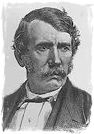 'It
is the word of a gentleman of the most strict and sacred honour, so there's
an end of it!' says Livingstone to himself as he places his finger for
the thousandth time on the text on which he stakes his life. He is surrounded
by hostile and infuriated savages. During the sixteen years that he has spent
in Africa, he has never before seemed in such imminent peril. Death stares
him in the face. He thinks sadly of his life-work scarcely begun. For the
first time in his experience he is tempted to steal away under cover of the
darkness and to seek safety in flight. He prays! 'Leave me not, forsake me
not!' he cries. But let me quote from his own journal: it will give us the
rest of the story.
'It
is the word of a gentleman of the most strict and sacred honour, so there's
an end of it!' says Livingstone to himself as he places his finger for
the thousandth time on the text on which he stakes his life. He is surrounded
by hostile and infuriated savages. During the sixteen years that he has spent
in Africa, he has never before seemed in such imminent peril. Death stares
him in the face. He thinks sadly of his life-work scarcely begun. For the
first time in his experience he is tempted to steal away under cover of the
darkness and to seek safety in flight. He prays! 'Leave me not, forsake me
not!' he cries. But let me quote from his own journal: it will give us the
rest of the story.
'January 14, 1856. Evening. Felt much turmoil of spirit in prospect of having all my plans for the welfare of this great region and this teeming population knocked on the head by savages to-morrow. But I read that Jesus said: "All power is given unto Me in heaven and in earth. Go ye therefore, and teach all nations, and lo, I am with you alway, even unto the end of the world." It is the word of a gentleman of the most strict and sacred honour, so there's an end of it! I will not cross furtively to-night as I intended. Should such a man as I flee? Nay, verily, I shall take observations for latitude and longitude to-night, though they may be the last. I feel quite calm now, thank God!'
The words in italics are underlined in the journal, and they were underlined in his heart. Later in the same year, he pays his first visit to the Homeland. Honours are everywhere heaped upon him. The University of Glasgow confers upon him the degree of Doctor of Laws. On such occasions the recipient of the honour is usually subjected to some banter at the hands of the students. But when Livingstone rises, bearing upon his person the marks of his struggles and sufferings in darkest Africa, he is received in reverential silence. He is gaunt and haggard as a result of his long exposure to the tropical sun. On nearly thirty occasions he has been laid low by the fevers that steam from the inland swamps, and these severe illnesses have left their mark. His left arm, crushed by the lion, hangs helplessly at his side. A hush falls upon the great assembly as he announces his resolve to return to the land for which he has already endured so much. 'But I return,' he says, 'without misgiving and with great gladness. For would you like me to tell you what supported me through all the years of exile among people whose language I could not understand, and whose attitude towards me was always uncertain and often hostile? It was this: "Lo, I am with you alway, even unto the end of the world!" On those words I staked everything, and they never failed!'
'Leave me not, forsake me not!' he prays.
'Lo, I am with you alway, even unto the end of the world!' comes
the response.
'It is the word of a gentleman of the most strict and sacred honour,
so there's an end of it!' he tells himself.
On that pledge he hazarded his all. And it did not fail him.

When, I wonder, did David Livingstone first make that text his own? I do not know. It must have been very early. He used to say that he never had any difficulty in carrying with him his father's portrait because, in 'The Cottar's Saturday Night,' Robert Burns had painted it for him. Down to the last morning that he spent in his old home at Blantyre, the household joined in family worship. It was still dark when they knelt down that bleak November morning. They are up at five. The mother makes the coffee: the father prepares to walk with his boy to Glasgow; and David himself leads the household to the Throne of Grace. The thought embedded in his text is uppermost in his mind. He is leaving those who are dearer to him than life itself; yet there is One on whose Presence he can still rely. 'Lo, I am with you alway, even unto the end of the world.' And so, in selecting the passage to be read by lamplight in the little kitchen on this memorable morning, David selects the Psalm that, more clearly than any other, promises him, on every sea and on every shore, the Presence of his Lord. 'The LORD is thy keeper: the LORD is thy shade upon thy right hand. The sun shall not smite thee by day, nor the moon by night. The LORD shall preserve thee from all evil: He shall preserve thy soul. The LORD shall preserve thy going out and thy coming in from this time forth, and even for evermore.' After prayers comes the anguish of farewell. But the ordeal is softened for them all by the thought that has been suggested by David's reading and by David's prayer. In the grey light of that wintry morning, father and son set out on their long and cheerless tramp. I remember, years ago, standing on the Broomielaw, on the spot that witnessed their parting. I could picture the elder man turning sadly back towards his Lanarkshire home, whilst David hurried off to make his final preparations for sailing. But, deeper than their sorrow, there is in each of their hearts a song—the song of the Psalm they have read together in the kitchen—the song of the Presence—the song of the text!
'Leave me not, forsake me not!' cries the lonely lad.
'Lo, I am with you alway, even unto the end of the world!'
'It is the word of a gentleman of the most strict and sacred honour,
so there's an end of it!'
And with that song singing itself in his soul, David Livingstone turns his face towards darkest Africa.
If ever a man needed a comrade, David Livingstone did. Apart from that divine companionship, his is the most lonely life in history. It is doubtless good for the world that most men are content to marry and settle down, to weave about themselves the web of domestic felicity, to face each day the task that lies nearest to them, and to work out their destiny without worrying about the remote and the unexplored. But it is equally good for the world that there are a few adventurous spirits in every age who feel themselves taunted and challenged and dared by the mystery of the great unknown. As long as there is a pole undiscovered, a sea uncharted, a forest untracked or a desert uncrossed, they are restless and ill at ease. It is the most sublime form that curiosity assumes. From the moment of his landing on African soil, Livingstone is haunted, night and day, by the visions that beckon and the voices that call from out of the undiscovered. For his poor wife's sake he tries hard, and tries repeatedly, to settle down to the life of an ordinary mission station. But it is impossible. The lure of the wilds fascinates him. He sees, away on the horizon, the smoke of a thousand native settlements in which no white man has ever been seen. It is more than he can bear. He goes to some of them and beholds, on arrival, the smoke of yet other settlements still further away. And so he wanders further and further from his starting point; and builds home after home, only to desert each home as soon as it is built! The tales that the natives tell him of vast inland seas and of wild tumultuous waters tantalize him beyond endurance. The instincts of the hydrographer tingle within him. He sees the three great rivers—the Nile, the Congo and the Zambesi—emptying themselves into three separate oceans, and he convinces himself that the man who can solve the riddle of their sources will have opened up a continent to the commerce and civilization of the world. The treasures of history present us with few things more affecting than the hold that this ambition secures upon his heart. It lures him on and on—along the tortuous slavetracks littered everywhere with bones—through the long grass that stands up like a wall on either side of him—across the swamps, the marshes and the bogs of the watersheds—through forests dark as night and through deserts that no man has ever crossed before—on and on for more than thirty thousand miles. He makes a score of discoveries, any one of which would have established his fame; but none of these satisfy him. The unknown still calls loudly and will not be denied. Even at the last, worn to a shadow, suffering in every limb, and too feeble to put his feet to the ground, the mysterious fountains of Herodotus torture his fancy. 'The fountains!' he murmurs in his delirium, 'the hidden fountains!' And with death stamped upon his face, he orders his faithful blacks to bear him on a rude litter in his tireless search for the elusive streams. Yet never once does he feel really lonely. One has but to read his journal in order to see that that word of stainless honour never failed him. The song that soothed and comforted the weeping household in the Blantyre kitchen cheered with its music the hazards and adventures of his life in Africa.
'Leave me not, forsake me not!'
'Lo, I am with you alway, even unto the end of the world!'
'It is the word of a gentleman of the most strict and sacred honour,
so there's an end of it!'
Thus, amidst savages and solitudes, Livingstone finds that great word grandly true.
'It is His word of honour!' says Livingstone; and, nothing if not practical, he straightway proceeds to act upon it. 'If He be with me, I can do anything, anything, anything!' It is the echo of another apostolic boast: 'I can do all things through Christ which strengtheneth me!' In that unwavering confidence, and with an audacity that is the best evidence of his faith, Livingstone draws up for himself a programme so colossal that it would still have seemed large had it been the project of a million men. 'It is His word of honour!' he reasons; 'and if He will indeed be with me, even unto the end, He and I can accomplish what a million men, unattended by the Divine Companion, would tremble to attempt.' And so he draws up with a calm hand and a fearless heart that prodigious programme from which he never for a moment swerved, and which, when all was over, was inscribed upon his tomb in Westminster Abbey. Relying on 'the word of a gentleman of the most strict and sacred honour,' he sets himself—
1. To evangelise the native races.
2. To explore the undiscovered secrets.
3. To abolish the desolating slave-trade.
Some men set themselves to evangelise; some make it their business to explore; others feel called to emancipate; but Livingstone, with a golden secret locked up in his heart, undertakes all three!
Evangelisation!
Exploration!
Emancipation!
Those were his watchwords. No man ever set himself a more tremendous task: no man ever confronted his lifework with a more serene and joyous confidence!
And how did it all work out? Was his faith justified? Was that word of honour strictly kept?
'Leave me not, forsake me not!' he cries.
'Lo, I am with you alway, even unto the end!'
In spite of that assurance, did he ever find himself a solitary in a strange and savage land? Was he ever left or forsaken? It sometimes looked like it.
It looked like it when he stood, bent with anguish beside that sad and lonely grave at Shupanga. Poor Mary Livingstone—the daughter of Robert and Mary Moffat—was never strong enough to be the constant companion of a pioneer. For years she struggled on through dusty deserts and trackless jungles seeing no other woman but the wild women about her. But, with little children at her skirts, she could not struggle on for long. She gave it up, and stayed at home to care for the bairns and to pray for her husband as he pressed tirelessly on. But, even in Africa, people will talk. The gossips at the white settlements were incapable of comprehending any motive that could lead a man to leave his wife and plunge into the interior, save the desire to be as far from her as possible. Hearing of the scandal, and stung by it, Livingstone, in a weak moment, sent for his wife to again join him. She came; she sickened; and she died. We have all been touched by that sad scene in the vast African solitude. We seem to have seen him sitting beside the rude bed, formed of boxes covered with a soft mattress, on which lies his dying wife. The man who has faced so many deaths, and braved so many dangers, is now utterly broken down. He weeps like a child. 'Oh, my Mary, my Mary!' he cries, as the gentle spirit sighs itself away, 'I loved you when I married you, and, the longer I lived with you, I loved you the more! How often we have longed for a quiet home since you and I were cast adrift in Africa! God pity the poor children!' He buries her under the large baobab-tree sixty feet in circumference, and reverently marks her grave. 'For the first time in my life,' he says, 'I feel willing to die! I am left alone in the world by one whom I felt to be a part of myself!'
'Leave me not, forsake me not!' he cried at the outset.
'I am left alone!' he cries in his anguish now.
Has the word of honour been violated? Has it? It certainly looks
like it!
It looked like it, too, eleven years later, when his own time came. He is away up among the bogs and the marshes near Chitambo's village in Ilala. Save only for his native helpers, he is all alone. He is all alone, and at the end of everything. He walked as long as he could walk; rode as long as he could ride; and was carried on a litter as long as he could bear it. But now, with his feet too ulcerated to bear the touch of the ground; with his frame so emaciated that it frightens him when he sees it in the glass; and with the horrible inward hemorrhage draining away his scanty remnant of vitality, he can go no further. 'Knocked up quite!' he says, in the last distinct entry in his journal. A drizzling rain is falling, and the black men hastily build a hut to shelter him. In his fever, he babbles about the fountains, the sources of the rivers, the undiscovered streams. Two of the black boys, almost as tired as their master, go to rest, appointing a third to watch the sick man's bed. But he, too, sleeps. And when he wakes, in the cold grey of the dawn, the vision that confronts him fills him with terror. The white man is not in bed, but on his knees beside it! He runs and awakens his two companions. They creep timidly to the kneeling figure. It is cold and stiff'! Their great master is dead! No white man near! No woman's hand to close his eyes in that last cruel sickness! No comrade to fortify his faith with the deathless words of everlasting comfort and everlasting hope! He dies alone!
'Leave me not; forsake me not!' he cried at the beginning.
'He died alone!'—that is how it all ended!
Has the word of honour been violated? It most certainly looks like
it!
But it only looks like it! Life is full of illusions, and so is death. Anyone who cares to read the records in the journal of that terrible experience at Shupanga will be made to feel that never for a moment did the word of honour really fail.
'Lo, I am with you alway, even unto the end!'
The consciousness of that unfailing Presence was his one source of comfort as he sat by his wife's bedside and dug her grave. The assurance of that divine Presence was the one heartening inspiration that enabled him to take up his heavy burden and struggle on again!
'Lo, I am with you alway, even unto the end!'
Yes, even unto the end! Take just one more peep at the scene in the hut at Chitambo's village. He died on his knees! Then to whom was he talking when he died? He was talking even to the last moment of his life, to the constant Companion of his long, long pilgrimage! He was speaking, even in the act and article of death, to that 'Gentleman of the most strict and sacred honour' whose word he had so implicitly trusted.
'He will keep His word'—it is among the last entries in his journal—'He will keep His word, the Gracious One, full of grace and truth; no doubt of it. He will keep His word, and it will be all right. Doubt is here inadmissible, surely!'
'Leave me not; forsake me not!' he cried at the beginning.
'Lo, I am with you alway, even unto the end!' came the assuring
response.
'It is the word of a gentleman of the most strict and sacred honour, so there's
an end of it!'
And that pathetic figure on his knees is the best testimony to the way in which that sacred pledge was kept.
From A Bunch of Everlastings, or, Texts That Made History by F.W. Boreham. New York: Abingdon, ©1920.
>> More David Livingstone