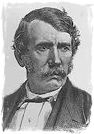
 It
is said that no country has given so many missionaries to India, Africa, and
China as has Scotland. One of these sturdy sons of missionary fame was David
Livingstone, whose name is inseparably connected with Africa.
It
is said that no country has given so many missionaries to India, Africa, and
China as has Scotland. One of these sturdy sons of missionary fame was David
Livingstone, whose name is inseparably connected with Africa.
Born March 19, 1813, of "poor and pious parents," his start in life was much the same as that of many others who have achieved much for God. Such parents bequeath to their children a legacy better by far than gold.
The father, Neil Livingstone, had a truly missionary spirit. In his journeys from place to place as a tea merchant he often distributed tracts, and was an earnest member of a missionary society.
Though deprived of luxuries, the Livingstone home was one of the kind where boys and girls live healthy, happy lives and become well fitted for life's duties. The "great gain" of "godliness with contentment" was theirs.
Early in life David learned to make the best of circumstances. It was the father's custom to lock the door at dusk, expecting none of the children to be outside at that time. One evening David was a little late in returning to the house, and found himself barred out. Knowing it was of no use to demur, he calmly sat down on the doorstep to spend the night.
When but nine years old he received a prize of a New Testament from his Sunday-school teacher, for repeating Psalm 119.
At the age of ten the boy commenced work in a cotton factory, and although his opportunities for education had been limited, the intensity of his desire for knowledge is shown by the fact that with part of his first week's earnings he bought a Latin grammar. The book was placed where he could catch a word or a sentence now and then as he worked. At the close of his long day's work he attended an evening school.
During his boyhood days religious reading had not much attraction for him, and the last flogging he ever received, he tells us, was for refusing to read Wilberforce's Practical Christianity. But his parents' labors and prayers were not in vain, and at the age of twenty he was converted.
In the early days of his Christian life it was no part of Livingstone's plan to become a missionary himself, though he was anxious to do all in his power to further the cause. Later, China's need of the Gospel was seen to be so great, and the men who would go so few, that he resolved to go himself, and China would probably have been his field of labor, had not the opium war closed the country to English missionaries.
Then he met Robert Moffat, and as he listened to his stirring appeals in behalf of South Africa, Livingstone became convinced that the "dark continent" was a field as needy as China, and decided that instead of waiting for the close of the opium war, he would go at once to Africa. With this decision the directors of the missionary society concurred, and Nov. 17, 1840, he bade farewell to the home of his childhood. Accompanied by his father, he walked from Blantyre to Glasgow, where he took the steamer for Liverpool. The father and son never met again on earth.
In July, 1841, he reached the Kuruman, where the Moffats had worked so faithfully. While waiting for permission to open a new station farther north, Livingstone learned the native language and in a surprisingly short time was able to preach. He had a remarkable power over the natives.
A year after arriving in Africa he wrote to his father: "The work of God goes on here notwithstanding all our infirmities. Souls are gathered in continually, and sometimes from among those you would never have expected to see turning to the Lord. Twenty-four were added to the church last month, and there are several inquirers."
In 1843 he received permission from his society to open a new station, as he desired, and located at Mabotsa. Lions were numerous in this place, and it was here he was attacked by one, nearly losing his life. He says of this attack: "The lion caught me by the shoulder and we both came to the ground together. Growling horribly, he shook me as a terrier dog does a rat. The shock produced a stupor similar to that which seems to be felt by a mouse after the first grip of the cat." A native teacher whom Livingstone himself had trained, sprang to the rescue, and the missionary's life was saved. His left arm was badly splintered, the imperfect setting of which caused the formation of a false joint, which remained for life.
The next event of importance was his marriage to Mary, eldest daughter of the Moffats. She "exchanged one great name for another," and honored both.
After working hard to build his house and establish a mission, the Livingstones were driven out of it by the jealousy of a brother (?) missionary, and removed to Chonuane, the capital of the Bakwains. Sechele, the chief, became strongly attached to Livingstone, and was converted. The people seemed unwilling to embrace the new religion, but some progress was made.
Chonuane proved to be unsuitable for a mission station, on account of the lack of rain there, and at Livingstone's suggestion, Sechele and his people prepared to remove to a place forty miles away, on the Kolobeng.
Of the life of the missionaries in the new station at Kolobeng, we have a glimpse, in what Mr. Livingstone terms "a sketch of African housekeeping":
"The entire absence of shops obliged us to make everything we needed
from the raw materials. If you want bricks to build a house you must proceed
to the field, cut down a tree, and saw it into planks to make the brick-molds.
The people cannot assist you much; for, though willing to labor for wages,
the Bakwains have a curious inability to make things square. As with all
Bakwains, their own dwellings are round. I erected three large houses at
different times, and every brick and stick had to be put square by my own
hand. A house of decent dimensions, costing an immense amount of manual labor,
is necessary to secure the respect of the natives.
"Bread is often baked in an extempore oven, constructed by scooping
out a large hole in an ant-hill, and using a slab of stone for a door. Another
plan is to make a good fire on the ground, and when it is thoroughly heated,
to place the dough in a short-handled frying-pan, or simply on the hot ashes.
A metal pot is then put over it, and a small fire is kindled on top.
"We made our own candles, and soap was procured from the plant salsola,
or else from wood ashes, which in Africa contain so little alkaline matter
that the boiling of successive lyes has to be continued for a month or six
weeks before the fat is saponified [made into soap].
"We rose early, because, however hot the day, the evening, night and
morning at Kolobeng were deliciously refreshing. After family worship and
breakfast between six and seven, we kept school -- men, women, and children
all being invited. This lasted till eleven o'clock. The missionary's wife
then betook herself to her domestic affairs, and the missionary engaged in
some manual labor, as that of a smith, a carpenter, or gardener. Dinner and
an hour's rest succeeded, when the wife attended her infant school, which
the young liked amazingly and generally mustered a hundred strong; or she
varied it with sewing classes for the girls which was equally well relished.
After sunset the husband went into town to converse, either on general subjects
or on religion. We had a public service on three nights of the week, and
on another, instruction on secular subjects, aided by pictures and specimen.
In addition to these duties we ... furnished food to the poor. The smallest
acts of friendship, even an obliging word and civil look, are, as St. Xavier
thought, no despicable part of the missionary's armor. Nor ought the good
opinion of the most abject to be neglected when politeness may secure it.
Their good word in the aggregate forms a reputation which procures favor
for the Gospel. Show kindness to the reckless opponents of Christianity on
the bed of sickness, and they can never become your personal enemies. Here,
if anywhere, love begets love.
"A native smith taught me to weld iron, and having acquired some further
information in this art, as well as in carpentering and gardening from Mr.
Moffat, I was becoming handy at most mechanical employments in addition
to ... preaching. My wife could make candles, soap and clothes; and thus
we had nearly attained to the indispensable accomplishments of a missionary
family in Central Africa -- the husband to be a Jack-of-all-trades with outdoors,
and the wife a maid-of-all-work within."
As can be seen these were busy, busy days; and the only regret Mr. Livingstone expressed concerning them was that he did not spend more time playing with his children. But how could he, when there was so much to be done?
The friendship of Sechele, the Bakwain chief, was a source of great pleasure to Livingstone, and the transformation wrought by the Gospel was marvelous. Later he became a preacher.
Livingstone's style of preaching, Mr. Moffat said, was "simple, interesting, very direct, and well suited to the capacity of the people."
It was not his wish to gain great numbers of followers who would be "Christians" in name only. He expressed his views on this subject thus:
"Nothing will induce me to form an impure church. Fifty added to the church sounds fine at home, but if only five of these are genuine what will it profit in the Great Day? I have felt more than ever lately that the great object of our exertions ought to be conversion."
The following is quoted from a letter to his father:
"For a long time I have felt much depressed after preaching the unsearchable riches of Christ to apparently insensible hearts; but now I like to dwell on the love of the great Mediator, for it always warms my own heart, and I know the Gospel is the power of God -- the great means which He employs for the regeneration of our ruined world."
Before many seasons passed at Kolobeng, severe droughts occurred successively, until at last the river dried up entirely, and it became apparent that another location would have to be found.
Several hundred miles northward were the Makololos, who were anxious to have a missionary. Several very perilous but unsuccessful attempts were made to reach their country.
On one of these journeys Mrs. Livingstone and the children accompanied him, but the hardships of the journey were great, and before he had accomplished his purpose, two of the children and some of the servants were stricken with fever, compelling them to return to Kolobeng. Of the death of a little daughter about this time Livingstone wrote: "It was the first death in our family ... We felt her loss most keenly ... It is wonderful how soon the affections twine around a little stranger."
Sickness making a rest imperative, the family visited the Moffats at the Kuruman and enjoyed their vacation there.
Soon afterward the Livingstones journeyed again toward the country of Makololo, and this time were successful in reaching it. Livingstone found the chief, Sebituane, very friendly, but after only one opportunity of talking with him about salvation, the chief was taken sick and soon died. Livingstone sowed the Gospel seed among the people, and a few years later made arrangements for his brother-in-law, John Moffat, to settle among them as a missionary. Of all his travels, most minute accounts were kept in his journal -- though he probably little thought then that he would some day be made famous by these travels.
On one of these journeys Livingstone discovered the Zambezi in the heart of Africa, far beyond where the Portuguese had supposed the source to be, and it seemed to him most important to trace the river from its source to the coast, and ascertain its possibilities for commerce. Though he would have preferred to settle in some mission station, the path which duty seemed to mark out for him was one of exploration. There being no suitable place to leave his family in Africa, he decided to send them to England, and took them to the Cape, where he sorrowfully bade them farewell, for a long separation.
Livingstone's explorations were not made for the sake of adventure. He had a threefold object in view, and it was only for the accomplishment of this purpose that he was willing to brave the dangers and hardships of travel through African wilds. His first object was to find a healthful spot in the Barotse country, where a mission could be located. His second, to find a passage to either coast, east or west, as the country where he wished to locate was too far from the Cape to allow communication by that route. The third purpose was to pave the way for the introduction of some legitimate commerce in place of the horrible slave trade, which he termed the "open sore of the world."
In all his explorations, Livingstone never forgot that he was a missionary. "The end of the geographical feat is only the beginning of the missionary enterprise," is an oft-quoted saying of his. Wherever he went, he sought to scatter the Gospel seed, believing that others would reap where he had sown. It was his custom to gather his men about him each day and read to them from the Bible. And has not God said, "My word ... shall not return unto me void"?
We cannot follow David Livingstone in all his weary travels, but of the hardships he endured we have a hint in the fact that in one period of seven months, he suffered from thirty-one attacks of intermittent fever, and arrived at the Portuguese settlement "a bag of bones." Yet he would not desist until he had carried out his purpose. "Cannot the love of Christ carry the missionary where the slave trade carries the trader?" he asked.
With kindness, and the devotion to duty which characterized him always, he accompanied his men to their homes, as he had promised to do, and in spite of the hardships of traveling, every one reached his home in good health.
Then Livingstone journeyed to the east coast, discovering on his way the wonderful Victoria Falls. He also found a locality which promised to be a healthful and suitable site for a mission, and prayed that God would give him strength to live until the news could be communicated to the world.
After reaching the coast he felt the time had come when he might visit England and see once more his wife and children. The sadness of those five years of separation and the joy of meeting are touchingly told by Mrs. Livingstone in a poem which she gave him on his return.
A hundred thousand welcomes, and it's time for
you to come
From the far land of the foreigners to your
country and your home.
Oh, long as we were parted, ever since you went
away,
I never passed a dreamless night, or knew an
easy day.
A hundred thousand welcomes! How my heart
is gushing o'er
With the love and joy and wonder thus to see
your face once more.
How did I live without you these long, long
years of woe?
It seems as if 'twould kill me to again be parted
from you.
Do you think I would reproach you with the
sorrows that I bore?
Since the sorrow is all over, now I have you here
once more;
And there's nothing but the gladness and the
love within my heart,
And the hope so sweet and certain that again
we'll never part.
You'll never part me darling, there's a promise
in your eye;
I may tend you while I'm living, you may watch
me when I die;
And if death but kindly lead me to the blessed
Home on high,
What a hundred thousand welcomes will await
you in the sky!
—Mary.
One vacant chair he found, however, on his return. While he was on his way, his beloved father had been called to his heavenly home. He had followed with great interest the reports of his son's work, and longed to see him again. When it became apparent that he would not live to welcome him, his daughter said, "You wished so much to see David," and he responded, "Ay, very much, very much; but the will of the Lord be done."
A little more than a year passed in England, and though it was busily spent it was a delightful season. He found great pleasure in the companionship of his children, and often romped and played with them.
In the latter part of 1857, having finished his first book, Missionary Travels, he traveled through the country, delivering addresses on the work so dear to his heart. In one of these addresses he said:
"If you knew the satisfaction of performing a duty, as well as the gratitude to God which the missionary must always feel in being chosen for so noble and sacred a calling, you would feel no hesitation in embracing it. For my own part I have never ceased to rejoice that God has appointed me to such an office. People talk of the sacrifice I have made in spending so much of my life in Africa. Can that be called a sacrifice which is simply paid back as a small part of a great debt owing to our God, which we can never pay? ... I know that in a few years I shall be cut off in that country which is now open; do not let it be shut again! And I go back to Africa to make an open path for commerce and Christianity; do you carry out the work which I have begun. I leave it with you!"
In March, 1858, accompanied by Mrs. Livingstone and their youngest son, he sailed again for Africa. Upon reaching the Cape, Mrs. Livingstone's health was so poor that they were forced again to separate. She went at first to her parents, and later to Scotland, while her husband continued his explorations, and was rewarded by the discovery of Lake Nyassa. This beautiful lake and the valley of the Shire River he considered "the key to Central Africa."
In 1862 he was joined again by his beloved Mary, but after three short months of happiness, she was overtaken with an illness which proved fatal, and in a few days she was buried under a baobab tree at Shupanga. Livingstone said he remembered passing this spot, and being impressed with its beauty. He expressed a wish that his own resting-place might be in "some far-off, still, deep forest" where he might "sleep sweetly" till awakened on the resurrection morn.
A little of the grief he felt at his loss he expressed in his journal:
"It is the first heavy stroke I have suffered, and quite takes away my strength. I wept over her who well deserved many tears. I loved her when I married her, and the longer I lived with her I loved the more. ...Oh, my Mary, my Mary! how often we have longed for a quiet home since you and I were cast adrift at Kolobeng. Surely the removal by a kind Father who knoweth our frame means that He rewarded you by taking you to the best home, the eternal one in the heavens."
To one of his daughters he wrote:
"All she told you to do she now enforces, as if beckoning from Heaven. Nannie, dear, meet her there. Don't lose the crown of joy she now wears, and the Lord be gracious to you in all things."
Lonely, yet not disheartened, Livingstone again took up his travels, and in the region explored, the horrors of the slave traffic became apparent. Corpses were seen on every hand, for a large proportion perished on their way to the coast."Not more than one in five ever reach the 'kind masters' in Cuba and elsewhere, whom, according to slave-owners' interpretation of Scripture, Providence intended for them," Livingstone wrote. He gave a pathetic description of the broken-heartedness felt by these poor creatures. It seemed to be an actual disease, and it was of this they died, apparently. So horrible was this traffic in human beings that Livingstone wrote regarding it:
"When endeavoring to give some account of the slave-trade of East Africa, it was necessary to keep far within the truth, in order not to be thought guilty of exaggeration, but, in sober seriousness, the subject does not admit of exaggeration. To overdraw its evils is simply an impossibility."
Livingstone's plan was to launch a steamer on Lake Nyassa, thus facilitating the exploration of that region.
The region around Lake Nyassa promised to be a spot well suited to missionary work and it was most disappointing to him not to see a mission established during his lifetime. Later on this was accomplished.
But before he was able to carry out his purpose, the expedition was recalled. And yet he did not give up and go home to his children, as some might have done. "In my case duty would not lead me home, and home, therefore, I would not go," he wrote.
In 1864 Livingstone once more visited England. While there he wrote his next book, The Zambezi and Its Tributaries, and tried to arouse sentiment against the Portuguese slave trade.
Livingstone had no thought of remaining in England, and in the autumn of 1865, sailed once more for the continent where so much of his life had been spent.
A friend of his had suggested that he go out this time "unshackled by other avocations than those of the geographical explorer." To this suggestion he replied that he "could feel in the way of duty only by working as a missionary."
He entered Africa on his fifty-third birthday and commenced his last series of explorations with a strong presentiment that he should not live to finish them. Some of the men who accompanied him displayed a beautiful spirit of fidelity to their master, while others proved to be so useless that he had to dismiss them. One of these men reported to Zanzibar that Livingstone had been murdered on the shores of Lake Nyassa, but the story was not fully believed, and in 1868 letters were received from him.
Extracts from his journal show the extreme weakness from which the brave missionary suffered. Frequent sicknesses were doing their fatal work. Disappointments were his lot. Often after long, weary marches he found his supplies and letters stolen or lost. At last, when the end of his journey seemed almost in sight, his men refused to accompany him farther, and he was forced to travel wearily 500 miles to Ujiji, only to find that the supplies which had been left there for him had been sold by an Arab trader, who claimed he had learned by divining on the Koran that Livingstone was dead. Every hope seemed gone, but God had not forgotten His faithful child.
One October day in the year 1869, Henry M. Stanley, reporter for the New York Herald, received a telegram from Mr. Bennett, the manager, which read like this: "Come to Paris on important business." Mr. Stanley was in Madrid, just back from another trip; some of his clothes were on the line, half dry; others were only half washed. More than that, there were friends from whom it was hard to part -- especially two little boys who liked to listen to the stories of his adventures. But these things made no difference -- orders must be obeyed. "To battle or the banquet it is ever the same -- 'Get ready and go,"' Stanley said.
When he reached Paris he immediately found Mr. Bennett and the conversation began.
"Where do you think Livingstone is?" asked Mr. Bennett -- for this was at the time when David Livingstone the missionary explorer had gone so far into the African jungles that no one had heard from him for a long, long time, and many people supposed he was dead.
"I really do not know, sir," was Stanley's reply.
"Do you think he is alive?"
"He may be, and he may not be."
"Well, I think he is alive, and that he can be found, and I am going to send you to find him."
"What! do you really think I can find Dr. Livingstone? Do you mean that I am to go to Central Africa?"
"Yes; I mean that you shall go, and find him wherever you may hear that he is, and get what news you can of him; and perhaps the old man may be in want -- take enough with you to help him should he require it. Of course you will act according to your own plans, and do what you think best -- BUT FIND LIVINGSTONE."
Further instructions were given, for Mr. Bennett was determined that, whatever the cost, Stanley should "find Livingstone." "God be with you," said Mr. Bennett as they parted.
And so it came about that Stanley found himself in the fruitful island of Zanzibar, ready to make preparations for the long, long journey before him.
But just how to make provision for such a trip was a puzzling question. For you know it is one thing to travel in America, in these days, when railroads and automobiles are so numerous, and it was quite another to journey through African wilds, fifty years ago [from 1932 when this was written], when most of the traveling must be done by foot, and when cloth and beads and wire must be used in place of money. From Arab merchants he learned a great deal about what would be needed. He found out that some tribes would take certain kinds of cloth in place of money; among other tribes, beads were used instead. Furthermore, he learned that while one tribe wanted red beads, and would take no other kind, another wanted black; white beads were accepted in some places, and refused in others. As you may imagine, there were many tiresome days of buying and packing. Men were hired and donkeys purchased, saddles and tents made, large quantities of supplies bought, and at last the New York Herald Expedition was ready to leave Zanzibar for the continent.
It could not be expected that a caravan consisting of 192 men, mostly natives, twenty-seven donkeys, two horses, and tons of luggage, could proceed through an untraveled country without some unpleasant happenings, and so when one of the donkeys decided to lie down in a puddle of black water, and his driver, for some reason, failed to prevent his doing it, there was nothing to do but to empty the bag the donkey was carrying, wash the soiled clothing, and go on.
A narrow ditch filled with black mud soon confronted the party, and could not be crossed until a bridge was constructed. For the first time the sound of American axes resounded through the jungle, and in a short time a bridge was constructed and the ditch was safely crossed.
Then, to make matters worse, a number of the men were taken sick, and the two horses died. But did they turn back because of difficulties? No; Stanley had been sent to "find Livingstone," and until that was accomplished, he would push on through every hardship, or die in the attempt.
My young friends, as you journey on toward Heaven, you will not always find the path an easy one. There will be hard tasks to perform, and obstacles to surmount. But, whatever the test, do not turn back. God's grace is sufficient to take you through victoriously.
Slowly the caravan journeyed onward and at last reached the swampy valley of the Makata -- a veritable "dismal swamp," through which they "splashed, waded, occasionally half-swimming, and reeled," covering only six miles in one ten-hour day.
When at last they reached the place where good food could be obtained, it was so greatly appreciated that Stanley wrote in his diary, "After fifty-seven days of living upon matama porridge and tough goat, I have enjoyed with unctuous satisfaction a real breakfast and dinner."
In this place white ants abounded and were so destructive that Stanley began to be afraid they might eat up his tent while he slept.
Ugogo was the next country in their line of travel. There grain fields were to be found and food was more abundant than in some places, but so extravagant were the demands of some of the native chiefs that Stanley's supply of cloth, which you remember served in place of money, was diminishing rather rapidly.
In Mizanza, Stanley was "honored" by a visit from the sultan of that place, who gazed in wonder at the furnishings of his tent. His white face and straight hair amazed the African, for how could the Musungu be white when the sun had burned his own people's skins into blackness? The guns seemed marvelous, and convinced the old chief that it would be wise for him to keep on friendly terms with the traveler.
Various kinds of dwellings were seen. One of these was a "tembe," which was "divided into apartments, separated from each other by a wattled wall. Each apartment may contain a family ... who form their beds on the floor out of dressed hides. The father of the family, only, has a 'kitanda,' or fixed cot made of oxhide stretched over a frame, or of the bark of the myombo tree. The floor is of tamped mud, and is exceedingly filthy. ...In the corners, suspended to the rafters, are the fine airy dwellings of black spiders of very large size, and other monstrous insects. Rats, a peculiarly long-headed, dun-colored species, infest every tembe. I hardly think we should care to stay in such a place."
Finally the caravan reached Unyanyembe. This was the end of the journey for some of the men, and a fat bullock was bought to provide a farewell feast to the caravan.
Stanley was hospitably received by the Arab governor, while dusky natives hovered around, greeting him with "one grand concentrated stare." A breakfast of smoking "'slapjacks" and tea -- served in a silver teapot -- was ready, and Stanley was invited. The invitation was readily accepted, and the hungry man did justice to the meal -- tea and slapjacks both disappeared in an amazingly short time.
The Arab accompanied him to the "tembe" in Kwihara which was to be his home during his stay in Unyanyembe.
While staying in Kwihara, a little boy-slave was given to Stanley. Not liking his name, which meant "my brother's wealth," he gave him the name Kalulu, meaning "antelope," because of his bright eyes, slim form, and quick movements. This boy proved to be a real help.
Some months were spent in Unyanyembe, but Stanley's object was to "find Livingstone," and he must journey on as fast as possible.
Accompanied by fifty-four men and boys, he bade farewell to the Arabs, and went on his way.
A few more weeks of traveling, and Ujiji would be reached. It was there they hoped to "find Livingstone." The journey had been long but the end was drawing nearer. There were some questions over which Stanley had pondered occasionally along the way. Was Livingstone really at Ujiji? And in case he was there, if he heard that another white man was coming, would he run away, as some had told him he probably would do?
They met a caravan from Ujiji. Yes, a white man was there -- an old man, with white hair on his face -- and he was sick, they said. Without doubt it was Livingstone, and oh, how Stanley wished for a railroad, or at least, a horse, so that he might quickly meet him. But he must have patience, and on the expedition marched.
Finally the long-looked-for day arrived. Yes, there was Lake Tanganyika in the distance, and hurrying on, they came in sight of Ujiji.
Before Livingstone had been in Ujiji many days, one of his servants came running to inform him that a white man was coming. This was none other than Henry M. Stanley. To the weary traveler who had not seen a white man for six years he was "almost as an angel from Heaven," and in his gratitude he said again and again to his benefactor, "You have brought me new life -- you have brought me new life." There were letters from home and loved ones, and abundant supplies of nourishing food, and before a week was over, new strength came to his weakened frame.
Together the two white men seated themselves on the rude porch in front of Mr. Livingstone's mud house and talked. Wonderingly Stanley listened to the tales of Livingstone's travels, and just as wonderingly Livingstone listened to Stanleys accounts of what had been happening in the civilized world.
Stanley's coming was at just the right time. Had it been a few weeks earlier, Livingstone would not have been there. Sometimes it seemed hard to Stanley to have to travel so slowly, but God was working everything out for good. And his arrival was none too early, for Livingstone's supplies were almost gone, and he was very thankful to partake of the good things provided by Stanley.
Four months they lived together and Stanley found Livingstone a man to be greatly admired. This is his testimony concerning him:
"God grant that if you ever take to traveling in Africa you will get
as noble and true a man for your companion as David Livingstone! For four
months and four days I lived with him in the same house, or in the same boat,
or in the same tent, and I never found a fault in him ... Each day's life
with him added to my admiration for him...
"I grant he is not an angel; but he approaches to that being as near
as the nature of a living man will allow. His gentleness never forsakes him;
his hopefulness never deserts him. No harassing anxieties, distraction of
mind, long separation from home and kindred, can make him complain. He thinks
all will come out right at last; he has such faith in the goodness of Providence."
Though not a Christian himself, Stanley acknowledged that it was religion that made the missionary traveler what he was, and his own life was greatly changed through Livingstone's influence.
While in Ujiji, Stanley suggested a cruise on Lake Tanganyika, and Livingstone was very glad to accompany him.
They went to the northern end of the lake, exploring the whole region carefully, and were gone twenty-eight days.
Along the shores of Lake Tanganyika beautiful palms grew. And the wood peach, wood plum, and wood apple were among the fruit bearing trees. Sugar-cane, rice, beans, sweet potatoes, Indian corn and some other grains grew in abundance.
There were plenty of wild animals -- lions and leopards, baboons, and hyenas, jackals, camelopards, elephants, rhinoceroses, giraffes, zebras, hippopotami, crocodiles, and others.
In one part of Africa the ox had a hump between his shoulders; in another, enormously long horns were the distinguishing mark. Then there were broad-tailed sheep and cowardly pariah dogs. There were birds and fish of numerous varieties.
Stanley tried hard to persuade Livingstone to go to England with him, and spend a year there before attempting any further exploration, but Livingstone believed he would soon be able to finish his work, and until that was done, he was willing to deny himself of the companionship of his children and the comforts of home.
When Christmas day came, they resolved to spend it in a fashion as nearly like the Anglo-Saxon as was possible in Central Africa. A bountiful dinner was planned, but alas! Stanley was just recovering from fever, and unable to prepare the meal himself, and Ferajji, the cook, who sometimes prepared excellent meals, spoiled the roast and burned the custard, and so the dinner was not especially appreciated. Later on they planned another "Christmas" dinner which was more successful.
But the day was drawing near when the New York Herald Expedition must start on its homeward trip. Livingstone and his men accompanied them to Unyanyembe, to wait until Stanley could reach the coast and send him new men and what supplies were needed.
Two canoes conveyed the two white men to Urimba, where a camp was made, while they awaited the coming of the men who had traveled by land with the supplies. At another camping place Stanley succeeded in shooting a buffalo, which supplied meat for the party.
Fifty-three days of traveling brought them to Kwihara, and Stanley felt quite at home in the "tembe" where he had lived on his way to Ujiji. Livingstone busied himself writing letters to his friends and loved ones at home, and the days passed rapidly.
When they parted, it was like the separation of lifelong friends, so strong was the attachment which had sprung up between them. Reluctantly they said their last farewells -- Stanley to return to civilization, and Livingstone to plunge again into African jungles, and never again on earth to see a white face.
Livingstone's exploration accomplished much from a geographical standpoint. He traveled 29,000 miles in Africa, and added to the known portion of the world about 1,000,000 square miles. Several lakes and rivers were discovered by him. And yet these discoveries were only of secondary importance in his estimation. His great purpose was to open the way for the Gospel and put a stop to the slave trade, and in both these purposes he was successful, though most of the fruit was harvested after he was gone. Of him it might well be said, "One soweth, and another reapeth."
On Livingstone's fifty-ninth birthday, while waiting for Stanley to send some men to accompany him, he made this entry in his journal:
"March 19, Birthday. My Jesus, my King, my life, my all; I again dedicate my whole self to Thee. Accept me, and grant, O gracious Father, that ere this year is gone, I may finish my task. In Jesus' name I ask it. Amen, so let it be. David Livingstone."
Not long after this he sent a letter to the New York Herald, trying to interest America in an effort to stop the slave trade on the east coast. He finished his letter with these words, which were chosen as a most fitting inscription for the tablet near his resting-place in Westminster Abbey: "All I can add in my loneliness is, may Heaven's richest blessing come down on every one, American, English, or Turk, who will help to heal the open sore of the world." It seems somewhat singular that these words were written just one year before his death. One of the last sentences he ever penned was this: "I would forget all my cold, hunger, suffering, and trials, if I could be the means of putting a stop to this cursed traffic."
When his men arrived, they started at once for the region he wished to explore. Many hindrances confronted them, and before very long his strong constitution succumbed, and his pain and weakness were extreme, He still hoped to recover, and kept on his way, borne in a palanquin [seat carried on poles] by his men.
"I shall not live to finish this journey," he told his servant. "But if I am able to deal a blow to the slave trade and induce others to attempt the work here, I shall not die in vain."
He grew so weary he implored his men to put him down and leave him. Destitute of all earthly comforts he longed to reach his mansion in the skies. When at last his faithful servants bore him to the little village of Ilala, a rude hut was prepared for him, and a bed of grass, raised from the floor by sticks, made for him. The next day he lay quiet, his attendants knowing that death was not far off. The next morning, they found him kneeling by the side of his rude bed -- dead.
Two of his faithful servants, Susi and Chumah, beautifully displayed their love for their master. All his papers and instruments were carefully placed in water-tight boxes, and reached England uninjured.
The heart of the missionary was buried under a tree, and a rude monument was erected. Jacob Wainwright, an educated Negro who had been sent by Stanley, read the burial service. The body was carefully embalmed, dried, wrapped, and, in spite of many obstacles, was carried to the coast to be sent to England. Upon arrival there it was unmistakably identified, partly by the false joint caused by the encounter with the lion many years before.
April 18, 1874, nearly a year after his death, accompanied by Jacob Wainwright, Henry M. Stanley, his own Mary's aged father, Robert Moffat, and many others, the remains were borne to their final resting-place in Westminster Abbey.
"Open the Abbey doors and bear him in
To sleep with king and statesman, chief and sage,
The missionary come of weaver kin,
But great by work that brooks no lower wage.
"He needs no epitaph to guard a name
Which men shall prize while worthy work is known;
He lived and died for good -- be that his fame;
Let marble crumble; this is Living stone."
From Hearts Aflame by Florence Huntington Jensen. Waukesha, Wisc.: Metropolitan Church Assn., ©1932.
>> More David Livingstone