In Westminster Abbey the visitor, wandering about studying the monuments and inscriptions, comes in the middle of the nave upon a large black slab set in the floor bearing these words:
| BROUGHT BY FAITHFUL HANDS OVER LAND AND SEA HERE RESTS DAVID LIVINGSTONE, MISSIONARY, TRAVELLER, PHILANTHROPIST, Born March 19, 1813, At Blantyre, Lanarkshire. Died May 1, 1873, At Chitambo's Village, Ulala. |
On the right border of the stone is a Latin sentence and along the left border:
| "OTHER SHEEP I HAVE WHICH
ARE NOT OF THIS FOLD: THEM ALSO I MUST BRING, AND THEY SHALL HEAR MY VOICE." |
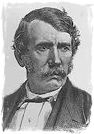
This is the resting-place of the body, but not of the heart, of the Scotch weaver lad who went out from his simple home an unknown lad and died as one of the greatest and most honored of men.
 From
his earliest childhood he was of a calm, self-reliant nature. We are told by
his best biographer that "it was his father's habit to lock the door at
dusk, by which time all the children were to be in the house. One evening David
had infringed this rule, and when he reached the door it was barred. He made
no cry nor disturbance, but, having procured a piece of bread, sat down contentedly
to pass the night on the doorstep. There, on looking out, his mother found
him... At the age of nine he got a New Testament from his Sunday-school teacher
for repeating the 119th Psalm on two successive evenings with only five errors,
a proof that perseverance was bred in the bone."
From
his earliest childhood he was of a calm, self-reliant nature. We are told by
his best biographer that "it was his father's habit to lock the door at
dusk, by which time all the children were to be in the house. One evening David
had infringed this rule, and when he reached the door it was barred. He made
no cry nor disturbance, but, having procured a piece of bread, sat down contentedly
to pass the night on the doorstep. There, on looking out, his mother found
him... At the age of nine he got a New Testament from his Sunday-school teacher
for repeating the 119th Psalm on two successive evenings with only five errors,
a proof that perseverance was bred in the bone."
At the age of ten he went to work in the cotton factory as a piecer, and after some years was promoted to be a spinner. The first half-crown he earned he gave to his mother. With part of his first week's wages he bought a Latin textbook and studied that language with ardor in an evening class between eight and ten. He had to be in the factory at six in the morning and his work ended at eight at night. But by working at Latin until midnight he mastered Virgil and Horace by the time he was sixteen. He used to read in the factory by putting the book on the spinning-jenny so that he could catch a sentence at a time as he passed at his work. He was fond of botany and geology and zoology, and when he could get out would scour the country for specimens. On one expedition he and his brother caught a big salmon, and, to conceal the fish, which they had no right to take, they put it in his brother's trousers leg and so got it home.
When he was about twelve he began to have serious thoughts about deeper things, but not till he was twenty did the great change come which brought into his life the strength of the consciousness of his duty to God. Feeling "that the salvation of men ought to be the chief desire and aim of every Christian," he made a resolution "that he would give to the cause of missions all that he might earn beyond what was required for his subsistence." But at twenty-one he read an appeal by Mr. Gutzlaff on behalf of China, and from that time he sought himself to enter the foreign mission field, influenced by "the claim of so many millions of his fellow creatures and the want of qualified missionaries." So he went out from his home to follow the advice of old David Hogg, one of the patriarchs of the village: "Now, lad, make religion the every-day business of your life, and not a thing of fits and starts; for if you do, temptation and other things will get the better of you."
China was the land to which Livingstone wished to go, but the opium war prevented his doing so at once. About the same time he came into contact with Dr. Robert Moffat, who was then in England creating much interest in his South African mission. He told Livingstone of "a vast plain to the north where he had sometimes seen, in the morning sun, the smoke of a thousand villages, where no missionary had ever been," and it was not long before the young Scotch student decided for Africa. Livingstone was thorough in his preparation, as he was in all things. He determined to get a medical as well as a theological education. To do it he had to borrow books, to earn his own way, and to live with the closest economy, paying about fifty-cents a week for the rent of his room. The first time he tried to preach he entirely forgot his sermon, and saying, "Friends, I have forgotten all I had to say," he hurried out of the pulpit and left the chapel. One of his acquaintances of those days wrote, years after, that even then his two strongest characteristics were simplicity and resolution. "Now after forty years," he adds, "I remember his step, the characteristic forward tread, firm, simple, resolute, neither fast nor slow, no hurry and no dawdle, but which evidently meant — getting there."
On December 8, 1840, he sailed for Africa, going out by way of Brazil and the Cape of Good Hope. The captain of the ship taught him the use of the quadrant and how to take observations. He was to find good use for this knowledge. Arriving at the Cape, he went on to his first station, Kuruman, but he had no thought of staying there or of working in any fixed groove. He was thinking of new plans, and, above all, his eyes were turned northward toward the great region absolutely untouched and unknown. The first period of his work might be roughly marked as from 1840 to 1852. From Kuruman he made several trips deeper into the country, and had some of those experiences with lions of which he was to have so many.
On one trip he broke a finger, and when it was healing broke it again by the recoil of a revolver which he shot at a lion which made him a sudden visit in the middle of the night. Some of his trips were in ox-wagons and some on ox-back. "It is rough traveling, as you can conceive," he wrote. "The skin is so loose there is no getting one's greatcoat, which has to serve both as saddle and blanket, to stick on; and then the long horns in front, with which he can give one a punch in the abdomen if he likes, make us sit as bolt upright as dragoons. In this manner I traveled more than four hundred miles." His investigations were undertaken on his own responsibility. He wrote home to ask the directors of the London Missionary Society to approve, but if they did not, he said, he was at their disposal "to go anywhere, provided it be forward."
He soon left Kuruman to locate at Mabotsa, and it was there that a lion nearly killed him, tearing his flesh and crushing the bone in his shoulder. A native diverted the attention of the lion when his paw was on Livingstone's head. When asked once what he thought when the lion was over him, Livingstone answered: "I was thinking what part of me he would eat first." When years later his body was brought home to England it was by the false joint in the crushed arm that it was identified. To avoid friction at Mabotsa, Livingstone, who had just built a house and laid out a garden, but who would quarrel with no one, gave up the station and went on with the daughter of Robert and Mary Moffat, the great missionaries of South Africa, whom he had just married, and established a new station at Chonuane. But there was no water there, so he moved again to Kolobeng, on the river of that name, and the whole tribe among whom he lived moved with him.
Kolobeng was unhealthful, and far beyond it stretched the vast unknown interior. Something in Livingstone's heart told him to go on. So on he went. On August 1, 1849, he discovered Lake 'Ngami, a body of water so big that he could not see the opposite shore. And, later, he found the River Zambezi. The lake was 870 miles from Kuruman across a desert. He must find a passage to the sea on either the west or the east coast. "Providence seems to call me to the regions beyond," he wrote, and he heard ever more loudly the call of God to strike at the awful slave traffic. But what should he do with his wife and children? The only course was to send them home to Scotland. So, hard as it was, he took them to Cape Town in March, 1852, the whole party appearing out of the interior in clothes of curious and outworn fashions, having been eleven years away from civilization, and in April he parted from his family and turned back into the darkness.
Before he reached Kolobeng the Boers had attacked and destroyed that station. With all ties to any one place now broken, he started north, and in June, 1853, reached Linyanti, fifteen hundred miles north from the Cape. It was a hard and dangerous journey, part of it made with fever, through swamps and thickets and water three or four feet deep. "With our hands all raw and bloody and knees through our trousers, we at length emerged. But, as he wrote in his journals on the way, "if God has accepted my service, then my life is charmed till my work is done ... I will place no value on anything I have or may possess, except in relation to the kingdom of Christ. If anything will advance the interests of that kingdom, it shall be given away or kept only as by giving or keeping of it I shall most promote the glory of him to whom I owe all my hopes in time and eternity. May grace and strength sufficient to enable me to adhere faithfully to this resolution be imparted to me, so that in truth, not in name only, all my interests and those of my children may be identified with his cause ... I will try and remember always to approach God in secret with as much reverence in speech, posture, and behavior as in public. Help me, thou who knowest my frame and pitiest as a father his children." Evidences of the curse of the slave-trade multiplied constantly, and he saw more clearly at Linyanti that both for the suppression of that traffic and for the expansion of the missionary work it was necessary to open up the continent.
Accordingly, on November 11, 1853, he started westward for the Atlantic Ocean, and on May 31, 1854, came out at Loanda, about two hundred miles south of the mouth of the Congo. He had thirty-one attacks of fever on the way. He must find and make his own road. The floods and rains kept him almost constantly wet. Savages opposed him. He had no white companions. He arrived ragged and worn and exhausted, to find no letters from home waiting for him. An ordinary man would have felt that he had done enough and would have started for home, but not Livingstone. He plunged back into Africa and went eastward across the continent. He left Loanda, September 24, 1854, and reached Quilimane, on the opposite side of Africa, on May 20, 1856. On the way he became nearly deaf from fever and nearly blind from being struck in the eye by a branch of a tree in the forest. On this trip he discovered the great Victoria Falls, higher and fuller than Niagara, and he had yet more exciting times with savage tribes, whom, as always, he found a way to placate. From Quilimane he sailed for England, arriving August, 1856. At Cairo he learned of the death of his old father, who had longed to see him once again.
He got a tremendous welcome home. The Scotch weaver lad who had been all alone in Africa found himself the great hero of the day in Scotland and England. He was received by the men of science, by the Queen and the royal family, by all friends of humanity. He was given the freedom of the cities of London, Edinburgh, and Glasgow, and honors of the Universities of Glasgow, and Oxford, and Cambridge. Unspoiled by all the flattery, he left England to return to Africa on March 10, 1858, going out now to Quilimane as British consul for the east coast and interior of Africa. As he sailed, he wrote back to his son, Tom:
"London, 2nd February, 1858. — My Dear Tom: I am soon going off from this country, and wilt leave you to the care of him who neither slumbers nor sleeps, and never disappointed any one who put his trust in him. If you make him your friend, he will be better to you than any companion can be. He is a friend that sticketh closer than a brother. May he grant you grace to seek him and to serve him. I have nothing better to say to you than to take God for your Father, Jesus for your Savior, and the Holy Spirit for your sanctifier. Do this and you are safe forever. No evil can then befall you. Hope you will learn quickly and well, so as to be fitted for God's service in the world."
"Pearl, in the Mersey, 10th March, 1858. — My Dear Tom: We are off again, and we trust that he who rules the waves will watch over us and remain with you, to bless us and make us blessings to our fellow men. The Lord be with you, and be very gracious to you! Avoid and hate sin, and cleave to Jesus as your Savior from guilt."
It was six years before Livingstone returned again to England. During this time he explored the Zambezi and the Shire rivers, making his way about among the people, whatever the difficulties, always with success, because he knew how to win and keep their confidence and love by being himself ever truthful, ever fearless. Mrs. Livingstone returned with him to Africa on this trip, and died on April 27, 1862, at Shupanga, where she was buried, and her husband went on alone to Lake Nyasa, making unwearied explorations, surmounting the obstacles of nature and bad men, and learning ever more and more about the iniquity of the trade in slaves.
In 1864 he went to India and thence to England for the last time. While there he learned of the death of his son Robert, who fought on the Northern side in the American Civil War and lies buried at Gettysburg, and his mother also died while he was on his way. He got home in time to fulfill her wish that one of her laddies should lay her head in her grave. He had another crowded year, which included the writing of a book, as his previous visit had done, and then with the last public words in Scotland, "Fear God and work hard," he returned to Africa to open up the unknown eastern interior. This time his connection was with the Royal Geographical Society. For the first six years he explored eastern equatorial Africa, discovering new lakes, rivers, and mountains, exposing the slave-trade, suffering, struggling, but never yielding. One Christmas he writes "Took my belt up three holes to relieve hunger." He had no white companion, and in 1866 the report reached Zanzibar that he had been killed.
This story was found to be false, but still no white man had seen Livingstone for a long time. He was not seeking to be seen, however. In the dark of the interior, all alone, hungry and weary, he was pressing on to open new country and to insure the future freedom of poor and oppressed peoples. In 1871 he was reduced to the last straits, all the goods sent to him at Ujiji having been sold by the rascal Shereef to whom they had been consigned; but just then Henry M. Stanley, who had been sent by the New York Herald to find him, came to him after a long search, bringing him ample stores. What impression he made on Stanley, Stanley himself has told us:
"I defy any one to be in his society long without thoroughly fathoming him, for in him there is no guile, and what is apparent on the surface is the thing that is in him. ... Dr. Livingstone is about sixty years old, though after he was restored to health he looked like a man who had not passed his fiftieth year. ... You may take any point in Dr. Livingstone's character and analyze it carefully, and I would challenge any man to find a fault in it. ... His is the Spartan heroism, the inflexibility of the Roman, the enduring resolution of the Anglo-Saxon — never to relinquish his work, though his heart yearns for home; never to surrender his obligations until he can write finis to his work."
Refreshed by Stanley's visit and the supplies he brought, Livingstone turned inland again, hunting for the source of the Nile and fighting the slave trade. The iron frame had been taxed almost to its limit, however, and ever fresh difficulties had to be overcome. His last birthday, March 19, 1873, found him very weak.
"The 29th of April was the last day of his travels. In the morning he directed Susi to take down the side of the hut that the kitanda might be brought to him, as the door would not admit it, and he was quite unable to walk to it. Then came the crossing of a river; then progress through swamps and plashes; and when they got to anything like a dry plain he would ever and anon beg of them to lay him down. At last they got him to Chitambo's village, in Ilala, where they had to put him under the eaves of a house during a drizzling rain, until the hut they were building should be got ready.
"Then they laid him on a rough bed in the hut, where he spent the night. Next day he lay undisturbed. He asked a few wandering questions about the country — especially about Luapula. His people knew that the end could not be far off. Nothing occurred to attract notice during the early part of the night, but at four in the morning the boy who lay at his door called in alarm for Susi, fearing that their master was dead. By the candle still burning they saw him, not in bed, but kneeling at the bedside with his head buried in his hands upon the pillow. The sad yet not unexpected truth soon became evident: he had passed away on the farthest of all his journeys, and without a single attendant. But he had died in the act of prayer -- prayer offered in that reverential attitude about which he was always so particular; commending his own spirit, with all his dear ones, as was his wont, into the hands of his Savior; and commending Africa — his own dear Africa — with all her woes and sins and wrongs, to the Avenger of the oppressed and the Redeemer of the lost."
His faithful African companions prepared his body for transportation to the coast, burying his heart and other organs at the foot of a mvula tree in Ilala, which is now marked with a rough inscription. The body they carried to Zanzibar. Thence it was taken to England and buried in the Abbey under the great slab which bears his name...
From Servants of the King [by] Robert E. Speer. New York: Eaton & Mains, 1909.
>> More David Livingstone