Born at Blantyre, Scotland, March 19, 1813
Died at Ilala, Africa, May 1, 1873
1. Parents. Niel Livingstone, whose ancestry came from Ulfa Island, of the Staffa group of Great Britain, first as a tailor and then as a tea merchant, made a moderate living in Blantyre. Quick temper, warm and tender heart, deep and noble convictions; a great reader of good books, a member of the Congregational Church; family worship morning and evening, regular attendance at church and strict observance of the Sabbath, were marked characteristics of his life and home. His wife, Agnes Hunter, to whom he was married in 1810, shared fully in the high ideals of her husband. To them were born five sons and two daughters, two sons dying in infancy.
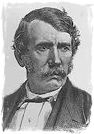 2. Early Life. David, the second son, was born on March 19, 1813. From
childhood he showed unusual love for nature, and through great perseverance,
which always characterized his life, gained prizes and excelled his playmates
in many ways. At ten he made his own living in the cotton mills while spending
his evenings in night school. Through reading Dick's "Philosophy of the
Future State" he was led to confess Christ; the life of Henry Martyn,
first modern missionary to Mohammedans, and Charles Gutslaff, medical missionary
to China, fixed his life purpose. "It is my desire to show my attachment
to the cause of Him Who died for me by devoting my life to His service." Contact
with Robert Moffat, pioneer missionary to Africa, prompted Livingstone to offer
his services to this needy field. Ordained as a missionary in Albion Street
Chapel, London, on November 8, 1840; only one night's visit home and that an
all night's conference about missions, closed in the morning by David reading
Psalms 121 and 135 at family worship, and this future missionary and explorer
was walking towards Glasgow on his way to Africa. He was accompanied by his
father to Broomiclaw, where they parted; never to meet again.
2. Early Life. David, the second son, was born on March 19, 1813. From
childhood he showed unusual love for nature, and through great perseverance,
which always characterized his life, gained prizes and excelled his playmates
in many ways. At ten he made his own living in the cotton mills while spending
his evenings in night school. Through reading Dick's "Philosophy of the
Future State" he was led to confess Christ; the life of Henry Martyn,
first modern missionary to Mohammedans, and Charles Gutslaff, medical missionary
to China, fixed his life purpose. "It is my desire to show my attachment
to the cause of Him Who died for me by devoting my life to His service." Contact
with Robert Moffat, pioneer missionary to Africa, prompted Livingstone to offer
his services to this needy field. Ordained as a missionary in Albion Street
Chapel, London, on November 8, 1840; only one night's visit home and that an
all night's conference about missions, closed in the morning by David reading
Psalms 121 and 135 at family worship, and this future missionary and explorer
was walking towards Glasgow on his way to Africa. He was accompanied by his
father to Broomiclaw, where they parted; never to meet again.
3. First Experiences in Africa. On December 8, 1840, Livingstone sailed for Africa. Going by Cape Town and Algoa Bay he was soon in the interior where Moffat was at work in the Bechuana territory. On the way thither he was incensed at the unkind treatment of the natives by Europeans. Mingling freely among them, healing their diseases, disarming their hostilities by interesting them in something unusual, he soon reached the conclusion that a noble and true heart was a better mainspring to overcome and direct raw natives than the abuse heretofore given them. His intense desire that all natives should have an opportunity to embrace Christianity, and his decided preference to labor where no white man had worked, led him to locate at Mabotsa, northward in the interior. This locality was infested by lions; and one day one which the natives had wounded sprang out of the bushes, seized Livingstone at the shoulder, tore his flesh and broke his arm. Ever after he could not raise his gun to shoot without great pain.
4. Marriage. In 1844 [Jan. 1845] he was united in marriage to Mary Moffat, oldest daughter of Robert and Mary Moffat. To them six children were born, one dying in infancy. Few couples enjoyed living together better than this one; but for the sake of Africa they deprived each other of association a great part of their lives. Thoughtless and unfriendly remarks about their separation caused them much heartache.
5. First Explorations. In 1845 the Livingstones moved to Chonuane, and later to Kolebeng, where Sechele, the chief of the tribes, became his first convert. These moves were but the first steps of this daring man's life. Each letter home ended with the words, "Who will penetrate the heart of Africa?" He sickened at heart when he heard of well-fed Christians at home engaged in hair-splitting discussions over doctrinal themes when millions were dying without the Gospel where he was. At last he began a tour, passed over Kalahari Desert, where for days no water could be found, and overcoming almost insurmountable difficulties, discovered Lake 'Ngami. The chief, Sevituane, welcomed him, but on account of the unhealthy conditions the country thus found did not prove suitable for a mission station.
6. Self-Denial and Losses. Livingstone conceived the idea that, if a way were opened from the interior to the coast, Christianity, civilization and commerce would move freely to these benighted people. But the undertaking involved fearful hardships and much self-denial. It was about this time that he wrote, "I place no value on anything I have or possess except in relation to the kingdom of Christ." Taking his wife and children to Cape Town, where amidst many tears and heart struggles he saw them sail for England on April 23, 1852, he set his face to this new purpose. But he found many obstacles. The Dutch Boers, who had robbed and subjected the natives to the worst slavery, opposed his efforts to the extent of destroying his home and carrying away his household goods. Undaunted, however, by any opposition, exploring the regions round about preparatory to the greater task of reaching the coast, preaching, teaching and healing, -- making notes and observations of a geographical and scientific nature and forwarding the same to England, -- thus he sought to do the Father's will as he wrote, "As for me, I am determined to open up Africa or perish."
7. The Horrors of the Interior. About the middle of 1853 Livingstone reached Linyanti, on the Zambesi. Here Chief Sekeletu rendered him all the aid he had for the journey, and the missionary explorer, with a few tusks, coffee, beads, etc., and accompanied with twenty-seven Barotse men and some oxen, threw himself into the heart of Africa on November 11, 1853, and after seven months of untold hardship, reached St. Paul de Loanda, on the west coast. During the journey he had thirty-one attacks of intermittent fever; towards its close these were accompanied by dysentery of the most painful type. Often he was destitute of food and especially of the kind needed for his condition. The horrors of polygamy, incest and cannibalism were appalling. The cruelties of slavery, seen in families broken up, gangs chained, bodies of those that perished from indescribable brutalities, lying by the wayside or their skeletons hanging from trees, while others were floating in the river until at night they interfered with the paddles of his boat,--such manifestations of the infamous slave trade constantly drew mightily on the tender heart of the noble missionary.
8. An Heroic Return. At St. Paul de Loanda, because no one expected him to arrive, there was no mail. A boat offered him passage to England; but though needing to rest and regain his health he started for the interior with his men after a short rest, because he had promised to return them to their chief, Sekeletu. When the news that he was alive reached England, astonishment and admiration filled the minds of the people. The Royal Geographical Society awarded him its highest honors, a gold medal.
9. New Discoveries. A journey of two thousand miles was before Livingstone as he began his return trip from the west coast eastward on September 24, 1854. Many hostile tribes had to be met and tactfully handled; many dangers were found in the way. After arriving at Linyanti on September 11, 1855, he went down the Zambesi River and discovered the famous, beautiful Victoria Falls and two longitudinal elevations where Europeans could live free from fever and the fly. His map and observations were of greatest value to the Royal Geographical Society. On May 20, 1856, he reached Quilimane on the east coast and thus covered a territory never before traversed by a white man.
10. First Visit Home. After sixteen years of absence Livingstone made his first visit to England, arriving December 9, 1856. Had he risen from the grave he could not have been looked upon with more interest or loaded with more honors. Societies, colleges and others vied with each other in doing him honor. Mrs. Livingstone, who had heard the unfriendly criticism about their prolonged separation and her husband's exploring instead of doing regular missionary work, and who had endured the long, lonely months of waiting, stood by his side through all this flood of honor. Lord Shaftesbury on one occasion "paid her equal tribute with her husband and all England said 'Amen.'"
11. Results in England. While at home, Livingstone wrote his first book, "Missionary Travels," a great success in sales and awakening interest in Africa. On this trip a very serious matter, which had absorbed the attention of those interested, was settled. The London Missionary Society which sent him out felt that it was not right to use his time in exploring the country. Livingstone had a strong conviction that "the end of the exploration is the beginning of the enterprise." At last, because so many looked upon his work as not missionary, he withdrew from the Board and engaged with the Royal Geographical Society and went out as the Queen's consul.
12. Extensive Explorations. On March 10, 1858, Dr. and Mrs. Livingstone, with their son Oswell, sailed from England. At Cape Town Mrs. Livingstone became so ill that she had to remain behind, and did not rejoin her husband till several years after. He explored the mouth of the Zambesi, made three trips on the Shire River and at last discovered Lake Nyassa. In 1860 he visited his old friend, Sekeletu; in 1861 he explored the river Rovuma and assisted in establishing the Universities Mission. Through all these years he was establishing sites for missions, preaching the Gospel, healing the sick, and contributing religious and scientific articles to periodicals in England. His accounts of the atrocities of the slave-trade stirred the whole world.
13. Mrs. Livingstone Dies. After spending a year at the Cape, Mrs. Livingstone returned to England and placed her children in school. In 1862 she joined her husband in Africa, but was not with him over three months when, from the banks of the Shire, she went to be with her Lord. In all of life's hardships and trials nothing called forth words from our hero like these, -- "For the first time in my life I want to die."
14. Last Visit to England. The following year, while exploring the region about Lake Nyassa, he was asked home by the government. He returned with the purpose of exposing the slave-trade and to obtain means to open a mission north of the Portuguese territory. His new book, "The Zambesi and Its Tributaries," 4,800 copies of which sold the first evening it was on the market, awakened deep interest in Africa and stirred up great indignation against the Portuguese because of its revelations of their treatment of the natives.
While at home, Livingstone with his aged mother and his children, save one, had a family reunion. Robert, the absent one, had first gone to Africa to find his father. Failing, he sailed for America, enlisted in the Federal army, was wounded, taken prisoner, died in a hospital, and was buried in the National Cemetery at Gettysburg. Thus, while the father was giving his life for the liberty of the black man in Africa, the son gave his life for the freedom of the same race in America.
Livingstone declined to return to Africa at the direction of the Royal Geographical Society simply to determine the watershed of the continent, though every inducement was offered him, and to accomplish this would have been the crowning achievement of his explorations. To preach, heal and help the African, and not to give up his missionary purposes, was still the impelling motive of all his efforts.
15. Reverses. His equipment upon his return to Africa by way of Bombay was not as good as it should have been. Many reverses met him. His helpers proved of little help; some of his people were ill behaved, and had to be dismissed; old scenes about Lake Nyassa haunted him and disappointed hopes preyed on his mind; the inhuman cruelties of the slave trade were a constant nightmare to him. For a time he turned his attention to the watershed question, but found many hindrances. It was at this time that Musa, with some followers, forsook him and reported the explorer dead. In spite of all this he pressed forward. His medicine chest, so essential to him, disappeared; he reached Lake Tanganyika; discovered Lake Moero; afterwards Lake Bangweolo; suffered greatly from sickness, and returned to Ujiji to find his goods all gone.
16. Hardships Indeed. The next two years, July, 1869, to October, 1871, were spent in a journey from Ujiji to the river Lealaba and return, and were perhaps the saddest years of his life. He beheld the thousand villages about which Moffat told, and which caused him to give his life to Africa. He, himself, preached to thousands and tens of thousands of natives. But his strength failed him in 1871. Feet sore from ulcers; teeth falling out through sickness; weary of body and sick of heart, he lay in his hut for eighty days, longing for home, now far beyond his reach. His sole comfort and help was his Bible, which he read through four times during this period, and upon the flyleaf of which he wrote these significant words: "No letters for three years. I have a sore longing to finish and go home, if God wills." Supplies and letters had been sent, but were intercepted by the Portuguese. The Royal Geographical Society had sent out a search, but found him not.
17. The Discoverer Discovered. Just at this moment of mystery about Livingstone's whereabouts, James Gordon Bennett, of the New York Herald, sent Henry M. Stanley to locate the explorer "at any cost." Almost marvelous was Stanley's effort. Once he wrote, "No living man shall stop me. Only death can prevent me; but death, -- not even this. I shall not die; I will not die; I cannot die. Something tells me that I shall find him. And I write it larger, find him, FIND HIM." At last after forced marches he met Susi, who came to meet Stanley, and then soon the explorer himself. "Dr. Livingstone, I presume?" said Stanley, as he lifted his hat. "Yes," replied the pale, weary, grey-haired missionary. "I thank my God I am permitted to see you," said Stanley; and to this came the reply, "I feel thankful that I am here to welcome you."
18. Overjoy. It was a glad day for Livingstone. Letters and supplies were abundant and appreciated. He forgot his ailments and became overjoyed in this Good Samaritan act. Together the men spent four months exploring Lake Tanganyika. Stanley became a hero worshipper of his companion. Once he wrote, "I challenge any man to find a fault in his character... The secret is that his religion is a constant, earnest and sincere practice."
19. "Forward." Once in his early life Livingstone said, "Anywhere, providing it is forward." Thus he was impelled even in old age. For, instead of returning with Stanley, as he well might have done and was urged to do, he made new resolve to locate the watersheds, secured new men and pressed into the interior. On March 19, 1872, when fifty-nine years old he wrote, "My birthday! My Jesus, my King, my Life, my All. I again dedicate my whole self to Thee." But the grey-haired, footsore explorer and missionary this time went forward thru swollen rivers and dismal swamps, every day of the march being marked with dysentery and most excruciating pains. At every convenient place he would have his carriers stop and let him rest. April 29 was his last day of travel. He had reached the village of Chitambo, in Ilala, on Lake Bangweolo. Here, sick unto death, he made observations, carefully brought his journal up to date, drew maps and gave orders. How heroic was the spirit in him to the last!
20. Victory. He rested quietly on the 30th; but at four on the morning of May 1,1873, the boy who slept at Livingstone's door wakened, beheld his master, and fearing death, called Susi. "By the candle still burning they saw him, not in bed; but kneeling at the bedside, with his head buried in his hands upon the pillow. The sad, yet not unexpected truth soon became evident; he had passed away on the furthest of all his journeys, and without a single attendant. But he had died in the act of prayer, -- prayer offered in that reverent attitude about which he was always so particular; commending his own spirit, with all his dear ones as he was wont, into the hands of his Savior; and commending Africa, his own dear Africa, with all her woes and sins and wrongs, to the Avenger of the oppressed and the Redeemer of the lost."
Words can never do justice to the noble course which his faithful servants, led by Susi, now took. They removed the heart from the body of their dead leader and buried it under a tree near where he died. They dried the body in the sun, tied it to a pole and after nine months' march reached the coast and shipped it to England. On April 18, 1874, the remains were laid to rest, amidst greatest honors, in Westminster Abbey, London.
21. Some Results. The news of Livingstone's death quickened the pulse-beat of the world and roused many thousands to accept his interpretation of his own efforts, "the end of the exploration is the beginning of the enterprise." Africa became at once the favored field for missionary enterprise of almost every denomination. The Congo Free State, through the efforts of Stanley, upon whom Livingstone's mantle fell, was agreed to by hundreds of native chiefs, and the "Great Powers at Berlin framed and ratified a constitution for the Free State, carrying out almost every principle for which Livingstone had contended."
| Chronology of Events in Livingstone's Life | |
|---|---|
| 1813 | Born at Blantyre, in Lanarkshire, Scotland, March 19. |
| 1833 | Real conversion took place in his life. |
| 1836 | Entered school in Glasgow. |
| 1838 | Accepted by London Missionary Society, September. |
| 1840 | Ordained missionary in Albion St. Chapel, November 20 Sailed on H.M. Ship "George" for Africa, December 8. |
| 1841 | Arrived at Kuruman, July 31. |
| 1842 | Extended tour of Bechuana country begun February 10. |
| 1843 | Located at Mabotsa, August. |
| 1845 | Marriage to Mary Moffat of Kuruman. |
| 1846 | Located at Chonuane with Chief Sechele. |
| 1847 | Moved to Kolobeng. |
| 1848 | Sechele, first convert, baptized, October 1. |
| 1849 | Lake 'Ngami discovered, August 1. |
| 1850 | Royal Geographical Society awarded royal donation, 25 guineas. |
| 1851 | Discovered the upper Zambesi August 3. |
| 1852 | Mrs. Livingstone and four children sailed from Cape Town April 23. |
| 1853 | Journey from Linyanti to west coast, November 11 to May 31, 1854. |
| 1854 | French Geographical Society awarded silver medal; University of Glasgow conferred degree LL.D.; Journey from west coast back to Linyanti, September 24 to September 11, 1855. |
| 1855 | Journey from Linyanti to Quilimane on east coast, November 3 to May 20, 1856; Royal Geographical Society awarded Patron's Gold Medal. |
| 1856 | Arrived in London on first visit home, December 9. |
| 1857 | Freedom of cities of London, Glasgow, Edinburgh, Dundee and many other towns; Corresponding Member of American Geographical and Statistical Society, New York; Royal Geographical Society, London; Geographical Society of Paris; K.K. Geographical Society of Vienna; Honorary Fellow of Faculty and Physicians of Glasgow; Degree of D.C.L. by University of Oxford; elected F.H.S.; appointed Commander of Zambesi Expedition and her Majesty's Consul at Tette, Quilimane, Senna |
| 1858 | Returned with Mrs. Livingstone to Africa, March 10. |
| 1859 | River Shire explored and Lake Nyassa discovered, September 16. |
| 1862 | Mrs. Livingstone died at Shupanga, April 27; Explored the Yovuma River. |
| 1864 | Arrived in Bombay, June 13; London, July 23. |
| 1866 | Arrived at Zanzibar, January 28. |
| 1867 | Discovered Lake Tanganyika April. |
| 1868 | Discovered Lake Bangweolo, July 18. |
| 1869 | Arrived at Ujiji, March 14. |
| 1871 | Reached Nyangwe, March 29; returned to Ujiji a "living skeleton,"
October 23. Henry M. Stanley found him October 28. |
| 1872 | Gold Medal by Italian Geographical Society. |
| 1873 | Died in his tent at Ilala, May 1. |
| 1874 | Body buried with honors in Westminster Abbey, London, April 18. |
From Christian Heroism in Heathen Lands by Galen B. Royer. Elgin, Ill.: Brethren Publishing House, 1915.
>> More David Livingstone