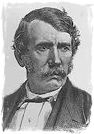
 The visitor in Westminster Abbey, after looking at the royal tombs in the
Chapel of Henry VII, and inspecting with nearer interest the tablets
and monuments of the famous Poets' Corner, may come out into the great
nave of the cathedral, and there, apart from the other famous graves,
but, as it were, nearer to the people and even amid them, in the middle
of the floor he finds the large slab which bears the name of David
Livingstone. Livingstone was certainly not a literary man in the common
meaning, though his works hold an important place in English literature;
he was certainly not a mere geographical explorer, though no name among
the explorers honored by the Royal Geographical Society can compare with
his; and missionaries and directors of missionary work were not quite
sure whether he could stand among them. In 1856 the London Missionary
Society seemed "desirous
of shelving his plans; so he shelved the society." Yet Livingstone,
in 1865, after he had been ten years independent of the missionary
society, declined Sir Roderick Murchison's tempting invitation to be a
mere explorer, and insisted, as he had from the beginning, that ''The
end of the geographical feat is but the beginning of the missionary enterprise." However
others might misunderstand him, in his own mind he was always the missionary
explorer and pioneer; the greatest missionary pioneer he really was
since the Apostle Paul.
The visitor in Westminster Abbey, after looking at the royal tombs in the
Chapel of Henry VII, and inspecting with nearer interest the tablets
and monuments of the famous Poets' Corner, may come out into the great
nave of the cathedral, and there, apart from the other famous graves,
but, as it were, nearer to the people and even amid them, in the middle
of the floor he finds the large slab which bears the name of David
Livingstone. Livingstone was certainly not a literary man in the common
meaning, though his works hold an important place in English literature;
he was certainly not a mere geographical explorer, though no name among
the explorers honored by the Royal Geographical Society can compare with
his; and missionaries and directors of missionary work were not quite
sure whether he could stand among them. In 1856 the London Missionary
Society seemed "desirous
of shelving his plans; so he shelved the society." Yet Livingstone,
in 1865, after he had been ten years independent of the missionary
society, declined Sir Roderick Murchison's tempting invitation to be a
mere explorer, and insisted, as he had from the beginning, that ''The
end of the geographical feat is but the beginning of the missionary enterprise." However
others might misunderstand him, in his own mind he was always the missionary
explorer and pioneer; the greatest missionary pioneer he really was
since the Apostle Paul.
He was born at Blantyre, near Glasgow, Scotland, March 19, 1813, the son of "poor and pious parents," as he himself wrote on their tombstone, giving thanks for their poverty as well as their piety. When nine years old he took a prize for repeating Psalm 119, "with only two errors." When but ten he went to work in a cotton factory, and laid his first half-crown of wages in his mother's lap, and with part of that week's pay bought a Latin grammar. For ten years he studied late at night, and at odd minutes in the mill, and read many of the classics. Till about 1833 he was waiting for some gracious, conscious change to come in his character, but, reading Dick's "Philosophy of a Future State," he was led to accept Christ at once with great joy; and Gutzlaff's "Appeal" led him to give himself to missionary work.
He spent two winters (1836-38) in Glasgow, studying Greek in the University, theology with Rev. Dr. Wardlaw, and medicine in Anderson's College; and was accepted by the London Missionary Society to go to China, and at their instance studied theology for a time with the Rev. Richard Cecil, though poor reports of his preaching capacity nearly caused his rejection by the society.
His going to China was delayed by the opium war; and meeting Robert Moffat, he concluded to go to Africa. He received a medical diploma, and was ordained in November, 1840, and in December sailed for the Cape; and in July, 1841, went to Kuruman, Moffat's station, seven hundred miles north of Cape Town. He spent two years at Kuruman, learning the language and practical missionary methods; and in 1843 established his own first station at Mabotsa, two hundred miles north-east of Kuruman, where he built a house, and took home Mary Moffat as his wife.
His plan was to open up new centers of light among tribes hitherto unevangelized, and raise up native pastors. He had no patience with lingering near the centers of missionary or civilized life. "If you meet me down in the Colony before eight years are expired," he wrote to a friend, "you may shoot me." Near Mabotsa, before his marriage, he had the famous encounter with a lion, which bit through his arm bone. Some one in London asked him what his thoughts were as the lion stood over him; and he answered with grim humor, "I was thinking what part of me he would eat first."
He had built his house to stay at Mabotsa; but a foolish jealousy on the part of a fellow missionary made him give up his home, and found a second station forty miles north, at Chonuane, the capital of the Bakwains. Here he labored three years, and the chief, Sechéle, was baptized; but the people suffered from drought, and their "rain-makers" charged it to the missionary. Livingstone thereupon persuaded the tribe to move westward forty miles to the river Kolobeng, where canals could furnish irrigation. This "beat the rain-makers" for the first year; but later droughts showed the river insufficient, and in 1849, leaving his wife and three children at Kolobeng, he set out in company with two English sportsmen, to find the tribe a healthier home to the north. He discovered Lake 'Ngami, Aug. 1; then returned, and the next April set out to occupy it with his wife and children and the converted chief Sechéle. The children and servants, however, fell ill, and he had to return. A fourth child was born and died ere long; and after fuller preparation he again set out with his family, in April, 1851, for the country of the Makololo, whose king, Sebituane, had been in former years a good friend of Sechéle. This time the journey was successfully accomplished, and Sebituane welcomed them heartily. He soon died; but his daughter, who succeeded him, was equally friendly, and Livingstone continued his explorations, and in June discovered the upper Zambesi.
The Makololo country, however, was not healthful, and the political disorders and strife with the Boers made Kolobeng unsafe; and in 1852 Livingstone took his family to the Cape, and sent them to England, himself returning to the Makololo.
In November, 1853, he set out with a company of natives upon that great exploring tour which led him north-westerly across the watershed of Central Africa, and brought him, in May, 1854, to the Portuguese town of Loanda on the west coast. Here he rested through the summer, and in September following marched eastward, and explored across the continent from ocean to ocean, reaching the mouth of the Zambesi in May, 1856.
He had sent home from Loanda his astronomical observations and his journals to that point and the Royal Geographical Society honored him in May, 1855, "with its gold medal. His careful studies of the watershed on his eastward journey were of equal value. He discovered the great falls of the Zambesi, and the blank, "unexplored region" from Kuruman to Timbuctoo was covered with his accurate and scientific descriptions and maps; and when from Kilimane he sailed to Mauritius, and thence to England, where he arrived in December, 1856, he was the hero of the hour. His journey of eleven thousand miles through unexplored Africa had brought him into national and world-wide distinction.
His meeting with his family was a greater joy than all his fame, though he found his father's chair empty, Neil Livingstone having died while his son was on his homeward journey.
The London Missionary Society gave him distinguished honor, but doubted the entire wisdom of his plans; and he resigned his connection with them. He prepared and published his first volume, "Missionary Travels and Researches in South Africa," which had an immediate popular success, and made him pecuniarily independent. Eminent scientists pronounced it a most valuable contribution to knowledge. It gave a most interesting proof of his personal traits. For example, in describing in the simplest manner an adventure with a buffalo, he says:
"I glanced around, but the only tree on the plain was a hundred yards off, and there was no escape elsewhere. I therefore cocked my rifle with the intention of giving him a steady shot in the forehead when he should come within three or four yards of me. The thought flashed across my mind, 'What if the gun misses fire?' I placed it at my shoulder as he came on at full speed, and that is tremendous. A small bush fifteen yards off made him swerve a little, and exposed his shoulder. I heard the ball crack there as I fell flat on my face. The pain must have made him renounce his purpose, for he bounded close past me to the water, where he was found dead. In expressing my thankfulness to God among my men, they were much offended with themselves for not being present to shield me from this danger. The tree near me was a camel-thorn, and reminded me that we had come back to the land of thorns again, for the country we had left is one of evergreens."
The passage, besides its graphic interest, shows Livingstone's coolness in the moment of danger, his devout thankfulness and habit of speaking of God's kind providences to his men, whom he held in friendly regard, and the keen eye of the naturalist noting even the thorns on the bush in the moment of deadly danger.
But, above all, his book reveals his controlling and devoted purpose of missionary exploration; and more and more the Christian church grows to see the justice of its ideas of missionary work. Especially was it wise in declaring the slave-trade the great "open sore of the world," which, unhealed, must make the Christianization or civilizing of Africa an impossibility.
In February, 1858, he was appointed British consul for Eastern Africa and the interior, and in March sailed in the Zambesi expedition. He explored the Zambesi from its mouth that season, entered its branch, the Shiré, in January, 1859, and discovered Lake Nyassa Sept. 16, 1859. He was joined by the Oxford and Cambridge missionaries early in 1861; explored with them the Rovuma, and later again explored the Shiré. Jan. 30, 1862, Mrs. Livingstone came to join him, arriving in the naval ship Gorgon, which also brought a small steamer, the Lady Nyassa, which, at the cost of six thousand pounds, profits of his book, he had had built for lake use.
Mrs. Livingstone died April 27, and at first he was quite prostrated. Later he again explored the Rovuma and Shiré Rivers, and had begun to build a road around the cataracts of the latter river, when letters were received from England, recalling the expedition as too costly. The recall was in part due to the hostility of the Portuguese authorities, because of his practical interference with the slave-trade.
In need now of money, he sailed his little steamer, the Lady Nyassa, to Bombay, to sell her, making a stormy journey of forty-five days; and from Bombay sailed to England. There he wrote, "The Zambezi and its Tributaries."
In 1865 Sir Roderick Murchison proposed to him to accept a purely geographical appointment, to explore the watersheds of Africa; but Livingstone declined, being unwilling to put the missionary work any but first. This refusal did not prevent his appointment as British consul in Africa, without salary; and he accepted this office, and also a commission from the Geographical Society, under which he went to Bombay and sold the Lady Nyassa for less than half her cost to him, thence sailing to Zanzibar, whence he went to the mouth of the Rovuma. He had already ascertained that this river had no connection with Lake Nyassa, but he ascended it as far as practicable, and reached Lake Nyassa Aug. 8, spending some weeks in exploring the lake; and then, to settle the question of the watershed, he pressed on northward, and reached Lake Tanganyika, April 1, 1867, and demonstrated that it belonged to a system of waters flowing away from the Indian Ocean. Then, pushing west, he came to Casembe in November, discovering Lake Moero, Nov. 8, 1867.
These laborious journeys were most wearing to his health, and he was prostrated by a severe fever in December, and Jan. 1, 1868, wrote in his journal: "Almighty Father, forgive the sins of the past year for thy Son's sake. Help me to be more profitable during this year. If I am to die this year, prepare me for it." This danger of death and these laborious journeys were for no mere explorer's fame. They were the steadfast persistence of his great purpose to accomplish the "geographical feat," which was "but the beginning of the missionary enterprise;" along with which was now his purpose to find and show, north of the Portuguese possessions, and Portuguese official complicity with the slave-trade, an open highway of legitimate commerce, the success of which he was convinced would ever heal "the open sore of the world."
Yet he ever bore with him the fitting influence of a devoted missionary of the cross. In the midst of these geographical explorations, while reaching the conclusion that Lake Bangweolo, discovered July 28, 1868, was one of a chain of lakes extending northward and traversed by the Lualaba, and wondering if that mighty interior river was not the long-sought upper Nile, he makes this note: "As for our general discourse, we mention our relationship to our Father; his love to all his children — the guilt of selling any of his children, the consequence. We mention the Bible, future state, prayers; advise union, that they should unite as one family, to expel enemies, who came first as slave-traders, and ended by leaving the country a wilderness."
Toward the end of 1868 he was again very ill; and at length resolved to go to Ujiji, on the east shore of Lake Tanganyika. The journey was most exhausting. Half-way to Tanganyika he became so ill that he had to be carried on the march — the first time in thirty years. His men too were about worn out. Canoeing on the lake was easier than marching, but taxed them to the utmost. "Patience," he says, "was never more needed than now. I am near Ujiji; but the slaves who paddle are tired, and no wonder; they keep up a roaring song all through their work, night and day. ... Hope to hold out to Ujiji." They arrived there March 14, 1869.
It was July before Livingstone was sufficiently rested and strengthened to set out on what proved his last journey. His immediate object was the exploration of that country west from the northern land of Lake Tanganyika. The country was said to be occupied by cannibals; but beyond them was the Lualaba, and the question whether it flowed northward to the Nile was of intense interest. He found the people drunken with palm-toddy, and obstinately obstructive to him. After a short attempt at canoeing on the Lualaba, his ill-health compelled falling back to Bambarré by the lake. In June, 1870, he made another start, but again had to fall back, and was laid up nearly three months with ulcers on his feet. He says that while in this country he "read the whole Bible through four times." He confessed in his journal: "I have an intense and sore longing to finish and retire, and trust the Almighty may permit me to go home."
Jan. 1, 1871, he was still waiting at Bambarré. There ten men came of a larger number sent from Zanzibar by Dr. Kirk, but bringing only one of the forty letters with which they had been sent, and proving most mutinous, worthless scoundrels when he tried to go westward with them. Nevertheless, he pushed on to the Lualaba, but found it wandering off still westward, apparently with no connection with the Nile. Here, too, he had to witness, with no power to help, the horror and desolation of a slavers' raid, with all its robbery, massacre, and utter desolation. Obliged to return, he came east six hundred miles to Ujiji, to find that there his stores had been stolen, and he was threatened with utter destitution. This was Oct. 23, 1871; and it was in this extremity that he was relieved by the arrival of Henry M. Stanley, of the New York Herald relief expedition, Nov. 10.
In September, 1866, men whom Livingstone had brought from Zanzibar deserted him, and in order to get pay on the arrival there, represented that he had been killed by the natives. The report was discredited, but years without messages made it seem not improbable. The Geographical Society commissioned Mr. Edward D. Young to search for Livingstone, and he proved the utter untrustworthiness of the report. But what truth was hidden in these dark and trackless forests it was left to Stanley to show, after an anxious uncertainty of years. Stanley brought with him abundant equipment; and he and Livingstone together explored the north end of Lake Tanganyika, and found that it had no northern outlet, and so could not be a source of the Nile. Subsequently Stanley was prostrated with fever; and for this and other causes he was with Livingstone till the middle of February, 1872. It belongs to Henry M. Stanley to tell how much of all that is noblest in him has its connection with that heroic missionary whom the New York Herald's enterprise sent him out to rescue.
They went together to Unyanyembe, a great Arab settlement between Ujiji and the east coast. There Stanley handed over the stores he had brought for Livingstone, public gifts, and clothing sent by his daughter; and after they had shaken hands and parted, sent up from the coast a company of trusty natives.
Aug. 25 Livingstone left Unyanyembe, and in six weeks was back at Lake Tanganyika. He rounded the southern point, and pushed south and west for Lake Bangweolo. The rainy season had come; and they were much hindered by the "sponge," and were often knee-deep in water. Fever and dysentery reduced Livingstone, till again he had to be carried on a sort of palanquin. Sometimes he was in great pain, and sometimes faint and drowsy. He kept up his journal; but the entries were shorter and shorter, at last little but the dates. He still questioned the men, where he could not observe for himself, about distant hills and the rivers they crossed. April 27, 1873, he wrote, "Knocked up quite, and remain — recover — sent to buy milch goats. We are on the banks of Molilamo." This was the last entry.
Next day his men lifted him from his bed to a canoe, and crossed the river. They then bore him to the site of the present village of Chitambo, at the southern end of Lake Bangweolo, reaching there with great difficulty, splashing through dreary stretches of water and sponge till the evening of April 29. He was at times utterly faint. Some of them went ahead, and built him a hut, and there they laid him in bed. Next day he was too ill to talk. At night they helped him select some medicine from the chest. Then he said, "All right; you can go." A lad slept in the hut with him, and towards morning called some of the men. They found his candle burning at his bedside, and Livingstone kneeling there as if in prayer, his face in his hands, but he was dead.
When these poor natives found that "the great master," as they called him, was dead, "with a fidelity which is rare in story, and a sense of responsibility almost unknown in benighted Africa," they buried his heart and internal organs under a tree — Livingstone wrote after his wife's death, "I have often wished that [my resting-place] might be in some far-off, still, deep forest, where I may sleep sweetly till the resurrection morn." His body they embalmed, as best they could, by drying; and wrapping it in calico, bark, and canvas, carried it, with all his personal effects, through a hostile country, all the weary way to the coast. It was thence taken to England, and there identified, partly by the arm crushed by the lion's jaw; and was laid to rest in Westminster Abbey.
From Great Missionaries of the Church by Charles Creegan and Josephine Goodnow. New York: Thomas Y. Crowell, ©1895.
>> More David Livingstone