| "O, little kenned my mither, In the day she cradled me, The lands that I should wander o'er, The death that I should dee." |
This stanza from an old Scotch song appears on the title page of Blaikie's "Life of Livingstone;" and surely the words are most fitting. How that good mother's heart would have ached for her child if she had foreseen the life that lay before him — the weary marches over burning sands and through dangerous jungles, the thirst, the fever, the howling beasts, the lonely death! Yet so good a mother would scarcely have held back her son, even if she had forseen all, from a life destined to give the heart of a great continent to the world, and to the people of that continent an opportunity to know and follow Christ.
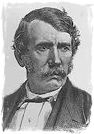 David Livingstone was the child of poor parents who were entirely unable to
give him the education which he craved. At ten years of age we find David
at work in the cotton mills of Blantyre, patiently toiling at his task,
and at the same time pursuing his studies with untiring energy. He fastened
textbooks up over his loom, and, by an occasional glance at the page as
he passed, mastered the studies followed by his more fortunate playmates
who had remained at school.
David Livingstone was the child of poor parents who were entirely unable to
give him the education which he craved. At ten years of age we find David
at work in the cotton mills of Blantyre, patiently toiling at his task,
and at the same time pursuing his studies with untiring energy. He fastened
textbooks up over his loom, and, by an occasional glance at the page as
he passed, mastered the studies followed by his more fortunate playmates
who had remained at school.
His delight in study and the good influences of his home kept him from evil companions and held him up to high ideals. His home was, indeed, a fountain of good. It was the typical home of the pious poor of Scotland — just such a place as Burns describes in the "Cotter's Saturday Night:"
"From scenes like these old Scotia's grandeur springs,
That makes her loved at home, revered abroad;
Princes and lords are but the breath of kings,
'An honest man's the noblest work of God.' "
By the time he had reached the age of twenty-three, Livingstone managed to prepare himself for college. He continued his studies by studying medicine and theology, and in 1838 he was accepted by the London Missionary Society as a candidate for the foreign field. He had set his heart upon becoming a missionary to China, but his plans were interfered with by the opium war. It was a sad disappointment to him when the society decided to send him out to Africa instead; but it was a blessed thing for the Dark Continent, which waited for the gospel.
In December, 1840, Livingstone sailed for Africa. He was much interested in the work of Robert Moffat, and his first temporary location was at Kuruman, a station which had been established by Moffat many years before. He selected a permanent location in the valley of Mabotsa, about two hundred miles northeast of Kuruman, and began to make a settlement. It was at about this time that he was attacked by a lion. In the encounter Livingstone's arm was crushed so seriously that he never again had the perfect use of it. He was wont to say that in this experience his fear of death vanished forever. He had faced death, and knew he had nothing, to fear.
Into the rude house at Mabotsa, which he had built for her with his own hands, Livingstone brought his bride, Mary, the daughter of Robert and Mary Moffat. For several years he lived the life of the ordinary missionary, teaching the gospel to the people, and, like Moffat, training them to habits of honesty and industry. From the first, he understood the natives, and they loved him. To this fact is largely due his success as a missionary explorer. He trusted them, and they, seeing his candor, his kindness, his faith in them, were true to him.
But Livingstone was destined to be more than a missionary in the ordinary sense of that term. He began to push out, to study and map the country and to look for openings for the missionary work of the future. In 1852 his family returned to England to recruit [recover] their health, and he started with a party from Capetown, intending at first to seek a healthful location for a new station. The expedition finally resulted in extensive explorations, by which Livingstone mapped out the river systems of the continent, and discovered the Victoria Falls. It is said that because of this one journey of Livingstone the entire map of Africa had to be reconstructed.
In 1856, after sixteen years in Africa, Livingstone returned to England. Everywhere he was hailed as a hero. Scientists welcomed the man who had added so much to geographical knowledge. Politicians paid honor to him who had opened such large districts to commerce. Christians said, "God bless you!" to the faithful missionary.
Livingstone felt that he was no longer a missionary in the strict sense of the term, so he asked to be released from his relations to the London Missionary Society, and accepted a position under the British government.
In the years which followed, a new purpose took control of Livingstone. As he continued his explorations, he saw that the blackest horror of dark Africa was the slave trade. He determined to put forth every power within him to stop this awful traffic in human lives.
In 1862 a great sorrow befell Livingstone. He had known little of home life for years, as the delicate health of his wife had made it impossible for her to share his hardships. She had recently joined him, however, and they were full of the joy of reunion, when the wife was suddenly stricken and died. The lonely husband buried her under a tree at Shupanga, and sadly took up his journey. He had hoped to keep his sons with him, but the climate told upon their health, and they were compelled to return to England. Henceforth the life of the explorer was spent in a loneliness doubly deep.
Livingstone's expedition was recalled in 1864, and he returned to England. In 1865 he went out again, still determined to oppose the slave trade, and to open Africa to missions and civilization. The journeys which followed were full of perils and hardships. Much of the time he was burning with fever. His supplies were cut off, and he all but perished from starvation. The Arab slave hunters opposed him, for they had learned of his desire to suppress their wretched business. Again and again he was face to face with death, but death had no terror for him.
He had been gone so long without sending back tidings that the people of England and America became alarmed. Mr. Bennett, of the New York Herald, sent Stanley, a newspaper correspondent, to Africa, with directions that he find Livingstone, if such a thing were possible. In 1871 the two explorers met, and almost at once they became close friends. Mr. Stanley was won to Christianity by the devout life of Livingstone, and always after spoke with gratitude of Livingstone's influence over him.
Livingstone lived and worked for two years longer after Stanley left him, and some of his most valuable discoveries were made during this time. But the battle with disease was becoming almost constant, and at length his strong frame gave way. On the morning of May 1, 1873, the African boys who attended him found him on his knees in his tent, dead. No doubt in that last hour he asked God's love and light for darkest Africa.
The hearts of the native boys were all but broken. "The great master is dead," they said. "We must bear his body to the coast, that the white chief may be buried among his own people."
They buried his heart in the land to which his heart had been given in life, and then started upon their strange journey. They bore the body through the land of hostile tribes, and at last reached the coast, whence it was sent to England, and laid, amidst great ceremonies, in Westminster Abbey.
Few men since the days of the apostles have done more for the world than did David Livingstone. Honors came to him, but they never turned him for one moment from the hard path of duty; and to the end he kept the simple faith and the humble heart of a little child.
His spirit is well expressed in the words from his last letter, which are inscribed upon his tomb:
"May heaven's richest blessing come down on every one, English, American or Turk, who will help to heal the open sore of the world."
From Pioneer Missionaries: Short Sketches of the Lives of the Pioneers in Missionary Work in Many Lands by Jessie Brown Pounds. Indianapolis, Ind.: The Young People's Department of the Christian Woman's Board of Missions, 1907.
>> More David Livingstone