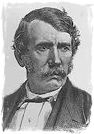
 David Livingstone was born within the humble home of "poor and pious parents" at
Blantyre, near Glasgow, [Scotland], on the 19th March, 1813. At the age
of ten he was put to work in the factory as a piecer, that his earnings
might aid his mother.
David Livingstone was born within the humble home of "poor and pious parents" at
Blantyre, near Glasgow, [Scotland], on the 19th March, 1813. At the age
of ten he was put to work in the factory as a piecer, that his earnings
might aid his mother.
It was in his twentieth year that the great spiritual change took place which determined the course of David Livingstone's future life. Before this time he had earnest thoughts about Eternity. "Great pains," he says, "had been taken by my parents to instill the doctrines of Christianity into my mind, and I had no difficulty in understanding the theory of a free salvation by the atonement of our Saviour; but it was only about this time that I began to feel the necessity and value of a personal application of the provisions of that atonement to my own case." He says that about his twentieth year he began to reflect on his state as a sinner, and became anxious to realize the state of mind that flows from the reception of the truth into the heart. He was hindered, however, from embracing the free offer of mercy in the Gospel, by a sense of unworthiness to receive so great a blessing till a supernatural change should be effected in him by the Holy Spirit. Conceiving it to be his duty to wait for this, he continued expecting a ground of hope within, rejecting meanwhile the only true hope of the sinner, the finished work of Christ, till at length his convictions were effaced and his feelings blunted.
Still his heart was not at rest. Later on God revealed to him his error, and he renounced all hope in himself; and as a bankrupt, beggared sinner he trusted in the power and willingness of Christ to save. To use again his own words: "I saw the duty and inestimable privilege immediately to accept salvation by Christ. Humbly believing that through sovereign mercy and grace I have been enabled so to do, and having felt in some measure its effects on my still depraved and deceitful heart, it is my desire to show my attachment to the cause of Him who died for me by henceforth devoting my life to His service."
On the 8th December, 1840, he took ship for South Africa, and landed at Algoa Bay, proceeded inland to Kuruman, then the most northerly mission station in South Africa. It was not long ere he pushed on into the interior, and wrote: "I had more than ordinary pleasure in telling these Bakaas of the precious Blood that cleanseth from all sin. I bless God that He has conferred on one so worthless the distinguished privilege and honour of being the first messenger of mercy that ever trod these regions."
For over thirty years this marvellous man laboured unweariedly and heroically for the good of the teeming millions of his beloved Africa. Towards the close of his noble life he became greatly reduced by severe illnesses, but still he laboured on. At four in the morning (1st May, 1873), by the candle still burning, they saw him, not in bed, but kneeling at the bedside, with his head buried in his hands upon the pillow. The sad yet not unexpected truth soon became evident; he had passed away on the farthest of all his journeys in the act of prayer, commending his own spirit, with all his dear ones, as was his wont, into the hands of his Saviour; and commending Africa — his own dear Africa — with all her woes, and sins, and wrongs, to the Avenger of the oppressed and the Redeemer of the lost. As Dr. Moffat, the veteran pioneer, said: "Thus Livingstone died, possessing the blessed hope, or rather, the assurance, that living or dying he was the Lord's."
From Twice-Born Men: True Conversion Records of 100 Well-Known Men in All Ranks of Life compiled by Hy. Pickering. London: Pickering & Inglis, [193-?]
>> More David Livingstone