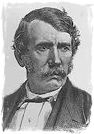
 "God has taken away the greatest man of his generation;" so wrote Florence
Nightingale, the gentlest and best of women, when she heard of the death
of the great missionary explorer. "Of his character," writes a
great statesman (than whom no one had fuller or better opportunities of judging), "it
is difficult for those who knew him intimately to speak without appearance
of exaggeration."
"God has taken away the greatest man of his generation;" so wrote Florence
Nightingale, the gentlest and best of women, when she heard of the death
of the great missionary explorer. "Of his character," writes a
great statesman (than whom no one had fuller or better opportunities of judging), "it
is difficult for those who knew him intimately to speak without appearance
of exaggeration."
A mourning nation has gone a good way towards endorsing these verdicts, and has given his last remains a sepulture amongst her kings. His fame was so world-wide that other countries seemed to understand him even better than his own, and not to love him less. To omit the name of such a man from these brief sketches of missionary heroes would be impossible; and yet the vastness and variety of his work, and the fact that concerning him so much has been written, and so recently, render it a difficult task. We must content ourselves with glancing at the more important features of a life and character which most of our readers have already studied in detail.
Like Duff, he was a Scotchman, and sprang from the ranks of the people. It is well known how at ten years of age he earned his bread, and helped to support the family, as a "piecer" in the cotton works of Blantyre, and how he contrived, during the long day's toil in the factory, to place his book on the spinning-jenny, and to pursue his studies amidst the roar of the machinery. His first week's wages were devoted to the purchase of the "Latin Rudiments," and he spent his evenings, and often a portion of his nights, in acquiring that language. "He could play and rollick," says his father-in-law "like other boys, but with a growing thirst for knowledge." Books of travel and of science were his delight; and when a rare half-holiday came round, he was sure to be off to the quarries to collect geological specimens, or away by the hedgerows to gather herbs and flowers; for he had early formed the opinion that a good herbalist had in his hands the panacea for all bodily diseases.
He was religiously brought up; and he tells us, with that quiet humour which never deserted him, that his last flogging was received for refusing to read Wilberforce's "Practical Christianity." It is plain, however, that the pious example of his parents, in a poor but happy home, was his best instruction, and laid the foundation for that eminently practical Christianity which he so thoroughly understood and so fully exemplified. It was at the age of twenty, however, that the crisis of his spiritual history took place; and he attributes it chiefly to the reading of Dicks' "Philosophy of a Future State." From that time his whole heart was given to God. There is a touching entry in his journal, written upon the last birthday but one of his eventful life, and it reveals at once the motive and the earnestness of his whole career: "My Jesus, my King, my Life, my All, I again dedicate my whole self to Thee."
He had heard of missions from his childhood, and had always been deeply interested in them; but it was an appeal on behalf of China, issued by the famous Dr. Gutzlaff, which inspired him with the desire to become himself a missionary. "The claims of so many millions of his fellow-creatures, and the complaints of the want of qualified men to undertake the task," — these, as he informs us, were the motives which led him, at the age of twenty-one, to the high resolve; and henceforth his "efforts were constantly directed towards that object without any fluctuation." The idea of medical missions was then comparatively new; but Livingstone felt that, more especially in connection with work for God in China, they were indispensable, so he resolved to qualify himself to the utmost; and by saving something out of his summer earnings at the mill, he was able to pay for his medical and Greek classes at Glasgow University during the winter, and at the same time to attend lectures in theology.
"The land of Sinim," however, was not the field which the great Head of the Church had designed for him. Just as Morrison, who had set his heart upon Africa, was led by an all-wise Providence to fill a sphere more suited to him in China, so Livingstone, whose earliest predilections were for China, was led by the same gracious hand to give his life to Africa, and to find there the very position for which both nature and grace had so eminently qualified him. He had offered himself to the London Missionary Society, and was well-nigh rejected on account of his hesitating manner and lack of ready speech. Fortunately for the world, the adverse decision was suspended, and another session brought out his noble character and vast capacities. But his prospect of going to China was interrupted by the Opium War, and just at this juncture a veteran missionary (who would have found a prominent niche in these sketches, only that they are confined to the deeds of departed worthies) appeared upon the scene, and determined the destination of the student. This was Robert Moffat, who, after three-and-twenty years of labour in South Africa, was thrilling the heart of England with the story of his labours and adventures. He fired the soul of his young countryman with a desire to explore and evangelize that mysterious land, with which both of their names will ever be identified. Indeed, it has been well said that if any heroes of modern times might be permitted to adopt the grand old agnomen of "Africanus," Robert Moffat and David Livingstone, who soon became his fellow-labourer and son-in-law, would be the men.
We are indebted to Professor Blackie for a biography of our hero, which gives the world a deeper insight into his inner and social life than could be obtained from his own official journals. These latter are generally marked by that characteristic reticence which caused him to conceal from the public gaze all that was best and noblest in his nature. It is only from his private letters, to his nearest and dearest ones, that we get the full portraiture of a man who was as gentle as he was resolute, and as loving as he was strong. The account of his last evening in the old homestead is touching in its simplicity: "A single night was all that he could spend with his family; and they had so much to speak of, that David proposed they should sit up all night. This, however, his mother would not hear of. 'I remember my father and him,' writes his sister, talking over the prospects of Christian missions. They agreed that the time would come, when rich men and great men would think it an honour to support whole stations of missionaries, instead of spending their money on hounds and horses. On the morning of the 17th November, 1840, we got up at five o'clock. My mother made coffee. David read the 121st and 135th Psalms and prayed. My father and he walked to Glasgow to catch the Liverpool steamer.' On the Broomielaw, father and son looked for the last time on each other's faces. The old man walked slowly back to Blantyre, with a lonely heart no doubt, yet praising God. David's face was now set in earnest toward the dark Continent."
His first nine years in Africa were spent chiefly amongst the Bechuanas, nine hundred miles from Cape Town. Here, with unwearied earnestness, he laboured for the evangelization of these uncivilized and rude barbarians. Here, too, he endeavoured to instruct them in useful arts; and, after the example of mediaeval missionaries, he laboured as a mechanic no less than as a preacher. At Kolobeng we find him helping to make a canal, preparing a garden, and building his fourth house with his own hands. Moffat had taught him how to work in iron and steel, while at the same time he became expert in carpentry and other trades. His devoted wife (Mary Moffat) made the butter, soap, candles, and clothes, instructed her infant-school, and taught the women to sing the hymns which her husband had translated. They had their privations and trials, and often lived "from hand to mouth;" but theirs was in the truest sense a happy life. As he reviews this part of his African career, he finds but one cause of regret, namely, that he did not devote more time to playing with his children; "but," he adds, "I was generally so exhausted by the mental and manual labour of the day that in the evening there was no fun left in me." How touching are the lines which in after years, when he was separated from his family, were ever ringing in his ears,
"I shall look into your faces, and listen to what you say,
And be often very near you when you think I'm far away."
It was during this period he had that famous encounter with the lion, which is known to nearly all who have heard his name; but concerning which he wrote home thus characteristically to his father; "I hope I shall not forget His mercy. ...Do not mention this to any one. I do not like to be talked about." Livingstone's life was saved almost by a miracle, but the left arm, which was crunched by the lion's teeth, was maimed for life, and the fracture entailed much pain and suffering to his latest days. It is well known that it was by the false joint in that broken limb that his body was identified, when brought home to England by his faithful followers; but the interesting fact is not generally known that Mebalwe, who saved his life, was one of the native teachers whom he himself had trained, and that it was a Christian lady in Scotland who contributed the money for this catechist's maintenance. How little did she dream that the twelve pounds, which she had sent to Livingstone for that purpose, would be the means of preserving to Africa for thirty years the life of its greatest benefactor!
The first fruits of Livingstone's missionary labour in this region was the conversion of Sechele, a chieftain of extraordinary energy, who was soon able to read the Bible in his own language, and to conduct his own family worship. Sechele, transformed in feelings, dress, and manners, used all his influence to induce his people to follow his example, but without much success. Livingstone, however, had laid a good foundation, as the results have proved. "That mission," says Dr. Moffat, writing in 1874, "is is the most prosperous, extensive, and influential of all our missions in the Bechuana country."
Livingstone now entered upon the special career which has made his name so famous, namely, that of a missionary explorer. Many considerations led him to the conscientious belief that this was the path peculiarly assigned to him by Providence. The oppressions practiced by the Boers of the Cashan Mountains upon the Bakwains first awakened his attention to the evils of the slave trade, and he longed to see it crushed out by Christianity and lawful traffic. He conceived it to be the duty of the missionary, when he had fully published the Gospel to any people, to press forward and make it known to those who had never heard it. His heart yearned over the countless millions who must be living in the interior of that vast unexplored continent, and who had never yet been visited by the messenger of peace. He felt, moreover, that God had given him peculiar talents for this work, and that it was his duty to employ them in the way most likely to advance the great cause which he had at heart. Writing to a friend at this time, he tells him about "the tsetse, the fever, the north wind, and other African notabilia"; but these and many other interesting points of information are followed up by the significant question, "Who shall penetrate through Africa?"
Livingstone himself was to be the answer to this question; and he offered himself and all that was dearest to him — home, prospects, honours, Christian intercourse — as a willing sacrifice upon the missionary altar. It would be a great mistake to think that the mere love of exploration and adventure, or even the fame that might possibly accrue from them, were sufficient to influence a mind like his. When he had achieved his greatest reputation as a discoverer, he expressed the honest feeling of his heart, in reminding those who had conferred distinctions upon him, that "where the geographical feat ends, there the missionary work begins."
We can only summarize the story of those wonderful journeyings, which revealed to us, for the first time, the teeming populations and boundless resources of Central Africa. Previous to his time the charts of this vast region presented nothing but a blank. To use the quaint words of Dean Swift—
"Geographers in Affic's maps
Put savage beasts to fill up gaps,
And o'er inhabitable downs
Put elephants for want of towns."
What a change, and what a revelation! What bright hopes and prospects for commerce, civilization, and Christianity, have sprung up in that benighted land since the dauntless explorer unlocked the door, and opened it wide to the traveler, the merchant, and the missionary!
The natives had often spoken to him of a lake which they called Ngami; and in June, 1849, he set out, with Messrs. Oswald and Murray, with the hope of discovering it. Skirting by the great Kalahari desert, he pursued his way, and on the 1st of August had the satisfaction of being the first white man to see that now famous lake. Finding that region insalubrious, he undertook (in the year 1850) another expedition. On this occasion he carried his wife and children with him to the Makololo country, where he made what was perhaps the most fruitful of all his discoveries — that of the great river Zambesi, flowing in the very center of the continent, with its majestic reaches and its "smoke-resounding" falls. His eyes gladdened as he gazed upon this unexpected highway for future commerce; for he saw in it a providential aid towards the extinction of that accursed traffic in human flesh and blood, which met him everywhere, and which made his very heart to bleed.
But what was to be the outlet for that commerce, and how was he to obtain the best and shortest route to the coast? These were questions which forced themselves upon his consideration; for the southern Boers had invaded the Bechuana country, pillaged his old settlement at Kolobeng, and broken up the organization which had cost him so many years of labour. His resolution was prompt and decisive. He carried his family back to Capetown (where it was observed that his coat was eleven years behind the fashion) dispatched them to England, and then started on that arduous journey which led him from Linyanti, in the very center of Africa, to Loando St. Paul, on its western shores. He found, however, that that port was too distant, and too difficult for convenient access, and that it was moreover too nearly connected with the slave trade to answer his purpose; so he retraced his steps, and traveled right across the vast continent to the mouths of the Zambesi on the eastern coast.
This perilous journey occupied four years, and never did a body of men voluntarily set out on such a serious undertaking with so spare an outfit. For himself and his twenty-seven black companions the stock of provisions consisted of a few biscuits, a few pounds of tea and sugar, and about twenty pounds of coffee. The supply of clothing was equally scanty, and the money-chest contained only twenty pounds of beads, worth about forty shillings. Three muskets for his people, with a rifle and double-barrelled smoothbore for himself, were all the firearms which the intrepid traveler took with him, although on these and on their ammunition mainly depended their supplies of food. "I had a secret conviction," observes Livingstone, "that if I did not succeed, it would not be for the lack of nicknacks, but from want of 'pluck,' or because a large array of baggage excited the cupidity of the tribes through whose country we wished to pass."
His tact and his fearlessness carried him safely through many a danger amidst hostile tribes, whilst his justice, and his kindliness, and his truth endeared him to his swarthy followers. The latter always spoke of him as their "Father," while many of the former came to regard him as a god. He was ready at any moment to endure any sacrifice, or to brave any danger, if only he could save a life, or soothe a sorrowing heart. A messenger arrived one night, and told how a native had been attacked by a rhinoceros, and ripped open. Livingstone, in order to relieve the wounded sufferer, started immediately, and forced his way for ten miles through tangled brake and thicket, amidst the midnight darkness, despite the risk of a like fate awaiting himself at any moment. Such was his philanthropy; but better and nobler still was that love of souls which led him evermore to make known to all men the message of redeeming love. His simple sermons, his earnest prayers, and his Sunday services marked him everywhere as "the man of God."
In 1856, preceded by the fame of his discoveries, he revisited his native land. The enthusiastic welcome and the triumphal honours that awaited him might well have spoiled a less noble spirit. But if Livingstone had his failings, the love of popularity was not one of them. He was characteristically humble. When a great man once expressed admiration at his wonderful achievements, he simply replied, "They are not wonderful; it was only what any one else could do that had the will." His one thought was for Africa — "Poor, enslaved Africa," as he was wont to say, "when are thy bleeding wounds to be healed?
Wherever he went he tried to deepen the national interest on behalf of his adopted country. To this end he appealed to the Geographical Society with respect to its exploration, and to our leading statesmen with reference to the suppression of its slave trade. He aroused the Universities to its claims upon their intellectual powers, and the Churches to its demands upon their Christian charity. With the same object in view, he sat down and wrote his "Missionary Travels," which was a kind of employment so distasteful to him that he says in the preface, "I would rather cross the African continent again than undertake to write another book!"
He had told his faithful followers in Africa that nothing but death would keep him from returning to them, and he kept his word. In 1858 he started on his second great expedition to explore the Zambesi. On this occasion he went forth under a Government commission, with a regular staff of assistants, and with a small steamer called the Ma Robert, which was Mrs. Livingstone's African name; but this expedition cost him more anxiety and pain than all his previous journeyings. Good Bishop Mackenzie, who had gone out in connection with the Universities' mission, and had joined Livingstone in his explorations, fell a victim to the climate; several other members of the mission shared a like fate; and, saddest of all, Mrs. Livingstone, who had joined her husband, was also taken from his side, 27th April, 1862. They had been only three short months together, after four years' separation. Two days after her death he wrote to Sir Roderick Murchison: "This heavy stroke quite takes the heart out of me. ...I married her for love, and the longer I lived with her I loved her the more. ...I try to bend to the blow as from our heavenly Father. ...I shall do my duty still; but it is with a darkened horizon that I set about it."
This second expedition resulted in the discovery of Lake Shirwa and Lake Nyassa, and tended materially towards the suppression of the slave trade, by revealing its enormities, and the awful destruction of human life which it involved at the hands of the Arab and Portuguese traders. "I sometimes fear," says Livingstone, "that my statements, which are within the truth, may be looked on as exaggerations; but the facts cannot be overstated. We saw three instances of bodies tied to trees, the hands fastened behind to the tree, and a strong thong, round the neck, to the same tree keeps the body in a sitting posture even after death. This is the way in which these vile half-caste Arabs vent their spleen when a slave is no longer able to walk — vexed at losing their money, they secure their death. ...It is quite a relief to get out of the beat of slave-dealers; they glut the market with calico and gunpowder, and send one tribe to plunder and destroy another." It was thus that he gave a voice to the silent agonies of Africa, and made that voice to be heard throughout the civilized world; nor, when he had the opportunity, did he hesitate to take the law into his own hands, and to strike the fetters from the limbs of the bleeding slave.
He had shed his last bitter tears beside Ma Robert's grave, and was about to launch his steamer, the Lady Nyassa, on which he had expended £6,000 of his own money, when, owing to political and financial reasons, the expedition was recalled by our Government. He resolved to sail to India and sell his ship before he returned home. The Portuguese would have bought her, in order to use her as a slaver; "but," writes Livingstone, "I would rather see her go down to the depths of the Indian Ocean than that." His engineer left him, so he had to turn skipper himself, and to navigate his vessel from Zanzibar to Bombay, a distance of 2,500 miles, amidst alternate squalls and calms, with no other aid but that of three Europeans and seven natives, most of whom were disabled by illness during the voyage. But he reached Bombay, where he sold his ship for one-third of what she had cost him, and then sailed for England.
He did not tarry longer amid the luxuries of home than to write his second volume, "The Zambesi and its Tributaries." His heart was in Africa; and when the Geographical Society proposed to him to go out and discover the great watersheds of Central Africa, and settle the long-disputed question of the sources of the Nile, he at once responded to the call; but to his honour be it spoken, that when they wished him to go forth "unshackled by any other occupation," he nobly replied, "I can only feel in the way of duty by working as a missionary." His last public words in his native Scotland will be long remembered as the epitome of his own life: "Fear God and work hard." And so he set forth in 1865 upon his third journey, not without forebodings that it would prove to be his last. "I set out on this journey," he writes, "with a strong presentiment that I should never finish it. The feeling did not interfere with me in reference to my duty; but it made me think a great deal of the future state, and come to the conclusion that possibly the change is not so great as we have usually believed. The appearances of Him who is all in all to us were especially human; and the Prophet whom St. John wanted to worship had work to do, just as we have, and did it."
Taking Bombay in his way, he obtained from the missionary school at Nassik some of those young liberated slaves, whose fidelity to their master, in life and death, have won for them the admiration of the world. Eight of them volunteered for the service; and these were supplemented at Zanzibar by some Johannamen and sepoys; the former were thieves, and the latter proved to be so intolerable that he soon dismissed them. The party dived into the depths of the unknown continent, and were lost to the cognizance of the outer world. Anxious months of expectation passed by, and no tidings concerning them arrived. At length one of the Johannamen arrived at Zanzibar, with circumstantial news that Livingstone had been murdered on the shores of Lake Nyassa. The story was only half credited in England, and the painful suspense was at length relieved in 1868 by letters from the missionary himself, telling how the Johannamen had deserted him, but how he had made the important discoveries of Lake Tanganyka and Lake Bangweolo. On May 30th, 1869, he wrote again from Ujiji; it was the last intelligence received from him up to July 1872, and it told a tale of suffering and illness, but yet of unconquerable resolution. He was without medicine or suitable food; suffering from hemorrhage, and scarcely able to walk from weakness; whilst a war that was raging near him cut off both communication and supplies; but he makes little of his deprivations, and with a touch of his old humour he writes to his daughter Agnes: "I broke my teeth tearing at maize and other hard food, and they are coming out. One front tooth is out, and I have such an awful mouth. If you expect a kiss from me, you must take it through a speaking trumpet"; and again, "the few teeth that remain are out of line, so that my smile is that of a hippopotamus."
After this he pushed on into the Manyuema country, with the determination of examining the Lualaha river, and settling the question of the watershed. All kinds of difficulties surrounded him; massacres and atrocities were of frequent occurrence; most of his followers failed him; the Arab slave-dealers bullied and thwarted him; his feet were lacerated by hard travel, and his strength exhausted by fever and dysentery. On one occasion he narrowly escaped death three times in a single day. Then we find him confined to his hut for eighty days, "harrowed by the wickedness he could not stop, extracting information from the natives, thinking about the fountains of the Nile, trying to do some good among the people, ...and last, not least, studying his Bible, which he read four times over whilst he was in this region." Everything seemed to be against him; no news from home or country came to cheer him; but the brave spirit of patient faith could not be quenched. "All," said he, will turn out right at the last" "I commit myself to the Almighty Disposer of events, and if I fall, will do so doing my duty, like one of His stout-hearted servants."
He returned to Ujiji, the 3rd of October, 1871, "a mere ruckle of bones," to find that his goods had been plundered, and he himself beggared in his absence. Truly he had fallen amongst thieves who had stripped him, and he was half dead; but who was to be the good Samaritan who, three days later, should unexpectedly pour oil and wine into his bleeding wounds? The story of his discovery and relief by Stanley are too well known to be repeated here. Statesmen and scientific societies in England seemed to have passed by on the other side; and to the intrepid young American belongs the honour of having preserved a little longer that invaluable life. Restored to comparative health and energy, Livingstone was entreated by his deliverer to return with him; but, though he had not seen a white man for six years, and yearned after home, he steadfastly refused. His heart was set upon solving the problem of the Nile, not so much, as he again and again assures us, for the sake of the discovery, as from the conviction that it would give weight to his pleadings on behalf of down-trodden and enslaved Africa. His impressions about the sources of the Nile were that they were far higher than any previous traveler had supposed, and in this, though he did not live to know it, he proved to be mistaken; but the great object on which he had set his heart was eventually realized. He had said in his parting lectures at Bombay, "Perhaps God in His providence will arrest the attention of the world to this hideous traffic by some unlooked-for means;" and amongst the last words he wrote were these: "I would forget all my cold, hunger, suffering, and toils, if I could be the means of putting a stop to this cursed traffic."
The end was drawing near, and his death was to be the means of awakening more attention to the subject than his life had ever done; for his last words, now deeply graven upon his tomb, became still more deeply engraven on the nation's heart: "All I can say in my solitude is, may Heaven's rich blessing come down on every one — American, English, Turk — who will help to heal this open sore of the world."
Stanley had left him, and sent up supplies and men from the coast; amongst the latter were some more pupils from the Nassik School. No sooner had they arrived than he set out once more for Tanganyika and Bangweolo. The pathway lay through deep morasses and flooded rivers, and amidst incessant rains. The natives proved unfriendly; hunger frequently assailed the party; his illness returned, and any but an iron frame would have succumbed at once; but he bore up bravely, and, as his journals prove, his faith remained unshaken. "Nothing earthly will make me give up my work in despair. I encourage myself in the Lord my God, and go forward." He pursued his investigations, but at length the strong man was utterly broken down. They had reached Ilala; and as he could go no further, his followers built a hut, and laid him beneath its shade. The next day he lay quiet, and asked a few questions. On the following morning (4th May, 1873), when his boys looked in at dawn, his candle was still burning; and Livingstone was kneeling by the bed, with his face buried in his hands upon the pillow. He was dead! and he had died upon his knees, praying, no doubt, as was his wont, for all he loved, and for that dear land to which he had devoted three-and-thirty years of his laborious life!
And that desolate band of followers whom he left behind, what a marvelous proof they gave of his influence over them, and of their deep attachment to him! They resolved to carry his remains to Zanzibar, and give them up to his countrymen; and so they embalmed the body, and reverently laid his heart, and all that could not be removed, in a Christian grave. Jacob Wainright, one of the Nassik boys, read the burial service, and carved an inscription on the mvula tree that overhung the spot. And then began such a nine months' march as the world had never witnessed, whilst these sons of Ham carried the body of their loved master to the coast; braving all risks; flinging aside all prejudices; at times fighting their way through hostile tribes; at others succeeding in carrying out their plan by stratagem, but never desisting from their labour of love until they gave up their sacred charge into the hands of the English consul. Well might they say as they surrendered their precious burden:
"Where will ye lay the form that enshrined
Daring so glorious and valour so kind?
Where shall be rest for the vigorous hand,
Hush for the brain that made weariness grand?
"Meeter to rest 'mid the tombs of the kings,
Ne'er shall be poet that soars as he sings;
Warrior that stormeth the newly-made breach,
Martyr that suffers, or mind that may teach.
"Lay him to rest where ye will, he is ours!
Strew on his hearse of Eternity's flowers.
Bear him, O ship, from the deserts he trod;
Waft him, O Death, to the garden of God!"
Livingstone had once come upon a native grave, not very far from the place where he himself was destined to die; it was a little rounded mound, with blue beads strewn upon it, and with a little path beside it, plainly showing that it had visitors. "This is the sort of grave," he writes, "I should prefer; to lie in the still, still forest, and no hand ever to disturb my bones; ... but I have nothing to do but wait till He who is over all decides where I have to lay me down and die. Poor Mary lies on Shupanga brae, and 'beeks fornent the sun.'"
But God so ordered it, and the love and admiration of a mighty nation so desired it, that he should lie in a nobler sepulchre. And so the doors of Westminster Abbey were opened for perhaps the most striking funeral that ever crossed its threshold; and as the anthem pealed through the stately aisles, they laid him down to sleep amongst the mighty and the great, and princely hands cast wreaths of flowers upon his coffin, and men of every class and creed bowed down their heads and worshipped; and some were there who, twelve years before, had helped him to lay Ma Robert in her lone and distant grave; and he was there who had found the long-lost missionary, and rescued him from death; and one was there, more moved than all the rest — that swarthy son of Africa, who now helped to bear his pall, but who had nursed him gently in his sickness, and who had laid his loving heart to rest amongst the people for whom he had lived and died.
It was the first time in the history of the nation that a missionary hero was thus honoured. Shall we say that this was so because such men have usually died at their distant posts? or was it rather because we were all too slow at home to recognize their bravery and their worth? Whatever be the reason, one thing is beyond dispute, that no one ever obtained this distinguishing honour at the hands of Englishmen who was better entitled to receive it, and that the whole civilized world has endorsed their tribute of admiration.
There is a well-known journal which is the representative of our national wit and humour; but which, when it condescends to be grave, never fails of being both touching and sublime. Within a border of the deepest mourning it set forth the following lines on the sad occasion; they are worthy of their theme, and form a suitable conclusion to this brief record of a noble life:
"Droop half-mast colours; bow, bareheaded crowds,
As this plain coffin o'er the side is slung,
To pass by woods of masts and ratlined shrouds,
As erst by Afric's trunks, liana-hung.
"'Tis the last mile of many thousands trod
With failing strength, but never-failing will,
By the worn frame, now at its rest with God,
That never rested from its fight with ill.
"Or if the ache of travel and of toil
Would sometimes wring a short, sharp cry of pain
From agony of fever, blain, and boil,
'Twas but to crush it down, and on again!
"He knew not that the trumpet he had blown
Out of the darkness of that dismal land,
Had reached and roused an army of its own
To strike the chains from the slave's fettered hand.
"Now we believe he knows, sees all is well;
How God had stayed his will and shaped his way,
To bring the light to those that darkling dwell
With gains that life's devotion well repay.
"Open the Abbey doors, and bear him in
To sleep with king and statesman, chief and sage,
The Missionary come of weaver-kin,
But great by work that brooks no lower wage.
"He needs no epitaph to guard a name
Which men shall prize while worthy work is known;
He lived and died for good — be this his fame:
Let marble crumble: this is Living-stone.
From Modern Heroes of the Mission Field by W. Pakenham Walsh. New York: Fleming H. Revell, [n.d.]
>> More David Livingstone