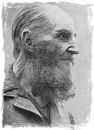
 Charles
T. Studd was born in 1860. In due time Charles was sent to Eton, and very
soon displayed his remarkable cricketing powers. He played for Eton when
in his 16th year; in 1879 he was captain of the team. In 1882 and 1883, "C.T." (as
he was called to distinguish him from his cricketing brothers) scored more
than a thousand runs and captured upwards of a hundred wickets.
Charles
T. Studd was born in 1860. In due time Charles was sent to Eton, and very
soon displayed his remarkable cricketing powers. He played for Eton when
in his 16th year; in 1879 he was captain of the team. In 1882 and 1883, "C.T." (as
he was called to distinguish him from his cricketing brothers) scored more
than a thousand runs and captured upwards of a hundred wickets.
After his father had been converted, he took his three boys to hear Moody, but they were not converted for some time after. He also had revivalist meetings in his house, attracting people for miles round, many being saved. This was wonderful, but his heart yearned for his boys, and at last C.T. was brought to the point by an evangelist staying in his home. The boy, down from Cambridge, dashed out of the door arrayed in flannels, was accosted by the messenger of God. A question — like a well-aimed cricket ball — sent his bails flying: "Are you a Christian, young man?" Young Studd was taken aback. He stammered out that perhaps not in the way his questioner meant, though he had believed in Jesus Christ, "since he was knee high, sir," and believed in the Church too. Charles thought that would settle him. "Look here," was the reply, "God so loved the world, that He gave His only begotten Son, that whosoever believeth in Him should not perish, but have everlasting life" (John 3:16). "You believe Jesus Christ died?" "Yes," "You believe that He died for you?" "Yes." "Do you believe the next part of that verse: 'shall have everlasting life'?" After some hesitation, C.T. said he did not. Yet through the loving words and God-given wisdom of the evangelist, the young man was very soon enabled to thank God for His great gift of everlasting life through faith in His Son.
But he did not tell others of his Saviour, and consequently his spiritual state was very low, and his heart grew very cold towards the Son of God Who loved him, and had given Himself for him. This lasted for six years. Then his brother George fell ill, and as Charles, at his brother's bedside, watched him hovering between life and death, eternal things appeared in their true light. George cared (at that time) for nothing but the Bible and the Lord Jesus Christ, and Charles learnt his lesson. George was restored to health, and Charles resolved to cleave to the Lord. He began by attending the Moody and Sankey meetings held in Cambridge, at which meetings hundreds of the students were saved. He lost his cold reserve now; he tried to persuade his friends to read the Bible, and spoke to them of their souls. He had the joy of leading his dearest friend to Christ— "a joy far exceeding all the earthly joys he had tasted."
Charles read an infidel effusion, in which the writer declared that if he believed, as millions say they do in regard to lost souls, etc., he would go forth into the world and preach, in season and out of season — nothing else should occupy his time — his text would be, "What shall it profit a man, if he shall gain the whole world and lose his own soul?" (Mark 8:36). Charles Studd felt called to give his whole life to seeking the salvation of his fellow-men, so he became one of the famous "Cambridge Seven:" Stanley P. Smith, two Polhill-Turners, W. W. Cassels, D. E. Hoste, Montague Beauchamp, and C. T. Studd. They sailed on Feb. 5, 1885, after meetings in England and Scotland which brought many more students to the Lord, and drew them into His work, some of whom continue to this day.
After many trials, and strenuous service in China, India, and Africa, on the 16th of July, 1931, the veteran missionary passed away after a brief illness, with a glad "Hallelujah" on his lips — straight into the Presence of His Lord.
From Twice-Born Men: True Conversion Records of 100 Well-Known Men in All Ranks of Life compiled by Hy. Pickering. London: Pickering & Inglis, [193-?]
>> More C. T. Studd