First Phase — 1848-1876, Age 1 to 28 — A Scottish Factory Girl
"It was the dream of my girlhood to be a missionary to Calabar."
I. Saved by Fear
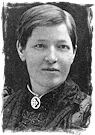 When
the founding of the Calabar Mission on the West Coast of Africa was creating
a stir throughout Scotland, there came into a lowly home in Aberdeen a life
that was to be known far and wide in connection with the enterprise. On December
2, 1848, Mary Mitchell Slessor was born in Gilcomston, a suburb of the city.
When
the founding of the Calabar Mission on the West Coast of Africa was creating
a stir throughout Scotland, there came into a lowly home in Aberdeen a life
that was to be known far and wide in connection with the enterprise. On December
2, 1848, Mary Mitchell Slessor was born in Gilcomston, a suburb of the city.
Her father, Robert Slessor, belonged to Buchan, and was a shoemaker. Her mother, who came from Old Meldrum, was an only child, and had been brought up in a home of refinement and piety. She is described by those who knew her as a sweet-faced woman, patient, gentle, and retiring, with a deeply religious disposition, but without any special feature of character, such as one would have expected to find in the mother of so uncommon a daughter. It was from her, however, that Mary got her soft voice and loving heart.
Mary was the second of seven children. Of her infancy and girlhood little is known. Her own earliest recollections were associated with the name of Calabar. Mrs. Slessor was a member of Belmont Street United Presbyterian Church, and was deeply interested in the adventure going forward in that foreign field. "I had," said Mary, "my missionary enthusiasm for Calabar in particular from her — she knew from its inception all that was to be known of its history." Both she and her elder brother Robert heard much talk of it in the home, and the latter used to announce that he was going to be a missionary when he was a man. So great a career was, of course, out of the reach of girls, but he consoled Mary by promising to take her with him into the pulpit. Often Mary played at keeping school, and it is interesting to note that the imaginary scholars she taught and admonished were always black. Robert did not survive these years, and Mary became the eldest.
Dark days came. Mr. Slessor unhappily drifted into habits of intemperance and lost his situation, and when he suggested removing to Dundee, then coming to the front as an industrial town and promising opportunities for the employment of young people, his wife consented, although it was hard for her to part from old friends and associations. But she hoped that in a strange city, where the past was unknown, her husband might begin life afresh and succeed. The family went south in 1859, and entered on a period of struggle and hardship. The money realized by the sale of the furniture melted away, and the new house was bare and comfortless. Mr. Slessor continued his occupation as a shoemaker, and then became a labourer in one of the mills.
The youngest child, Janie, was born in Dundee. All the family were delicate, and it was not long before Mary was left with only two sisters and a brother — Susan, John, and Janie. Mrs. Slessor's fragility prevented her battling successfully with trial and misfortune, but no children could have been trained with more scrupulous care. "I owe a great debt of gratitude to my sainted mother," said Mary, long afterwards. Especially was she solicitous for their religious well-being. On coming to Dundee she had connected herself with Wishart Church in the east end of the Cowgate, a modest building, above a series of shops near the Port Gate from the parapets of which George Wishart preached during the plague of 1544. Here the children were sent to the regular services — with a drop of perfume on their handkerchiefs and gloves and a peppermint in their pockets for sermon-time — and also attended the Sunday School.
Mary's own recollection of herself at this period was that she was "a wild lassie." She would often go back in thought to these days, and incidents would flash into memory that half amused and half shamed her. Some of her escapades she would describe with whimsical zest, and trivial as they were they served to show that, even then, her native wit and resource were always ready to hand. But very early the Change came. An old widow, living in a room in the back lands, used to watch the children running about the doors, and in her anxiety for their welfare sought to gather some of the girls together and talk to them, young as they were, about the matters that concerned their souls. One afternoon in winter they had come out of the cold and darkness into the glow of her fire, and were sitting listening to her description of the dangers that beset all who neglected salvation.
"Do ye see that fire?" she exclaimed suddenly. "If ye were to put your hand into the lowes it would be gey sair. It would burn ye. But if ye dinna repent and believe on the Lord Jesus Christ your soul will burn in the lowin' bleezin' fire for ever and ever!"
The words went like arrows to Mary's heart; she could not get the vision of eternal torment out of her mind: it banished sleep, and she came to the conclusion that it would be best for her to make her peace with God. She "repented and believed." It was hell-fire that drove her into the Kingdom, she would sometimes say. But once there she found it to be a Kingdom of love and tenderness and mercy, and never throughout her career did she seek to bring any one into it, as she had come, by the process of shock and fear.
II. In the Weaving-Shed
The time came when Mrs. Slessor herself was compelled to enter one of the factories in order to maintain the home, and many of the cares and worries of a household fell upon Mary. But at eleven she, too, was sent out to begin to earn a livelihood. In the textile works of Messrs. Baxter Brothers & Company she became what was known as a half-timer, one who wrought half the day and went to the school in connection with the works the other half. When she was put on full time she attended the school held at night. Shortly afterward she entered Rashiewell factory to learn weaving under the supervision of her mother. After trying the conditions in two other works she returned, about the age of fourteen, to Baxter's, where she soon became an expert and well-paid worker. Her designation was a "weaver" or "factory girl," not a "mill-girl," this term locally being restricted to spinners in the mills. When she handed her first earnings to her mother the latter wept over them, and put them away as too sacred to use. But her wage was indispensable for the support of the home, and eventually she became its chief mainstay.
Life in the great factory in which she was but a unit amongst thousands was hard and monotonous. The hours of the workers were from six A.M. to six P.M., with one hour for breakfast and one for dinner. Mary was stationed in a room or shed, which has very much the same appearance today. Now as then the belts are whirring, the looms are moving, the girls are handling the shuttles, and the air is filled with a din so continuous and intense that speech is well-nigh impossible. Mary had to be up every morning at five o'clock, as she helped in the work of the home before going out, while similar duties claimed her at night. Though naturally bright and refined in disposition she was at this time almost wholly uneducated. From the factory schools she had brought only a meagre knowledge of reading and arithmetic, and she had read little save the books obtained from the library of the Sunday School. But her mind was opening, she was becoming conscious of the outer world and all its interests and wonders, and she was eager to know and understand. In order to study she began to steal time from sleep. She carried a book with her to the mill, and, like David Livingstone at Blantyre, laid it on the loom and glanced at it in her free moments. So anxious was she to learn that she read on her way to and from the factory. It was not a royal road, that thoroughfare of grim streets, but it led her into many a shining region.
Her only source of outside interest was the Church. From the Sunday School she passed into the Bible Class, where her attendance was never perfunctory, for she enjoyed the teaching and extracted all she could out of it. She would carry home the statements that arrested and puzzled her, and refer them to her mother, who, however, did not always find it easy to satisfy her. "Is baptism necessary for salvation, mother?" was one of her questions. "Well," her mother replied, "it says that he that repents and is baptized shall be saved; but it does not say that he that repents and is not baptized shall be damned." Some of her mother's sayings at this time she never forgot. "When one duty jostles another, one is not a duty," she was once told. And again, "Thank God for what you receive: thank God for what you do not receive: thank God for the sins you are delivered from; and thank God for the sins that you know nothing at all about, and are never tempted to commit."
Mary was a favourite with her classmates. There was something about her even then which drew others to her. One, the daughter of an elder, tells how, though much younger, she was attracted to her by her goodness and her kind ways, and how she would often go early to meet her in order to enjoy her company to the class.
III. Misery
The explanation of much in Mary Slessor's character lies in these early years, and she cannot be fully understood unless the unhappy circumstances in her home are taken into account. She was usually reticent regarding her father, but once she wrote and published under her own name what is known to be the story of this painful period of her girlhood. There is no need to reproduce it, but some reference to the facts is necessary if only to show how bravely she battled against hardship and difficulties even then.
The weakness of Mr. Slessor was not cured by the change in his surroundings. All the endearments of his wife and daughter were powerless to save the man whose heart was tender enough when he was sober, but whose moral sensibilities continued to be sapped by his indulgence in drink. Every penny he could lay hands upon was spent in this way, and the mother was often reduced to sore straits to feed and clothe the children. Not infrequently Mary had to perform a duty repugnant to her sensitive nature. She would leave the factory after her long toil, and run home, pick up a parcel which her mother had prepared, and fly like a hunted thing along the shadiest and quietest streets, making many a turning in order to avoid her friends, to the nearest pawnbroker's. Then with sufficient money for the week's requirements she would hurry back with a thankful heart, and answer the mother's anxious, questioning eyes with a glad light in her own. A kiss would be her reward, and she would be sent out to pay the more pressing bills.
There was one night of terror in every week. On Saturday, after the other children were in bed, the mother and daughter sat sewing or knitting in silence through long hours, waiting in sickening apprehension for the sound of uncertain footsteps on the stairs. Now and again they prayed to quieten their hearts. Yet they longed for his coming. When he appeared he would throw into the fire the supper they had stinted themselves to provide for him. Sometimes Mary was forced out into the streets where she wandered in the dark, alone, sobbing out her misery.
All the efforts of wife and daughter were directed towards hiding the skeleton in the house. The fear of exposure before the neighbours, the dread lest Mary's church friends should come to know the secret, made the two sad souls pinch and struggle and suffer with endless patience. None of the other children was aware of the long vigils that were spent. The fact that the family was never disgraced in public was attributed to prayer. The mother prayed, the daughter prayed, ceaselessly, with utter simplicity of belief, and they were never once left stranded or put to shame. Their faith not only saved them from despair, it made them happy in the intervals of their distress. Few brighter or more hopeful families gathered in church from Sunday to Sunday.
Nevertheless these days left their mark upon Mary for life. She was at the plastic age, she was gentle and sensitive and loving, and what she passed through hurt and saddened her spirit. To the end it was the only memory that had power to send a shaft of bitterness across the sweetness of her nature. It added to her shyness and to her reluctance to appear in public and speak, which was afterwards so much commented upon, for always at the back of her mind was the consciousness of that dark and wretched time. The reaction on her character, however, was not all evil; suffering in the innocent has its compensations. It deepened her sympathy and pity for others. It made her the fierce champion of little children, and the refuge of the weak and oppressed. It prepared her also for the task of combating the trade in spirits on the West Coast, and for dealing with the drunken tribes amongst whom she came to dwell. Her experience then was, indeed, the beginning of her training for the work she had to accomplish in the future.
The father died, and the strain was removed, and Mary became the chief support of the home. Those who knew her then state that her life was one long act of self-denial; all her own inclinations and interests were surrendered for the sake of the family, and she was content with bare necessaries so long as they were provided for.
IV. Taming the Roughs
In her church work she continued to find the little distraction from toil which gave life its savour. She began to attend the Sabbath Morning Fellowship and week-night prayer meetings. She also taught a class of "lovable lassies" in the Sabbath School — "I had the impudence of ignorance then in special degree surely" was her mature comment on this — and became a distributor of the Monthly Visitor. Despite the weary hours in the factory, and a long walk to and from the church, she was never absent from any of the services or meetings. "We would as soon have thought of going to the moon as of being absent from a service," she wrote shortly before she died. "And we throve very well on it too. How often, when lying awake at night, my time for thinking, do I go back to those wonderful days!"
She owed much to her association with the Church, but more to her Bible. Once a girl asked her for something to read, and she handed her the Book, saying, "Take that; it has made me a changed lassie." The study of it was less a duty than a joy: it was like reading a message addressed specially to herself, containing news of surpassing personal interest and import. God was very real to her. To think that behind all the strain and struggle and show of the world there was a Personality, not a thought or a dream, not something she could not tell what, in spaces she knew not where, but One who was actual and close to her, overflowing with love and compassion, and ready to listen to her, and to heal and guide and strengthen her — it was marvellous. She wished to know all He had to tell her, in order that she might rule her conduct according to His will. Most of all it was the story of Christ that she pored over and thought about. His Divine majesty, the beauty and grace of His life, the pathos of His death on the Cross, affected her inexpressibly. But it was His love, so strong, so tender, so pitiful, that won her heart and devotion and filled her with a happiness and peace that suffused her inner life like sunshine. In return she loved Him with a love so intense that it was often a pain. She felt that she could not do enough for one who had done so much for her. As the years passed she surrendered herself more and more to His influence, and was ready for any duty she was called upon to do for Him, no matter how humble or exacting it might be. It was this passion of love and gratitude, this abandonment of self, this longing for service, that carried her into her life-work.
Wishart Church stood in the midst of slums. Pends, or arched passages, led from the Cowgate into tall tenements with outside spiral stairs which opened upon a maze of landings and homes. Out of these sunless rookeries tides of young life poured by night and day, and spread over the neighbouring streets in undisciplined freedom. Mary's heart often ached for these boys and girls, whom she loved in spite of all their roughness; and when a mission was determined on, and a room was taken at 6 Queen Street — a small side thoroughfare nearly opposite Quarry Pend, one of the worst of the alleys — she volunteered as a teacher. And so began a second period of stern training which was to serve her well in the years to come. The wilder spirits made sport of the meetings and endeavoured to wreck them. "That little room," she wrote, "was full of romantic experiences." There was danger outside when the staff separated, and she recalled how several of the older men surrounded the "smaller individuals" when they faced the storm. One of these was Mr. J. H. Smith, who became her warm friend and counsellor.
As the mission developed, a shop under the church at the side of Wishart Pend was taken and the meetings transferred to it, she having charge of classes for boys and girls both on Sundays and week-nights. Open-air work was at that time dangerous, but she and a few others attempted it: they were opposed by roughs and pelted with mud. There was one gang that was resolved to break up the mission with which she had come to be identified. One night they closed in about her on the street. The leader carried a leaden weight at the end of a piece of cord, and swung it threateningly round her head. She stood her ground. Nearer and nearer the missile came. It shaved her brow. She never winced. The weight crashed to the ground. "She's game, boys," he exclaimed. To show their appreciation of her spirit they went in a body to the meeting. There her bright eyes, her sympathy, and her firmness shaped them into order and attention...
On the wall of one of her bush houses in West Africa there used to hang a photograph of a man and his wife and family. The man was the lad who had swung the lead. On attaining a good position he had sent her the photograph in grateful remembrance of what had been the turning-point in his life...
Another lad, a bully, used to stand outside the hall with a whip in hand driving the young fellows into "Mary Slessor's meeting," but refusing to go in himself. One day the girl weaver faced him. "If we changed places what would happen?" she asked, and he replied, "I would get this whip across my back." She turned her back. "I'll bear it for you if you'll go in," she said. "Would you really bear that for me?" "Yes, and far more — go on, I mean it." He threw down the whip and followed her in, and gave himself the same day to Christ. Even then she was unconventional in her methods and was criticised for it. She had a passion for the countryside, and often on Saturday afternoons she would take her class of lads away out to the green fields, regardless of social canons.
By and by a new field of work was opened up when a number of progressive minds in the city formed Victoria Street United Presbyterian congregation, not far from her familiar haunts. In connection with the movement a mission service for the young was started on Sunday mornings under the presidency of Mr. James Logie, of Tay Square Church, and to him Mary offered her services as a monitor. Mr. Logie soon noticed the capacity of the young assistant and won her confidence and regard. Like most people she was unconscious at the moment of the unseen forces moulding her life, but she came in after days to realise the wise ordering of this friendship. Mr. Logie became interested in her work and ideals, and sought to promote her interests in every way. She came to trust him implicitly — "He is the best earthly friend I have," she wrote — and he guided her thenceforward in all her money affairs.
She was as successful with the lads at this service as she had been elsewhere. Before the meeting she would flit through the dark passages in the tenements and knock, and rouse them up from sleep, and plead with them to turn out to it. Her influence over them was extraordinary. They adored her and gave her shy allegiance, and the result was seen in changed habits and transformed lives. It was the same in the houses she visited. She went there not as one who was superior to the inmates, but as one of themselves. In the most natural way she would sit down by the fire and nurse a child, or take a cup of tea at the table. Her sympathy, her delicate tact, her cheery counsel won many a woman's heart and braced her for higher endeavour. It was the same in the factory; her influence told on the workers about her; some she strengthened, others she won over to Christ, and these created an atmosphere which was felt throughout the building.
And yet what was she? Only a working girl, plain in appearance and in dress, diffident and self-effacing. "But," says one whom she used to take down as a boy to the mission and place beside her as she taught "she possessed something we could not grasp, something indefinable." It was the glow of the spirit of Christ which lit up her inner life and shone in her face, and which, unknown even to herself, was then and afterwards the source of her distinction and her power.
V. Self-Culture
For fourteen years, and these the freshest and fairest years of her life, she toiled in the factory for ten hours each full day, while she also gave faithful service in the mission. And yet she continued to find time for the sedulous culture of her mind. She was always borrowing books and extracting what was best in them. Not all were profitable. One was The Rise and Progress of Religion in the Soul by Philip Doddridge, a volume much pondered then in Scottish homes. A friend who noticed that she was somewhat cast down said to her, "Why, Mary, what's the matter? You look very glum." "I canna do it," she replied. "Canna do what?" "I canna meditate, and Doddridge says it is necessary for the soul. If I try to meditate my mind just goes a' roads." "Well, never mind meditation," her friend said. "Go and work, for that's what God means us to do," and she followed his advice. Of her introduction to the fields of higher literature we have one reminiscence. Her spirit was so eager, she read so much and so quickly, that a friend sought to test her by lending her Sartor Resartus. She carried it home, and when next he met her he asked quizzically how she had got on with Carlyle. "It is grand!" she replied. "I sat up reading it, and was so interested that I did not know what the time was, until I heard the factory bells calling me to work in the morning!"
There was no restraining her after that. She broadened and deepened in thought and outlook, and gradually acquired the art of expressing herself, both in speech and writing, in language that was deft, lucid, and vigorous. Her style was formed insensibly from her constant reading of the Bible, and had then a grave dignity and balance unlike the more picturesque, if looser, touch of later years. The papers that were read from her at the Fellowship Association were marked by a felicity of phrase as well as an insight and spiritual fervour unusual in a girl. Her alertness of intellect often astonished those who heard her engaged in argument with the agnostics and freethinkers whom she encountered in the course of her visiting. She spoke simply, but with a directness and sincerity that arrested attention. Often asked to address meetings in other parts of Dundee, she shrank from the ordeal. On one occasion a friend went with her, but she could not be persuaded to go on the platform. She sat in the middle of the hall and had a quiet talk on the words, "The common people heard Him gladly." "And," writes her friend, "the common people heard her gladly, and crowded round her and pleaded that she should come again."
VI. A Tragic Land
There was never a time when Mary was not interested in foreign missions. The story of Calabar had impressed her imagination when a child, and all through the years her eyes had been fixed on the great struggle going on between the forces of light and darkness in the sphere of heathenism. The United Presbyterian Church in which she was brought up placed the work abroad in the forefront of its activity; it had missions in India, China, Japan, Calabar, and Kaffraria; and reports of the operations were given month by month in its Missionary Record, and read in practically all the homes of its members. It was pioneer work, and the missionaries were perpetually in the midst of adventure and peril. Their letters and narratives were eagerly looked for; they gave to people who had never travelled visions of strange lands; they brought to them the scent and colour of the Orient and the tropics; and they introduced into the quietude of orderly homes the din of the bazaar and harem and kraal. These men and women in the far outposts became heroic figures to the Church, and whenever they returned on furlough the people thronged to their meetings to see for themselves the actors in such amazing happenings, and to hear from their own lips the story of their difficulties and triumphs.
Mrs. Slessor never missed hearing those who came to Dundee, and once she was so much moved by an address from the Rev. William Anderson as to the needs of Old Calabar that she longed to dedicate her son John to the work. He was a gentle lad, much loved by Mary. Apprenticed to a blacksmith, his health began to fail, and a change of climate became imperative. He emigrated to New Zealand, but died a week after landing. His mother felt the blow to her hopes even more than his death. To Mary the event was a bitter grief, and it turned her thoughts more directly to the foreign field. Could she fill her brother's place? Would it be possible for her ever to become a missionary? The idea floated for a time through her mind, unformed and unconfessed, until it gradually resolved itself into a definite purpose. Sometimes she thought of Kaffraria, with its red-blanketed people, but it was always Calabar to which she came back: it had from the first captivated her imagination, as it for good reason captivated the imagination of the Church.
The founding of the Mission had been a romance. It was not from Scotland that the impulse came but from Jamaica in the West Indies. The slave population of that colony had been brought from the West Coast, and chiefly from the Calabar region, and although ground remorselessly in the mill of plantation life they had never forgotten their old home. When emancipation came and they settled down in freedom under the direction and care of the missionaries their thoughts went over the ocean to their fatherland, and they longed to see it also enjoy the blessings which the Gospel had brought to them. The agents of the Scottish Missionary Society and of the United Secession Church, who, together, formed the Jamaica Presbytery, talked over the matter, and resolved to take action; and eight of their number dedicated themselves for the service if called upon. A society was formed, and a fund was established to which the people contributed liberally. But the officials at home were cold; they deprecated so uncertain a venture in a pestilential climate. The Presbytery, undaunted, persevered with its preparations, and chose the Rev. Hope M. Waddell to be the first agent of the Society.
It is a far cry from Jamaica to Calabar, but a link of communication was provided in a remarkable way. Many years previously a slaver had been wrecked in the neighbourhood of Calabar. The surgeon on board was a young medical man named Ferguson, and he and the crew were treated with kindness by the natives. After a time they were able by another slaver to sail for the West Indies, whence Dr. Ferguson returned home. He became surgeon on a trader between Liverpool and Jamaica, making several voyages, and becoming well known in the colony. Settling down in Liverpool he experienced a spiritual change and became a Christian. He was interested to hear of the movement in Jamaica, and remembering with gratitude the friendliness shown him by the Calabar natives he undertook to find out whether they would accept a mission. This he did through captains of the trading vessels to whom he was hospitable. In 1843 a memorial from the local king and seven chiefs was sent to him, offering ground and a welcome to any missionaries who might care to come. This settled the matter. Mr. Waddell sailed from Jamaica for Scotland to promote and organize the undertaking.
Happily the Secession Church adopted the Calabar scheme, and after securing funds and a ship — one of the first subscriptions, it is interesting to note, was £1000 from Dr. Ferguson — Mr. Waddell, with several assistants sailed in 1846, and after many difficulties, which he conquered with indomitable spirit and patience, founded the Mission. In the following year it was taken over by the United Presbyterian Church, which had been formed by the union of the United Secession and Relief Churches.
In no part of the foreign field were conditions more formidable. Calabar exhibited the worst side of nature and of man. While much of it was beautiful, it was one of the most unhealthy spots in the world — sickness, disease, and swift death attacking the Europeans who ventured there. The natives were considered to be the most degraded of any in Africa. They were, in reality, the slum-dwellers of Negro-land. From time immemorial their race had occupied the equatorial region of the continent, a people without a history, with only a past of confused movement, oppression, and terror. They seem to have been visited by adventurous navigators of galleys before the Christian era, but the world in general knew nothing of them. On the land side they were shut in without hope of expansion. When they endeavoured to move up to the drier Sahara and Soudanese regions they were met and pressed back by the outposts of the higher civilisations of Egypt and Arabia, who preyed upon them, crushed them, enslaved them in vast numbers. And just as the coloured folk of American cities are kept in the low-lying and least desirable localities, and as the humbler classes in European towns find a home in east-end tenements, so all that was weakest and poorest in the Negro race gravitated to the jungle areas and the poisonous swamps of the coast, where, hemmed in by the pathless sea, they existed in unbroken isolation for ages. It was not until the fifteenth century that the explorations of the Portuguese opened up the coast. Then, to the horrors of the internal slave-trade was added the horror of the traffic for the markets of the West Indies and America. Calabar provided the slavers with their richest freight, the lands behind were decimated and desolated, and scenes of tragedy and suffering unspeakable were enacted on land and sea. Yet for 400 years Europeans never penetrated more than a few miles inland. Away in the far interior of the continent great kingdoms were known to exist, but all the vast coastal region was a mystery of rivers, swamps, and forests inhabited by savage Negroes and wild beasts.
It is not surprising that when the missionaries arrived in Calabar they found the natives to have been demoralised and degraded by the long period of lawlessness and rapine through which they had passed. They characterised them in a way that was appalling: many seemed indeed to have difficulty in selecting words expressive enough for their purpose. "Bloody," "savage," "crafty," "cruel," "treacherous," "sensual," "devilish," "thievish," "cannibals," "fetish-worshippers," "murderers," were a few of the epithets applied to them by men accustomed to observe closely and to weigh their words.
Not an attractive people to work almongst. Neither must the dwellers of the earth have appeared to Christ when He looked down from heaven ere He took his place in their midst. And Mary Slessor shrank from nothing which she thought her Master would have done: she rather welcomed the hardest tasks, and considered it an honour and privilege to be given them to do. She was not blind to the conditions at home. Often when at the Mission she realised how great was the need of the slums, with their problems of poverty and irreligion and misery. But the people there were within sight of church spires and within hearing of church bells, and there were many workers as capable as she: whilst down in the slums of Africa there were millions who knew no more of the redemptive power of Christ than did the beasts of the field. She was too intelligent a student of the New Testament not to know that Christ meant His disciples to spread His Gospel throughout the world, and too honest not to realise that the command was laid upon every one who loved Him in spirit and in truth. It was therefore with a quiet and assured mind that she went forward to the realisation of the dream. She told no one: he shrank even from mentioning the matter to her mother, but patiently prepared for the coming change. In the factory she took charge of two 60-inch looms, hard work for a young woman, but she needed the money, and she never thought of toil if her object could be gained.
Early in 1874 the news of the death of Dr. Livingstone stirred the land: it was followed by a wave of missionary enthusiasm; and the call for workers for the dark continent thrilled many a heart. It thrilled Mary Slessor into action. She reviewed the situation. Her sisters were now in good situations, and she saw her way to continue her share in the support of the home. What this loyal determination implied she did not guess then, but it was to have a large share in shaping her life. Broaching the subject to her mother she obtained a glad consent. One or two of her church friends were lukewarm; others, like Mr. Logie and Mr. Smith, encouraged her. The former, who was deeply interested in foreign missions and soon afterwards became a member of the Foreign Mission Committee, promised to look after her affairs during her sojourn abroad.
In May 1875 she offered her services to the Foreign Mission Board. Her heart was set on Calabar, but so eager was she to be accepted that she said she would be willing to go to any other field. Women agents had long been engaged in Calabar. The first, Miss Miller, had gone out with Mr. Waddell in 1849 — she became the "Mammy" Sutherland who did such noble service — and they were playing an ever more important part, and were stated to be both "economical and effective." Requests had just been made for additions to the staff. The application was, therefore, opportune. Her personality, and the accounts given of her character and work, made such an impression on the officials that they reported favourably to the Board, and she was accepted as a teacher for Calabar and told to continue her studies in Dundee. In December it was decided to bring her to Edinburgh, at the expense of the Board, for three months, for special preparation.
The night before she left Dundee, in March 1876, she stood, a tearful figure, at the mouth of the "close" where she lived. "Good-bye," she said to a friend, and then passionately, "Pray for me!"
VII. The Three Mary's
A stranger in Edinburgh, Mary Slessor turned instinctively to Darling's Temperance Hotel, which was then, and is still, looked upon as a home by travellers from all parts of the globe. The Darlings, who were associated with all good work, were then taking part in the revival movement of Messrs. Moody and Sankey, and the two daughters, Bella and Jane, were solo-singers at the meetings. The humble Dundee girl had heard of their powers, and she entered the hotel as if it were a shrine. Feeling very lonely and very shy, she attended the little gathering for worship which is held every evening, and was comforted and strengthened.
She found a lodging in the home of Mr. Robert Martin, a city missionary, connected with Bristo Street congregation, and formed a friendship for his daughter Mary. By her she was taken to visit a companion, Mary Doig, who lived in the south side. The three became intimates, and shortly afterward Miss Slessor went to live with the Doigs, and remained with them during her stay in the city. It was a happy event for her. Warm-hearted and sympathetic, they treated her as one of the family. A daughter who was married, Mrs. M'Crindle, also met her, and a lifelong affection sprang up between the two. In later days it was to Mrs. M'Crindle's house the tired missionary first came on her furloughs.
Though she attended the Normal School in the Canongate, she was not enrolled as a regular student, and her name does not appear on the books; but a memory of her presence lingers like a sweet fragrance, and she appears to have been a power for good. One who was a student with her says: "She had a most gracious and winning personality, and impressed the students by her courage in going to what was called 'the white man's grave.' Her reply to questioners was that Calabar was the post of danger, and was therefore the post of honour. Few would volunteer for service there, hence she wished to go, for it was there the Master needed her. The beauty of her character showed itself in her face, and I have rarely seen one which showed so plainly that the love of God dwelt within. It was always associated in my mind with that of Miss Angelica Fraser; a heavenly radiance seemed to emanate from both."
Her leisure hours were given up to miscellaneous mission work in the city. Mary Doig and Mary Martin were both connected with Bristo Street congregation, and worked in the mission at Cowan's Close, Crosscauseway, and they naturally took Mary Slessor with them. Another intimate friendship was formed with Miss Paxton, a worker in connection with South Gray's Close Mission in the High Street. Miss Paxton was standing at the entrance to the close one Sunday, after a meeting, when Miss Slessor passed up with a Mr. Bishop, who afterwards became the printer at Calabar. Mr. Bishop introduced her. "You want some one to help you?" he said; "you cannot do better than take Miss Slessor." The two were kindred spirits, and Mary was soon at home among Miss Paxton's classes. Her first address to the women stands out clearly in the memory of her friend, and is interesting as indicating her standpoint then and throughout her life. It was on the question, "What shall I do with Jesus?" She told them that Christ was standing before them as surely as He stood before Pilate; and very earnestly she went on, "Dear women, you must do something with Him: you must reject Him or you must accept Him. What are you going to do?" She gave them no vision of hell-fire: she spoke to their reason and judgment, putting the great issue before them as a simple proposition, clear as light, inexorable as logic, and left them to decide for themselves.
Her two companions soon came under her influence. Their culture, piety, and practical gifts seemed to mark them out for missionaries, and as a result of her persuasion they offered themselves to the Foreign Mission Committee of the Church, and were accepted for China. In July the Committee satisfied itself with regard to Miss S lessor's proficiency, and decided to send her out at once to Calabar. Her salary was fixed at £60. Before sailing for their different stations the three Marys, as they came to be known, attended many meetings together, and were a source of interest to the Church.
Miss Slessor was now twenty-eight years of age, a type of nature peculiarly characteristic of Scotland, the result of its godly motherhood, the severe discipline of its social conditions, its stern toil, its warm church life, its missionary enthusiasm. Mature in mind and body, she retained the freshness of girlhood, was vivacious and sympathetic, and, while aglow with spirituality, was very human and likable, with a heart as tender and wistful as a child's. What specially distinguished her, says one who knew her well, were her humility and the width and depth of her love. With diffidence, but in high hope, she went forward to weave the pattern of her service in the Mission Field...
She sailed on August 5, 1876. Two Dundee companions went with her to Liverpool. At the docks they saw going on board the steamer Ethiopia, by which she was to travel, a large number of casks of spirits for the West Coast. "Scores of casks!" she exclaimed ruefully, "and only one missionary!"
From Mary Slessor of Calabar: Pioneer Missionary by W.P. Livingstone. 8th ed. New York: George H. Drona Co., [1917?].
>> More Mary Slessor