 It was New Year's Day, 1861, on the island of Tanna, in the New Hebrides.
The missionaries had spent the day taking medicine, food, and water to the
villagers, hundreds of whom were smitten down with a virulent type of measles.
Most of those who took the medicine and followed instructions recovered,
but vast numbers preferred to try their own experiments. Scores of them,
tormented by the burning fever, plunged into the sea seeking relief and found
it in almost instant death. Others dug holes in the earth, the length of
the body and several feet deep, and lay therein, the cool earth feeling pleasant
to their fevered bodies. In this futile effort hundreds of them died, literally
in their own graves, and were buried where they lay.
It was New Year's Day, 1861, on the island of Tanna, in the New Hebrides.
The missionaries had spent the day taking medicine, food, and water to the
villagers, hundreds of whom were smitten down with a virulent type of measles.
Most of those who took the medicine and followed instructions recovered,
but vast numbers preferred to try their own experiments. Scores of them,
tormented by the burning fever, plunged into the sea seeking relief and found
it in almost instant death. Others dug holes in the earth, the length of
the body and several feet deep, and lay therein, the cool earth feeling pleasant
to their fevered bodies. In this futile effort hundreds of them died, literally
in their own graves, and were buried where they lay.
In the evening, the missionaries knelt in the mission house in a fervent prayer of consecration of their all to Christ and of petition for the salvation of the cannibals among whom they lived. They solemnly committed themselves to the protecting presence of their Lord, not knowing that even then the house was surrounded by fierce savages, armed with clubs, killing-stones and muskets, determined to slay and eat the foreigners whose God, they believed, had brought disease, hurricanes, and other troubles upon them.
After the worship, the younger missionary stepped out of the door to go to his own house close by. Instantly he was attacked and fell to the ground screaming, "Look out! They are trying to kill us!" Rushing to the door the older missionary shouted to the savages, "Jehovah God sees you and will punish you for trying to murder His servants." Two black men swung their ponderous clubs and struck at him, but missed, whereupon the entire company fled into the bush.
The younger white man was in such a state of excitement that for days he was unable to sleep. In fact, his nervous system was unhinged by the shock of the attack, his mind gave way under the apprehension of being killed and eaten by savages, and in three weeks he died. The older missionary had already survived many such attacks on his life and was destined to survive many more. John G. Paton — for such was his name — found in the presence of his Lord the antidote to fear and the assurance that his life was immortal until his work was accomplished. "During the crisis," he says in his Autobiography, "I felt calm and firm of soul, standing erect and with my whole weight on the promise, 'Lo, I am with you alway.' Precious promise! How often I adore Jesus for it and rejoice in it! Blessed be His name."
The precious promise!
The secret of a calm Soul!
The secret of a joyous heart!
The promise to stand on!
The promise to lean one's whole weight upon!
"Lo, I am with you all the way."
Matthew 28:20 was the text that sang its way through all the changing scenes, manifold trials, and monumental accomplishments of the life of John G. Paton. This was the text of which David Livingstone said: "It is the word of a Gentleman of Honor and there is an end of it!" This is a history-making text, because it speaks of a wonder-working, never-failing Presence.
John G. Paton's Text Speaks of a Transfiguring Presence
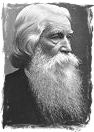
John G. Paton was born in a farm cottage not far from Dumfries, Scotland, May 24,1824. He was the eldest of eleven children. After some snatches of elementary education, he set out to learn the trade of his father — the manufacture of stockings. For fourteen hours a day he manipulated one of the six "stocking frames" in his father's workshop, using for study most of the two hours allotted each day for the eating of his meals.
John first learned the sweetness and the wonder of Matthew 28:20 amid the simplicities and sanctities of his humble Scottish home. In a passage of extraordinary beauty, he has pictured his father, James Paton, as a man of singular piety, going three times a day into "the prayer closet" and coming forth with shining face as of one who had been on the Mount of Transfiguration. "The outside world might not know," he states, "but we children knew whence came that happy light that was always dawning on my father's face: it was a reflection of the Divine Presence, in the consciousness of which he lived."
Writing sixty years later the son pays this eloquent tribute to the power of his father's prayers:
"Never, in temple or cathedral, on mountain or in glen, can I hope to feel that the Lord God is more near, more visibly walking and talking with men, than under that humble cottage roof of thatch and oaken wattles. Though everything else in religion were by some unthinkable catastrophe to be swept out of memory, or blotted from my understanding, my soul would wander back to those early scenes, and shut itself up once again in that Sanctuary Closet, and, hearing still the echoes of those cries to God, would hurl back all doubt with the victorious appeal. 'He walked with God, why may not I?'"
This man of prayer deemed himself to be the family high priest, whose chief business it was to live in the Shekinah and to lead his children into the transfiguring reality of the Divine Presence. That the Paton children entered fully into this holy heritage is indicated by the words of John:
"When on his knees and all of us kneeling around him in family worship, he poured out his whole soul with tears for the conversion of the heathen world to the service of Jesus, and for every personal and domestic need, we all felt that we were in the presence of the living Saviour, and learned to know and love Him as our Divine Friend. As we rose from our knees, I used to look at the light on my Father's face and wish I were like him in spirit."
The light on the father's face: the transfigured look!
To know and love Him: the transfigured life!
The presence of the living Saviour: the transfiguring Lord!
It was not some minister or evangelist or Sunday School teacher, but his own father who led John G. Paton into the redeeming, transfiguring Presence. Having seen the text incarnated in the imposing grandeur of his father's character and having tasted for himself its surpassing delights, he launched out upon a career that tested to its utmost the validity of the promise, "Lo, I am with you," and opened to his wondering gaze the sublimities of Matthew 28:20.
The Text Speaks of the Guiding Presence
As a youth John heard the voice of his Lord saying, "Go across the seas as the messenger of My love; and lo, I am with you." Christ was leading him into a wider sphere of work and training, and he was determined to follow. It was hard to leave the happy home, but at length the day of separation arrived. It was about forty miles to Kilmarnock, where he would take a train to Glasgow. The journey to Kilmarnock had to be taken on foot, because he could not afford to travel by stagecoach. All his possessions were tied up in a large handkerchief, but he did not think of himself as poverty-stricken, for he had with him his Bible and his Lord.
His father walked with him the first six miles. The old man's "counsels and tears and heavenly conversation on that parting journey" were never forgotten by the son. At length they both lapsed into silence. The father carried his hat in his hand and his long yellow locks fell over his shoulders, while hot tears flowed freely and silent prayers ascended. Having reached the appointed parting place, they clasped hands and the father said with deep emotion, "God bless you, my son! Your father's God prosper you and keep you from all evil!" Unable to say more, his lips kept moving in silent prayer; in tears they embraced and parted.
Continuing down the road past a curve, John climbed the dyke for a last look and saw that his father had also climbed the dyke, hoping for one more glimpse of his boy. The old patriarch looked in vain, for his eyes were dim, then climbed down and started for home, his head still bared and his heart offering up fervent supplications. "I watched through blinding tears," says the son in his Autobiography, "till his form faded from my gaze; and then, hastening on my way, vowed deeply and oft, by the help of God, to live and act so as never to grieve or dishonor such a father and mother as He had given me." In times of sore temptation in the years that followed, the father's form rose before John's eyes and served as a guardian angel.
During the ensuing years he was very busy distributing tracts, teaching school, and laboring as a city missionary in a degraded section of Glasgow. He realized that an ocean voyage would not, as by magic, turn him into a missionary, and that to be a missionary means, above all else, to be a soul-winner, hence he was constantly seeking to win the lost around him. One of those whose salvation he sought was a doctor, who was a drunkard and an infidel. After gaining the doctor's friendship, he asked him one day to kneel down and pray. The doctor replied, "I curse, I cannot pray. Let me stand and I will curse God to His face." The wicked infidel was eventually converted and lived a radiant Christian life.
While pursuing his theological and medical studies, young Paton kept hearing the wail of the perishing heathen in the South Seas. For two years the church of which he was a member, the Reformed Presbyterian Church of Scotland, had been advertising for a missionary to go to the New Hebrides to join the Rev. John Inglis in his work in that benighted area. When Paton offered himself for this service, Dr. Bates, secretary of the Heathen Missions Committee, cried for joy.
Almost everyone thought it was very foolish for a promising young man to go to live among the cruel and uncivilized natives of the islands of the South Pacific. One old man exclaimed, "The cannibals! You will be eaten by cannibals!"
"Mr. Dixon," replied the young missionary appointee, "you are advanced in years now and your own prospect is soon to be laid in the grave, there to be eaten by worms. I confess to you that if I can but live and die serving and honoring the Lord Jesus, it will make no difference to me whether my body is eaten by cannibals or by worms."
On the sixteenth of April, 1858, John G. Paton, accompanied by his wife and by Mr. Joseph Copeland, said farewell to bonnie Scotland and set sail for the South Pacific. In his heart a song kept singing and the oft-repeated refrain was, "Lo, I am with you all the way."
I committed my future to the Lord God of my father," he says, "assured that in my very heart I was anxious to serve Him and to follow the blessed Saviour."
The Text Speaks of the Empowering Presence
After stopping at the island of Aneityum, where missionary effort had already gained signal success, the young Scotchman and his wife landed on Tanna, November 5, 1858, and proceeded to build a small house at Port Resolution. It was in those days purely a cannibal island and the white man's faith in his text was soon severely tried. He and Mrs. Paton were surrounded by painted savages, enveloped in the superstitions and cruelties of heathenism at its worst. The men and children went about in a state of nudity while the women wore abbreviated grass or leaf aprons. Soon after landing they saw scores of armed men rushing by in great excitement, with feathers in their twisted hair and their faces painted in the most grotesque manner. The discharge of muskets in the bush near by and the horrible yells of the savages soon made it clear that they were engaged in deadly, bloody fighting. The next day the missionaries were informed that five men had been killed, cooked, and eaten by the victorious party. That evening the stillness was broken by a wild, wailing cry, long-continued and unearthly. Paton was told that one of the wounded men, home from the recent battle, had just died, and that they had strangled his widow so that her spirit might accompany him to the next world and be his servant there, as she had been in this world. The lot of woman in the New Hebrides was truly deplorable. She was merely man's down-trodden slave. She did all the hard work, while he considered fighting to be his chief business. If she offended him in any way, he would beat her as much as he liked and no one thought of interfering. There was little sense of family affection, hence the aged who could not work were starved to death or violently destroyed.
The Tannese had hosts of stone idols and sacred charms, of which they stood in abject fear. Indeed, their worship was altogether a service of fear, its aim being to propitiate some evil spirit, to prevent calamity or to secure revenge on some enemy. They also offered frequent gifts to their sacred men, wizards, and witches, who were believed able to remove sickness or to cause it by means of Nahak or incantation.
In a fight one day seven men were killed, their widows were strangled, and all were cooked and feasted upon by the warriors and their friends. When the chief Nouka became seriously ill, three women were sacrificed for his recovery.
His heart filled with both horror and pity, and driven almost to despair, Paton writes: "Had I given up my much-beloved work, and my dear people in Glasgow, with so many delightful associations, to consecrate my life to these degraded creatures? Was it possible to teach them right and wrong, to Christianize or even to civilize them?" He was soon reminded, however, that he had not undertaken this work on his own account and that he had at his disposal resources that were equal even to so staggering a task. "We were conscious," he says, "that our Lord Jesus was near us and that through Him we were made strong for any assignment which He had given or might give."
Thus empowered and emboldened, he began to tell the natives plainly of their wickedness, to point them to the Lamb of God who is able to save from sin and in every possible way to show them the contrast between their depravities and the Christian way of living. Whenever two parties were about to engage in war, he would run in between them and call upon them to desist. How was he enabled to face such perils amid savages frenzied by hate and shrieking for blood? Let him answer in his own words: "My faith enabled me to grasp and realize the promise, 'Lo, I am with you alway.' In Jesus I felt invulnerable. These were the moments when I felt my Saviour to be most truly and sensibly near, inspiring and empowering me."
The enabling faith!
The invulnerable support!
The sure promise!
The empowering Presence!
"Lo, I am with you alway, even unto the end."
One morning at daybreak Paton went out to find his house surrounded by armed men, muttering fiercely that they had come to kill him at once. Being inveterate speech-makers, however, the Tannese desisted in their design until a chief had made the following speech: "Missi, we love the ways and practices of our fathers, which you and other missionaries oppose. We killed the last foreigner that lived in Tanna before you came here. We murdered the Aneityumese teachers and burned down their houses. Now we are determined to kill you, because you are changing our customs and we hate the Jehovah worship."
"Seeing that I was entirely in their hands," says Paton, "I knelt down and gave myself away body and soul to the Lord Jesus, for what seemed the last time on earth." The savages grew strangely quiet, listening as he, upon rising, told of the Saviour's great love, and then departed, muttering that he would yet be killed if he did not leave the island at once.
Several days later, while a large number of natives were assembled, a man rushed furiously on Paton with his axe and attempted to take his life. The next day a fierce-looking chief followed him around for four hours, frequently pointing his loaded musket at him as if to shoot. While silent prayer ascended, the missionary went quietly on with his work. What was the secret of such a gallant spirit? It was the text and the Presence! He tells us:
"Life in such circumstances led me to cling very near to the Lord Jesus. With my trembling hand clasped in the hand once nailed on Calvary, and now swaying the scepter of the universe, calmness and peace abode in my soul. Trials and hairbreadth escapes strengthened my faith and seemed only to nerve me for more to follow. Without that abiding consciousness of the presence and power of my dear Lord and Saviour, nothing else in all the world could have preserved me from losing my reason and perishing miserably. His words, 'Lo, I am with you alway, even unto the end of the world,' became very real to me and I felt His supporting power. I had my nearest and dearest glimpses of the face and smile of my blessed Lord in those dread moments when musket, club, or spear was being leveled at my life."
Thus, through fiery trials, the missionary was learning the divine dependability and power of those golden words, "Lo, I am with you all the way."
The Text Speaks of the Consoling Presence
In the midst of so many fearful and hazardous experiences, Paton seemed lonely enough, but the most desolating sorrow of all was yet to come. When he and Mrs. Paton landed on Tanna, both were healthy and full of enthusiasm, as they anticipated a happy life together seeking the salvation of their depraved fellow-beings. Three months later a son was born to them, and their island-exile thrilled with joy. But the ecstasy soon faded. Tropical fever did its deadly work, and the grief-stricken missionary had to dig with his own hands a grave for his young wife and his baby boy. "Let those," he says, "who have ever passed through similar darkness, as of midnight, feel for me. I was stunned, and my reason seemed almost to give way. I built a wall of coral round the grave and covered the top with beautiful white coral, broken small as gravel; that spot be came my sacred and much-frequented shrine during all the years that, amidst difficulties, dangers, and deaths, I labored for the salvation of these savage islanders."
Two of the noblest knights of the Cross — David Livingstone and John G. Paton — had much in common. Both were from Scotland. Both went out as missionaries. Both faced innumerable deaths and endured indescribable hardships in pursuance of their mission. Each had for his wife a girl named Mary and buried her, with his own hands, in a foreign grave. And both found their strength and consolation in the same sublime text — Matthew 28:20.
"Leave me not, my Lord, in this my hour of anguish," cried Livingstone beside the new-made grave under the Baobab tree at Shupanga.
"I was never altogether forsaken," says Paton of his Gethsemane. "The ever-merciful Lord sustained me to lay the precious dust of my loved ones in the same quiet grave. But for Jesus, and the fellowship He vouchsafed me there, I must have gone mad and died beside that lonely grave!" A few weeks afterwards, George Augustus Selwyn, pioneer Bishop of New Zealand, and James Coleridge Patteson, later the martyr bishop of Melanesia, paid a chance visit to the island. There ensued a scene which must have caused tears in heaven as well as on earth. "Standing with me beside the grave of mother and child," says Paton, "I weeping aloud on his right hand, and Patteson sobbing silently on his left, the good Bishop Selwyn poured out his heart to God amidst sobs and tears, during which he laid his hands on my head and invoked heaven's richest consolation and blessing on me and my trying labors."
"Never altogether forsaken!" — The unfailing
Presence.
"The Lord sustained me!" — The upholding Presence.
"But for Jesus, I must have gone mad!" — The empowering
Presence.
"Heaven's richest consolation!" — The consoling Presence.
"Lo, I am with you all the way, even unto the end of the
world."
In his utmost extremity, the missionary leaned his whole weight on the text, and the consolations of heaven attended his way.
Despite the gnawing pain in his heart and the discouragement all around, Paton continued his labors, declaring the riches of love in Christ as he went from village to village. He also turned his attention to printing and translation, after reducing the language to written form. He had a small printing press and a font of type with him, and so when he had translated a portion of the New Testament in Tannese, he began the laborious work of setting the type. Finally, the first sheet came from the press — the first chapter of God's Word ever printed in Tannese! Although it was one o'clock in the morning, he shouted for joy.
In the year 1862 a new crisis arose. Hundreds of frenzied natives vowed the death of the missionary without delay. Nowar, a friendly chief, urged him to flee into the bush under cover of darkness and hide there in the leafy boughs of a large chestnut tree. From this shelter he saw and heard the black men beating the bushes in frantic search of him. Concerning the exciting and terrifying experiences of that night, Paton writes: "I heard the frequent discharging of muskets and the yells of the savages. Yet I sat there on one of the branches, safe in the arms of Jesus! Never, in all my sorrows, did my Lord draw nearer to me and speak more soothingly to my soul. Alone, yet not alone! Had I been a stranger to Jesus and to prayer, my reason would verily have given way, but my comfort and joy sprang from the promise, 'Lo, I am with you alway.'"
Paton concludes his account of this memorable incident by asking a question which every heart should ponder in utmost seriousness: "If thus thrown back upon your own soul, alone, all, all alone, in the midnight, in the bush, in the very embrace of death itself, have you a Friend who will not fail you then?"
John G. Paton had such a Friend and in His Presence there was consolation as abounding as his need.
The Text Speaks of the Reassuring Presence
As indicated earlier, the savages of Aneityum had accepted Christianity with alacrity and sincerity. Indeed, many of them had gone forth to other islands and suffered much for Christ's sake and the gospel's — even martyrdom, in a number of instances. Several of the Aneityumese Christians were helping Paton in his efforts to evangelize the Tannese.
One day he received information that he and his Aneityumese teachers were destined to be the victims of a feast which the natives were planning. They looked out of the window and saw a band of armed killers approaching. Knowing that they were cut off from all human hope, they turned to prayer. For many hours they heard the savages tramping around the house, threatening to break in or set the place on fire. As they prayed, their hearts were quieted with the assurance that He who was for them was greater than all their foes. Says Paton: "Our safety lay in our appeal to the blessed Lord who had placed us there, to whom all power had been given in heaven and on earth. This is strength, this is peace -- to have sweet communion with Him. I can wish my readers nothing more precious than that."
The indomitable herald of the Cross was thinking of Matthew 28:18-20 and the reassuring Presence it vouchsafed to him: "All power is given unto me in heaven and in earth. Go, therefore ... and lo, I am with you."
The Hand that reassured the missionary restrained the enemy, and at length the killers departed without accomplishing their design.
Paton kept several goats as a source of milk supply. One day he heard an unusual bleating among the goats, as if they were being killed or tortured. He rushed to the goathouse. Instantly a band of armed men sprang from the bush, surrounded him and raised their clubs. He had fallen into their trap! "You have escaped from us many times," they said, "but now we are going to kill you!" Lifting his hands and eyes toward heaven, Paton committed his cause to the Lord whose servant he was. As he prayed, the Divine Presence overshadowed him, his heart was filled with a tender reassurance and the cannibals slipped away one after another. "Thus," affirms the missionary, "Jesus restrained them once again. His promise is a reality; He is with His servants, to support and bless them, even unto the end of the world!"
The promise that was ever on his lips!
The Presence that was ever in his heart!
The promise that held him! The Presence that reassured him!
"Lo, I am with you all the way!"
The Text Speaks of the Protecting Presence
On one occasion when Paton was preaching in one of the villages, three sacred men stood up and declared that they could kill him by Nahak or sorcery, if only they could get possession of any piece of fruit or food of which he had eaten. Being thus challenged, he resolved, with his Lord's help, to strike a blow at the tremendous power for evil wielded by the sorcerers. After taking a bite out of three plums, he handed one of them to each of the sacred men. The natives were astounded at his action and momentarily expected to see him fall over dead, as the sorcerers proceeded with their incantations. With many gesticulations and mutterings, they rolled up in leaves the three plums, kindled a sacred fire and burned them. "Stir up your gods to help you," urged Paton. "I am not killed. In fact I am perfectly well."
At length the sorcerers said that they would call all the sacred men together and that they would kill Missi before the next Sabbath arrived. Paton told the people he would meet them at that same place the next Sabbath morning. Great excitement prevailed on the island. Every day messengers came from different quarters inquiring if the white man was ill. Sabbath morning he appeared before the people in sound health and said: "Now you must admit that your gods have no power over me and that I am protected by the true and living God. He is the only God who can hear and answer prayer. He loves all human beings, despite their great wickedness, and He sent His dear Son, Jesus, to save from sin all who will believe and follow Him." From that day two of the sacred men were very friendly but the others were his bitter enemies and incited the natives to new animosity.
About this time a bloody scene was enacted on the island of Erromanga. In the year 1839 John Williams and his young associate Harris were clubbed to death and eaten by the Erromangans. But in time other courageous missionaries took their places. Now, after four years of devoted service, Mr. and Mrs. Gordon were beaten and murdered.
When the Tannese heard of this horrible deed, they shouted to one another: "Our love to the Erromangans! They are brave men. They have killed their Missi and his wife while we only talk about it."
Due to the frequent attacks upon their lives and the murder of one of their number, all the Aneiyumese teachers, except Abraham, returned to their own island. This dear fellow, formerly a blood-thirsty savage, was a true hero of the Cross. In the face of imminent death he determined to stay with the missionary at the post of duty and of danger. As hundreds of furious cannibals shouted for their death, the two knelt in prayer. "O Lord," prayed Abraham, "make us two strong for Thee and Thy cause, and if they kill us, let us die together in Thy good work, like Thy servants, Missi Gordon the man and Missi Gordon the woman."
The savages encircled them in a deadly ring and kept urging each other to strike the first blow or fire the first shot. Presently a killing-stone, thrown with great force, grazed Abraham's cheek. The dear old saint turned his gaze heavenward and said, "Missi, I was nearly away to Jesus."
"In that awful hour," writes Paton, "I saw Christ's own words, as if carved in letters of fire upon the clouds of heaven: 'Whatsoever ye shall ask in My name, that will I do, that the Father may be glorified in the Son.'" As he stood praying, he saw the Lord Jesus hovering close by, watching the scene, and an assurance came to him, as if a voice from heaven had spoken, that not a musket would be fired, not a club would strike, not a spear leave the hand in which it was held vibrating to be thrown, not an arrow leave the bow, or a killing-stone the fingers, without the permission of Jesus Christ, who rules all nature and restrains even the savages of the South Seas. How were the savages prevented from carrying out their murderous design? It was a miracle, emanating from the protecting presence of his Lord. "If any reader wonders how they were restrained," says he, "much more would I, unless I believed that the same Hand that restrained the lions from touching Daniel held back these savages from hurting me."
In closing the account of this remarkable episode, he comes back for the thousandth time to the text that sang and sobbed and shouted its way through all his days. He writes: "I was never left without hearing the promise in all its consoling and supporting power coming up through the darkness and the anguish, 'Lo, I am with you alway.'"
The text that supported him!
The promise that consoled him!
The Presence that protected him!
"Lo, I am with you alway!"
The Text Speaks of the Delivering Presence
On several occasions ships called at Port Resolution and the missionary was urged to sail away to safety. In each instance he declined, hoping that he might yet win the Tannese for Christ. But, finally, when the mission house was broken into and everything he had was either stolen or destroyed, he realized that to stay longer meant the direst of fates — namely, to be killed and eaten by the cannibals or else to die from slow starvation. Having decided to leave Tanna for a season, he made his way across the island, amid indescribable hardships and countless perils, to the mission station occupied by Mr. and Mrs. Mathieson.
Completely worn out with long watching and fatigue, Paton fell into a deep sleep. About 10 o'clock his faithful little dog, Clutha, the only thing left of all his possessions, sprang quietly upon him and woke him up. Looking out, he saw that the house was surrounded by savages, some with blazing torches, the rest armed with various weapons. Quickly they set fire to the church close by and then to the reed fence connecting the church and the dwelling house. In a few minutes the house, too, would be in flames, while infuriated men waited to kill the missionaries when they attempted to escape. Humanly speaking, their lot was hopeless. Kneeling, they committed themselves, body and soul, to the Lord Jesus, pleading His presence and His promised deliverance: "Call upon me in the day of trouble and I will deliver thee."
Opening the door, Paton rushed outside to cut the reed fence. Instantly he was surrounded by a company of savages with raised clubs shouting, "Kill him! Kill him!" "They yelled in rage," says Paton, "but the invisible Lord restrained them and delivered me. I stood invulnerable beneath His invisible shield."
The presence of the invisible Lord!
The protection of the invisible shield!
The deliverance of the Divine Presence!
Just at this juncture, a rushing, roaring sound came from the south. An awful tornado of wind and rain was fast approaching! If it had come from the north, the flames from the church would have quickly reached and burned the mission house. Instead, the wind blew the flames away from the house and soon a torrent of rain was falling. Terror stricken, the natives fled, shouting: "This is Jehovah's rain! Truly their God is fighting for them and helping them."
Their fright was short-lived, however. Early the next morning, they returned to complete the bloody work they had commenced the preceding night. With wild shrieks they drew near the house. Presently, amid the rising crescendo of shouting and excitement, the missionaries heard the cry, "Sail O! Sail O!" They were afraid to believe their ears but it was true: a vessel was sailing into the harbor just when all hope seemed lost. The missionaries were soon rescued and taken to Aneityum.
"In joy we united our praises," says Paton. "Truly our precious Jesus has all power. Often since have I wept over His love and mercy in that deliverance."
Jesus — the source of all power!
Jesus — the fountain of love and mercy!
Jesus — the author of every deliverance!
Jesus claimed, "All power is given unto Me" and promised, "Lo, I am with you." On the basis of manifold miraculous experiences in the life of John G. Paton, Christ's claim and promise were abundantly established.
The Text Speaks of the Supplying Presence
Paton intended to continue on Aneityum his translation of the Bible in Tannese and then to return to Tanna as soon as the way opened. But after consultation with the other missionaries, he agreed to go first to Australia, then to Scotland, to arouse greater interest in the work of the New Hebrides, to recruit new missionaries, and especially to raise a large sum of money for the building and upkeep of a sailing ship to assist the missionaries in the work of evangelizing the Islands. Later he raised a much larger sum with which to build a mission steamship.
The memory of a childhood experience encouraged him to undertake this mission. It had been a hard year. The potato crop failed and other crops were poor. The Paton family, like other peasants, were in great want. While the father was away on a business trip, both food and money gave out entirely. The trusting mother took the matter to the Lord in prayer and assured the children that He would supply their needs in the morning. Sure enough, a basket of food arrived from an unexpected source the next day. Gathering the children around her, the mother said, "My dear children, love your Heavenly Father. Tell Him in faith and prayer all your needs, and He will surely supply them, so far as it shall be for your good and His glory."
He believed that the Lord who had guided, protected, and delivered him with so mighty a hand during his days on Tanna, would also supply the material needs of the Mission, just as He supplied the material needs of his family in the days of his youth. He shared the confidence so often expressed by Hudson Taylor: "God's work done in God's way will never lack God's supplies." In response to Paton's thrilling message and plea, gifts poured in. Most of the money, however, came from tens of thousands of boys and girls, who became shareholders in the vessel at the rate of one share to a six pence. He attributed this success in money-raising to the supplying presence of his Lord. "The angel of His presence went before me," he says, "and wonderfully moved His people to contribute."
The Text Speaks of the Enabling Presence
While in Scotland, Paton was married to Margaret Whitecross, and together they sailed to the South Seas. They reached Aneityum in August, 1866, where he learned that faithful old Abraham had gone to his heavenly reward. He had received and prized highly a silver watch his missionary friend had sent him from Australia. When he was dying he said, "Give it to Missi, my own Missi Paton, and tell him that I must go to Jesus, where time is dead."
Mr. and Mrs. Paton established a new Mission station on Aniwa, the nearest island to Tanna, to lead the Aniwans to Christ while awaiting the day when he could return to the scene of his early hopes and sufferings. They built a house for themselves and two houses for orphan children. Later a church, a printing house, and other buildings were erected. They found the Aniwans to be essentially the same sort of savages as the Tannese. The same superstitions, the same cannibalistic cruelties and depravities, the same barbaric mentality, the same lack of altruistic or humanitarian impulses were in evidence. The belongings of the missionaries were often filched and many attempts were made to kill them. All sorts of experiences, from comedy to tragedy, entered into the pattern of their lives.
At first the Patons lived in a small native hut. While he was engaged in building a house on a spot some distance away, his adze [cutting tool similar to an axe] slipped and cut his ankle severely. He urged some of the native men to carry him to his hut. When they demanded payment, he produced some fish-hooks, which were in great demand, and gave several to one of the men. This man took him a short distance, put him down and ran away. A second man was similarly paid and similarly put him down after going a few steps; then a third, and others. Meanwhile, the patient suffered terribly and bled profusely.
Having recovered and gone back to house-building, he noticed one day that he needed some tools which were at the hut. Writing a note on a piece of wood he handed it to a chief, named Namakei, and asked him to give it to Mrs. Paton. "But what do you want?" the old chief asked wonderingly.
"The wood will tell her," was the reply.
Namakei thought this was a strange sort of joke, but did as requested. His surprise knew no bounds when Mrs. Paton sent just what her husband wanted. The missionary took advantage of the opportunity to tell him about the Bible, through which he could hear God "speak" to him. An intense desire was awakened in the old man's soul to see the Word of God printed in his own language, and induced him to be of great assistance in this undertaking, while also inspiring him to learn to read. When at length the first section of the Bible was printed, he inquired eagerly: "Missi, can it speak? Does it speak my language?"
"Yes, it does."
"O Missi, make it speak to me!"
Paton read to him a few verses and the chief exclaimed joyfully, "It does speak! It speaks my own words! Please give it to me." After pressing it to his heart, he handed it back disappointedly saying, "Missi, it will not speak to me!"
Paton explained that he must first learn to read, then he could make the book speak. Noticing that the chief's sight was poor, he found a pair of glasses to fit him and Namakei cried with glee, "I have gotten back the sight I had when a boy. O Missi, make the book speak to me now!"
He was given the first three letters of the alphabet. These he soon mastered and ran to the missionary saying: "I have lifted up A, B, C. They are here in my head now. Give me other three."
Namakei applied himself with much diligence. As soon as he could read, he would say to the people: "Come and I will let you hear how God's book speaks our own Aniwan words. Listen to these beautiful words, telling why the Missi came to live among us wretched people and of his, Friend Jesus, who always goes with him, to make him strong in all his undertakings."
Somewhat haltingly he read out the words: "Go and make disciples of all nations. And lo, I am with you alway."
Just as Nebuchadnezzar observed the form of Another, like unto the Son of God, in the fiery furnace with Shadrach, Meshach and Abednego, so the savages of the New Hebrides discerned that the missionary was not alone and was not dependent upon his own resources.
The Text Speaks of the Transforming Presence
Through discouragement and fiery trials, the missionaries labored on, knowing that He who was with them was mighty in His saving, transforming power. As Paton testified: "In heathendom every true convert becomes at once a missionary. The changed life, shining out amid the surrounding darkness, is a gospel in largest capitals which all can read."
Namakei turned out to be an excellent exhibit of "the new creature in Christ," though it required a considerable time to pass from the stage of praising Jesus to possessing and enthroning Him in his life. Due to the great scarcity of water on Aniwa and the prevalence of disease due to drinking bad water, Paton determined to dig a well. When the idea was suggested to Namakei, the old chief thought the Missi had lost his mind. But the white man worked hard for many days, despite the severe heat of the tropical sun. When the well caved in one night, he cleared it out again after much effort. Namakei tried to persuade him to desist from this mad and stupid effort, telling him that water comes only from above and that if he should strike water he would drop through into the sea and be eaten by sharks. Eventually the white man came out of Jehovah's well with a jug full of water. Namakei hesitantly took the jug, tasted the water, then cried: "Rain! It is rain! The world is turned upside down since Jehovah came to Aniwa!" Cautiously he and the others peered into the well to see "Jehovah's rain springing up below.
"Is this well just for you and your family?" they inquired.
"No, all of you may come and drink as much as you need."
Greatly pleased, the people ran off to spread the news. But Namakei said "Missi, may I help you in the service next Sabbath? I'd like to preach a sermon on the well." The Missi readily agreed.
Having heard of what was in store, a great crowd assembled in the church the next Sabbath. Namakei delivered a powerful and eloquent message, closing as follows:
"Friends of Aniwa, something here in my heart tells me that the invisible God does exist and that I shall see Him some day when the heaps of dust are removed which now blind my old eyes, just as we saw the water that had so long been invisible, when the dirt and the coral were removed in making the well. From this day, my people, I must worship the God who has opened for us the well. Let every man who thinks as I do go now and fetch the gods of Aniwa, that they may be destroyed. Let us stand up for Jehovah God who sent His Son Jesus to die for us and to bring us to Heaven." This speech, coupled with the chief's stalwart example, caused many to turn from heathen idols to the true God.
After many requests, Namakei secured permission to go to Aneityum with Paton to attend the yearly meeting of the missionaries. He was now very old and feeble. At the meeting he rejoiced to hear how the people of various islands were accepting the gospel and turning from their heathen ways. "Missi," he said, "I am lifting up my head like a tree. I am growing tall with joy."
After a few days on Aneityum the old chief fell ill as he was resting under the shade of a Banyan tree. "O Missi," he whispered, "I am near to die! Tell my people to go on pleasing Jesus. O Missi, let me hear your words rising up in prayer. My dear Missi, I will meet you again in the home of Jesus."
Such was the triumphant death of one who had once been a cannibal, but who had come under the transforming touch of the living Lord.
Another saint, transformed from a brutal savage, was Naswai. He was the teacher of the school in his village and was most zealous in the things of Christ. On one occasion a group of people came from Fotuna to see for themselves what the gospel had accomplished on Aniwa. Naswai made a forceful address, in which he said: "Men of Fotuna, when you return tell your people how we of Aniwa have been changed. As heathens, we quarreled, killed, and ate each other. We had no peace, no joy, in heart or house or land. Now Jehovah has changed all our black hearts and we live as brethren, in peace and happiness."
Namakei's daughter, Litsi, had been trained from childhood by the missionaries. She became a noble example of Christian womanhood. Being the daughter of the most important chief on the island, she was called "the Queen of Aniwa." In time she married a man named Mungaw. One night Mungaw was shot and killed by Nasi, a chief from Tanna. Some time after, Litsi went to Tanna animated by a high and holy revenge. She went as a missionary to the very people whose chief had killed her husband! Other Christians from Aniwa joined her, and they spread the blessed gospel in that dark land. Thus at last some of Paton's converts on Aniwa were taking Christ to the poor, degraded people of that bloody isle from which he had been driven many years before. Thus was being answered the prayer he prayed so often at that sacred spot where he buried his wife and baby three months after reaching Tanna. He said: "Whenever Tanna turns to the Lord and is won for Christ, men will find the memory of that spot still green. It was there that I claimed for God the land in which I had buried my dead with faith and hope."
What faith? What hope? Faith in the promise! Hope in the text! "Lo, I am with you alway." Assured of that sweet and abiding Presence, he knew that mighty transformations would take place — that savages would become saints, murderers would become missionaries, selfish men would become servants, and all the habitations of cruelty and darkness would resound with the Redeemer's praise.
The Text Speaks of the All-Sufficient, Never-Failing Presence
It was a notable day when Paton himself revisited Tanna. Old Nowar, the friendly chief, was overjoyed to see him and Mrs. Paton, and urged them to remain. He promised them food and protection. He seemed to realize, however, that what he had to offer was both inadequate and unnecessary, for the missionaries had a source of power that was mightier than all the wiles and devices of men. He recalled numerous instances when this truth was demonstrated. "Then," Paton relates, "he led us to that chestnut tree in the branches of which I had sheltered during that lonely and memorable night when all hope of earthly deliverance had perished, and said to Mrs. Paton with a manifest touch of genuine emotion, 'The God who protected Missi in the tree will always protect you!'" Even savage eyes were able to see that the missionary had with him the unfailing Presence of his omnipotent Lord.
At the age of 83, John G. Paton passed away in Australia, January 28, 1907. His body was laid to rest in the Boroondara Cemetery and on the tomb was inscribed the text that transfigured all his days.
Concerning this text, his son, F. H. Paton, writes: "In his private conversation and in his public addresses, my father was constantly quoting the words, Lo, I am with you alway, as the inspiration of his quietness and confidence in time of danger, and of his hope in the face of human impossibilities. So much was this realized by his family that we decided to inscribe that text on his tomb in the Boroondara Cemetery. It seemed to all of us to sum up the essential element in his faith and the supreme source of his courage and endurance."
The text upon his lips!
The text upon his heart!
The text upon his tomb!
The inspiration of his confidence!
The essential element in his faith!
The source of his courage and endurance!
"Lo, I am with you alway, even unto the end!"
"Even unto the end." The last sentence in the second volume of the great missionary's Autobiography is this: "Let us commune with each other again, in the presence and glory of the Redeemer." The all-sufficient, never-failing presence of his Lord was with John G. Paton "even unto the end" of his earthly pilgrimage and on into the ineffable realities of the heavenly. He had not entered the domain of a stranger. He was but renewing the companionship that glorified all his days. He had entered into "the presence and glory of the Redeemer," where there are pleasures evermore.
Used with permission. From Heroes of Faith on Pioneer Trails by E. Myers Harrison. Published by Moody Press, Chicago, Illinois, ©1945.
>> More John Paton