 Greek
and Roman, Arab, Turk, and Christian pioneer, at various times, and actuated
by different purposes, have wended their ways into the unknown land of the
Dark Continent; and Africa for ages has been the scene of thrilling adventure,
perilous labor, and sublime life-sacrifice.
Greek
and Roman, Arab, Turk, and Christian pioneer, at various times, and actuated
by different purposes, have wended their ways into the unknown land of the
Dark Continent; and Africa for ages has been the scene of thrilling adventure,
perilous labor, and sublime life-sacrifice.
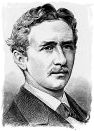
Livingstone, Speke, Gordon, Stanley, Hannington, and others, are numbered among the world's heroes; and conspicuous upon this roll of noble men must now be written the name of Alexander M. Mackay.
Born Oct. 13, 1849, in the little village of Rhynie, Aberdeen County, Scotland, in his father's home,—the Free Church Manse,—Mr. Mackay was at once blessed with a godly upbringing in the midst of intellectual surroundings. Mr. Mackay's father was a man of great literary ability, and for fourteen years carefully carried on the daily instruction of his boy. At three years of age Alexander Mackay read the New Testament with ease, and at seven his text-books were Milton's "Paradise Lost," Russell's "History of Modern Europe," Gibbon's "Decline and Fall of the Roman Empire," and Robertson's "History of the Discovery of America."
He was his father's constant companion in his walks; and stories are now told of the villagers' wonder at seeing the boy often "stop to look for something in the road;" while from point of fact he was watching his father's stick trace the supposed course of the Zambesi River, or outline the demonstrating of a proposition in Euclid. Letters were frequently received at the Manse from Hugh Miller, Sir Roderick Murchison, and other eminent scholars, all of which were read and talked about in the family circle; and in these ways the boy's mind rapidly developed.
At ten years of age he had great skill in map-making, and wonderful dexterity in type-setting; and very accurate were the proof-sheets turned out from his little printing-press.
In 1864 he entered the grammar school at Aberdeen, and here he worked well; he seldom joined the excursions of the young people, but preferred to become initiated in art photography, or to watch the workmen in the great shipyards. And thus from different sources practical knowledge of many things was by him early acquired.
In 1865 Mackay sustained a great loss in the death of his mother, whose parting injunction, to "Search the Scriptures," became a duty, always continued. In the fall of 1867 Mackay entered the Free Church Training School for Teachers, in Edinburgh; and there he won the admiration of pupils and teachers by his scholarly ability for two years, and then entered the Edinburgh University for a three years' course in classics, applied mechanics, higher mathematics, and natural philosophy, followed by a year's study of surveying and fortification with Lieutenant Mackie, Professor of Engineering.
For two years (1870-72), while Secretary of the Engineering Society, and tutor each morning at George Watson's College, Mackay daily took the tram-car to Leith, and spent his afternoons in model-making, and in turning, fitting, and erecting machinery in the engineering works of Messrs. Miller and Herbert. His evenings were employed in attending lectures on chemistry and geology at the School of Arts and other places. Sundays he gave to regular attendance at religious services, and to teaching in Dr. Guthrie's Original Ragged School.
In November, 1873, Mackay went to Germany to study the language, and at once secured a good position as draughtsman in the Berlin Union Engineering Co. While thus employed, he spent his evenings in translating Lübsen's "Differential and Integral Calculus," and in inventing an agricultural machine, which obtained the first prize at the exhibition of steam-engines held at Breslau. The directors of the company, recognizing Mackay's ability, soon made him chief of the locomotive department.
In May, 1874, Mackay became a boarding member in the family of Herr Hofprediger Baur, one of the ministers at the cathedral, and one of the chaplains; and in this cultured and pious home Mackay derived many advantages, and met once a week at the Bible readings, the élite of the Christian society of Berlin, among whom were Gräfin von Arnim, sister of Prince Bismarck, and Graf and Gräfin Egloffstein, who gave great interest to Mackay's later labors.
At this time Herr Hofprediger Baur was actively engaged in a German translation of the life of Bishop Patteson; and this work, together with the Professor's sympathy, proved a stimulus to the decision Mackay had already made to devote his life to missionary work; this decision having been arrived at after reading his sister's account of Dr. Burns Thompson's urgent appeal to young men to go to Madagascar. With Mackay to decide was to act; but as he could not at once enter the field as clergyman or doctor, he determined to do so as engineering missionary (a most practical and far-sighted determination); and, blessed with his father's sanction, he offered his services to the London Missionary Society, but was answered that Madagascar "was not yet ripe for his assistance." At this time Mackay received an offer of partnership in a large engineering firm in Moscow, which without hesitation he refused, believing an opening for him in mission work would soon be found.
In 1875 the Daily Telegraph published Stanley's famous letter "challenging Christendom to send missionaries to Uganda;" and the Church Missionary Society gladly accepted Mackay's offer of service in their future mission to the Victoria Nyanza. Early in March, Mackay returned to England; and in the development of plans the Church Missionary Society determined to combine the industrial with the religious element, and sanctioned the purchase of a light cedar boat for navigation, and also appropriated three hundred pounds for a portable engine and boiler to be fitted into a wooden boat to be built by the missionaries on the Nyanza. Many weary days Mackay gave to finding, in London, an engineer who would build an engine on the principle of welded rings, each light enough to be transported by two men. But finally an engine after his own design was built, and tools of all kinds were ready for the enterprise; and on the 27th of April, 1876, in a company of eight, Mackay left England in the Peshawur, and arrived at Zanzibar May 29.
To facilitate the journey to the great lake, the mission party intended to sail up the Wami River, and on the 12th of June Mackay and Lieutenant Smith started in the Daisy on a voyage of exploration, but, after many days of hardship, they found both the Wami and Kingani Rivers unnavigable, and were obliged to proceed inland on foot.
At Ugogo, in November, Mackay, who had charge of the third section of the caravan, was taken seriously ill, and was obliged to return to the coast, where he was instructed by the Church Missionary Society to delay starting for the interior until June, 1877. He employed the intervening time in sending a relief caravan to his brethren on the lake, and in cutting a good road to Mpwapa, two hundred and thirty miles inland.
March, 1878, Mackay heard of the murder of Lieutenant Smith and Mr. O'Neill, who had reached the lake months before, and hurried with all speed to the scene of the disaster, the island of Ukerewe, hoping by friendly intervention to prevent further bloodshed.
June 13 he arrived at Kagei, and had his first glimpse of the great lake. With joy he realized that the worst part of his journey was over. Piled together in a hut, Mackay found much of the valuable property conveyed to this point by the first sections of the expedition, and left in charge of the natives. Heaped together lay boiler-shells and books, papers and piston-rods, steam-pipes and stationery, printers' types, saws, and garden-seed, tins of bacon and bags of clothes, portable forges and boiler fittings, here a cylinder, there its sole plate.
"Ten days' hard work from dawn to dark, and," Mackay wrote, "the engines for our steamer stand complete to the last screw; the boiler is ready to be riveted, tools and types have separate boxes, and rust and dust are thrown out of doors. It seems a miracle that I find almost everything complete, even to its smallest belonging, after a tedious voyage of seven hundred miles." The Daisy, rebuilt by O'Neill, but now greatly damaged, employed Mackay's attention; and setting up his rotary grindstone, to the wonderment of the natives, he patched the sides and calked the seams, and made the boat again seaworthy.
After his great labor in repairs, Mackay, in spite of danger to himself, visited Ukerewe, and with tactful courage held a friendly visit with King Lkonge.
After this visit Mackay was a victim of dysentery; but at length, joined by Mr. Wilson, and favored with a good breeze, he sailed in the Daisy for Uganda. Four days of fine sailing, and then they were wrecked; and eight weeks of hard labor was given to making a new boat out of the Daisy. Mackay finally reached Rubaga, the capital of Uganda, Nov. 6. A friendly interview was at once had with King Mtesa, who had told Stanley to send the "white men," and for a time affairs at court went smoothly. Mtesa and his subjects were much interested by accounts of railways, electricity, astronomy, and physiology; and Mackay gained great influence by his mechanical skill, which caused wonder and admiration.
Mtesa appeared very anxious to hear more about the Christian religion to which Stanley had introduced him, and every Sunday religious services were held at court. From the first, the Arabs who centered in Rubaga were jealous of Mackay, fearing his influence would overthrow the slave traffic, which brought them here as elsewhere in Africa. They used all means to turn Mtesa against the white man, the most potent of which were the rich presents, including fire-arms, presented to the king.
The Arabs were no more formidable enemies to Mackay than were the Roman Catholic missionaries, who came soon after his arrival, confusing Mtesa with their claims to the true religion, and instituting a cruel persecution against the Protestants.
In April, 1880, Mackay, finding his store of goods nearly exhausted by the thieving of Mtesa's chiefs, went to Uyui for supplies, and during this trip barely escaped being murdered by the natives. At this time Mtesa turned entirely away from the teachings which Mackay and his friends had labored for two years to inculcate,—two years of labor, poverty, danger, and ofttimes threatened starvation, Mackay keeping his comrades alive by the sale of articles made by himself in his workshop.
"Beside teaching his pupils reading, writing, and arithmetic, Mackay gave them daily lessons" in building and designing. He built a house for the mission party, which was a source of wonder to all, and caused Mtesa to ask instruction for the natives in wood and iron; and when Mackay asked a piece of ground to build huts on, he at once gave him twenty acres. To the natives Mackay's most wonderful achievement was a cart painted red and blue, and drawn by oxen.
From time to time Mackay's great work was supplemented by co-laborers sent by the Church Missionary Society; and in March, 1881, his heart was delighted by the baptism of five converts by Mr. O'Flaherty. Early in 1883 the Rev. E. C. Gordon and Mr. Wise joined Mackay; in May of the same year the Rev. R. P. Ashe arrived, and the prospects of the Mission were most encouraging until October, 1884, when Mtesa died.
The king's son, Mwanga, succeeded to the throne—a youth with all his father's vices and none of his virtues; and a reign of blood and terror followed, beginning with the burning of two Christian lads, who met their death with songs of praise, and were the first martyrs to the faith in Uganda.
The storm of persecution spent its full force in October, 1885, when news reached the king that white men had come by the Masai route, and were entering Uganda by the "back door." Orders were sent to kill the whole party. Prevented from leaving the court, Ashe and Mackay awaited in dread suspense, which gave way to despair, when news of Bishop Hannington's death was confirmed. In the months that followed, lives of missionaries and converts were in constant danger; still the gospel spread, and young men came daily to the mission house for translated copies.
In May, 1886, thirty of the missionaries' faithful converts were slowly burned alive. Mackay was now anxious to get out of the country, but was refused permission to leave. New missionaries with presents would have bought his escape; but he would not write for men to come to Uganda in the disturbed condition of affairs, so bravely stayed on, even after he had unselfishly obtained leave for Ashe to go.
Alone, weary in soul and body, his life in imminent danger, Mackay worked early and late in translating and printing the Scriptures. News of the Emin Pasha expedition reached the king; and warned by French priests that Stanley and Mackay would put their heads together to "eat the country," Mwanga decided that Mackay must leave Uganda. Arranging that Mr. Gordon should come to care for the converts, who were only comforted by his assurances that he was but going to the south of the lake, Mackay turned away from the country where he had spent nine eventful years,—years of deep experiences, of toils and privations; years that had silvered his hair and calmed the restless impulses of his youth; but his watchword was unchanged—"Africa for Christ."
After much weary wandering, Mackay fell in with a friendly chief in the land of Usambiro; and here, single-handed and alone, he began the great work of a new mission station. A band of five men, headed by Bishop Parker, and including his old friend and fellow worker, Ashe, soon came to cheer his lonely life. A few happy weeks together—then Bishop Parker and Mr. Blackburn died of fever; Mr. Walker went to Uganda; Mr. Ashe was compelled to return home on account of bad health; Mackay was again alone.
And again this all-round missionary set himself to the work of teaching, translating, printing, binding, doctoring, and building; and in the midst of these many and arduous labors, he found time to give to the world practical suggestions, now being carried out; viz., "Stations all over Uganda," and, "a railway from the coast to the lake."
In September, 1889, Stanley visited Mackay on his return to the coast, and "In Darkest Africa" gives with unstinted praise an account of the mission station, with its clay-built house "garnished with missionary pictures, and shelves filled with choice, useful books, its hospitable table with wholesome food (home-made bread and coffee); the mission-school of neat, well-mannered boys, a launch's boiler, and a canoe under construction, saw-pits, and cattle-fold, all the work of "the best missionary since Livingstone."
Stanley and his party urged Mackay to join the homeward expedition, but with characteristic fidelity he refused to leave until some one came to take his place. "European platforms and royal receptions" were never his; but Feb. 8, 1890, his tireless energy rested, and the title-deeds of his labor were recorded, in divine Presence, upon the brow of every converted black in Uganda.
From Great Missionaries of the Church by Charles Creegan and Josephine Goodnow. New York: Thomas Y. Crowell, ©1895.
>> More Alexander Mackay