Chapter 1—Preparation for Service
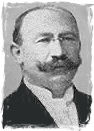 Birth and Education.— I was born near Suwalki, Poland, on the 6th
day of August, 1867, of Jewish parents, my father being a Jewish rabbi.
Birth and Education.— I was born near Suwalki, Poland, on the 6th
day of August, 1867, of Jewish parents, my father being a Jewish rabbi.
All that I remember about my early life is that when I was about four years old, I was taken to the home of my father's people who lived in that town and was sent to school.
When six years old, my good mother, who was a devout Jewess, born and reared in Germany, prevailed upon my father to allow me go to her people in Koenigsberg and study in the German schools, as there was very little opportunity for a Jewish boy to obtain higher education in Russian-Poland. Though very reluctant, because of his orthodox Jewish faith and fear of the Gentile teaching, he consented on condition that I return to him at the age of fourteen.
I remained in Germany until I was fourteen, having completed not only the grammar school but also the lyceum. My mother's father was a wheat merchant and owned several sailing vessels. He was a very learned, widely traveled and liberal minded man. During my holidays he would take me with him on his trips to various parts of Europe.
Returning to Orthodoxy.— When I had finished my studies at the lyceum my father insisted upon my returning to him, at which time I was to begin preparation for becoming a Jewish teacher. His plans were very simple. I was to marry the only daughter of a wealthy Jewish family who would support me and the possible future family, for at least seven years, while I was to give myself to the mastery of Hebrew and the Talmud, as well as to the Rabbinical social exigencies. It was not an easy nor congenial task and my heart revolted against it, especially against the strict Jewish, or perhaps I may say pharisaical customs and habits prevailing. I could not accustom myself to them. For instance, no match could be lighted on a Sabbath Day—no handkerchief could be carried in one's pockets, and so on. The strict orthodoxy of the Jews in Poland and Russia becomes intolerable to one who has been trained in other circles. I wanted to get out of it all and get into the world and live my own life.
Matrimonial Speculation.— Not until after much insisting was I allowed to see the girl my father, or rather the matrimonial agent, had chosen for me to marry. I found her to be a child of perhaps not more than twelve years of age. Needless to say my whole soul revolted against the business, and I determined not to have any part in the affair. However, it was very difficult for me to escape, as my father, suspecting my determination, watched me closely. It was only after every preparation had been made for the wedding-feast that I was able to run away. I was only about fifteen years of age and I have never seen the face of my father nor did I ever learn what became of the girl.
Alone in the World.— I wandered about some cities and villages in Poland, working my way from one place to another as waiter, apprentice at several trades, and, finally, fell in with a traveling merchant who kept me as his secretary, but really used me as an instrument for some kind of a secret political society. This brought me into many difficult situations and imprisonments, from which I was usually taken out quite readily. Finally I had to flee from Russia to save myself from being sent to Siberia. I was near Suwalki when word came to cross the frontier, and I managed to send word to my mother to meet me in the cemetery, near the tomb of my great-grandfather for whom I had been named. There my mother and I met for the last time. To my mother I owe my life and greater usefulness, for had it not been for her, I would have been doomed to live the circumscribed life of a Jewish recluse.
I crossed the frontier that night and reached Koenigsberg where I found letters and money enough to take me to New York City, the United States of America, the land of liberty and opportunity and where friends and relatives were ready to receive me.
Arriving in London.— Unfortunately or otherwise, I spent all the money I had on the way, arriving in Hamburg with only thirty pfenings (three nickels) in my possession. No vessel to New York would take me over and I found a sailing boat, carrying horses to London that was willing to take me. I was to do some kind of work, but we had a very rough sea and I suffered great agonies until we reached the Thames. I will never forget the arrival in London on that early September morning of 1882. I at once seemed to smell the warm odors of a bakershop and, entering, placed my three German nickels on the counter and pointed to a loaf of bread. How rapidly this bread disappeared can more easily be imagined than described, as I had not had any food for three days.
In London I found an uncle of mine, my mother's brother, who owned a large dry goods store in the East End who gladly took me in and gave me work in his office as assistant bookkeeper. He was a splendid man, a typical orthodox Jew, adhering strictly to all that Moses and the Holy Fathers required. I had my own room in the attic and was taking special lessons in mercantile bookkeeping as well as in the English language.
Hearing the Gospel for the First Time.— One Sabbath afternoon while passing through Whitechapel Street I met a missionary to the Jews—a converted Jew—who invited me to hear him preach at the Mildmay Mission to the Jews on the 53rd chapter of Isaiah. Now, I was particularly interested in this certain chapter of the Bible because of an incident that had happened to me while in Poland, and most likely had it not been for this peculiar incident I would not have gone to this meeting. The incident as it occurred was as follows:
My father was celebrating the feast of the Tabernacle, living in a tent that he had put up close to our home. He had a number of visitors staying with him and as I had passed the age of thirteen and was considered a full-fledged Jew, I was allowed to stay and listen to the talks and discussions. Upon the table were several books and among them was a well used copy of the Prophets. Accidentally, for the question had never been brought to my attention, I opened book and was reading the 53rd Chapter of Isaiah. There were some comments on the margin and one remark seemed to loom out above all the other scribblings, viz.: "To whom does the Prophet refer in this Chapter?" Innocently I turned to my father and asked him the very same question. He looked at me quite surprised and a profound quietness seemed to come over him. Not being answered I repeated the question, when my father snatched the book out of my hand and deliberately slapped me in the face. I felt quite chagrined and humiliated and I confess I did not like that kind of an answer — but in the Providence of God, it served its purpose, for, when that Jewish Missionary asked me to go and hear him explain that very same chapter I could not but remember that scene in the tent and, of course, went, out of curiosity to see if he had a better explanation to give than the one my father had given.
A Glimpse of Christ.— That was the turning point. I went to hear him explain that marvelous prophetical chapter and though I could not understand it all at that time, it sank into my heart. He asked me to read the New Testament, and when he called my attention to the wonders of the life of the Messiah and how every prophecy was fulfilled in Jesus, I was soon convinced that the Son of Mary, the crucified One, was the Christ of God, the Messiah of Israel, the Rejected One of my people. Oh! how I wept when I came to the Crucifixion scene and read those awful words: "His blood be on us and on our children." It seemed to me that I had taken an active part in the murder of the Innocent One and I realized for the first time the reason for the terrible history of the Jews, the sufferings and persecutions they had gone through and even were still enduring. It was not long after this that I realized I must cast in my lot with Jesus and plead for forgiveness for the part I had in that great crime of Calvary.
But if I did this I knew the consequences, for I had heard my uncle condemn and curse the Jews who had abandoned their faith. They were imposters, according to his opinion, persons who had sold their souls for money. I knew that my lot would be hard. I knew I would be driven away from his home where I had spent so many happy days.
Struggling Against the Light.— I struggled hard for nearly three months, against my own convictions and against the light. My soul yearned for a complete surrender to Him who died for me but who, as risen Lord, was seated at the right hand of the Father, patiently waiting to receive and forgive. My head reasoned but my heart trembled for the future. I could not eat nor sleep, and my uncle was contemplating sending me to some health resort, as I was beginning to look very haggard. Personally, I was fearing that I would lose complete control of myself or even my mind. I was in a dreadful dilemma.
Finally the Lord had pity on me and gave me peace. It happened this way: As was my custom I went to the Wellclose Square Mission and on this particular Saturday afternoon the Reverend John Wilkinson had been announced to preach. He took as his text Matthew 10:37: "He that loveth father or mother more than me is not worthy of me." He emphasized especially the last phrase "not worthy of me"—not worthy of Jesus. All that the preacher said seemed to touch my soul and, when he asked for testimonies I could not help standing up and tremblingly saying: "I want to be worthy of Jesus!"
Decision and Happiness.— I went to my room and paced the floor until past midnight, when at last I surrendered my all to Jesus, all I could say was, "Lord, make me worthy of Thee!" I felt my load lifted. I knew that I was forgiven and accepted and when at last, through tears of joy and happy communion with Him, I stretched myself on my bed, I slept the most refreshing sleep I had had for a long time. Happiness and joy filled my soul.
Testifying.— Early next morning, it was Sunday morning, I appeared in due time for breakfast. My uncle was at the table and no doubt noticed my happy and satisfied look. As I sat down to the table he asked me why I looked so happy and I told him frankly:
"Uncle, for the last three months I have been going through a great struggle." I told him of my going to the Mission and the reading of the New Testament and finished by saying:
"Last night I decided and have accepted Jesus as my Saviour and from now on, Uncle, I want you to know that I too am a Christian."
It would be difficult to describe how the good man received this bit of information. He left the table unable to touch the food, pale and sad as if his heart would break. I, however, was able to eat and enjoyed my breakfast as I had not done for a long time.
Going into the store I found my uncle pacing the floor furiously angry. I went into the office and, when I had an opportunity, I related to the senior bookkeeper my happy experience of the previous night. He cautioned me not to tell it to my uncle if I wanted to keep my place. Imagine his surprise when I informed him that my uncle was the first person to whom I had given the information. Later in the day the bookkeeper informed me that my uncle had told him, that as long as I was not baptized it did not matter.
"These boys," he had said, "one day believe one thing and the next day another. These notions will soon disappear and as long as he does not submit to that rite and publicly deny the faith of his fathers, it does not matter." The Jews think that Jewish candidates for baptism pass through a special ceremony when they are forced to curse their God and the religion of their Fathers.
Profession of Faith.— I then and there determined to make my profession of faith and immediately spoke to Mr. Wilkinson about it. After due inquiries we agreed to have it done at the Wellclose Square Mission, in the East End of London, one Saturday afternoon. I invited my uncle and a great many Jewish friends to be present. He came and during the whole time did his utmost to get me out of the meeting. However, I remained firm, and after hearing my testimony on behalf of Christ, he and his group of friends walked out boisterously, slamming the door after them. After that never-to-be-forgotten meeting, Mr. Wilkinson and the staff of missionaries met in the Home of Inquiries, situated in the North of London, at Mildmay Park, where we had a delightful time of prayer and consecration. It was almost midnight when I returned to my home and when I opened the door a shower of curses, broom sticks, hot water, met me. After being cruelly insulted and beaten, I was driven away from that door and home.
My heart, however, was so full of joy and happiness that I did not notice the cold of that October night. My tired body did not feel the hard stones as I walked those streets the whole night, awaiting the arrival of the first day of my new life.
Expelled From Home.— Early Monday morning, after walking all the night through the streets of London, I went into my uncle's store ready to continue my work. At the door I met him, as if expecting me.
"What do you wish, Sir?" he said. I told him, "Uncle, I have come to work."
"Don't call me Uncle any more," he exclaimed, "I do not know you any more and you have absolutely nothing more to do here and the sooner you get out of this place the better it will be for you."
"All right," I said, "but I would like to go to my room and get my clothes."
"You have absolutely nothing here," he shouted at the top of his voice and pushing me to the door shoved me out.
I expected to be asked to resign from my work, but to be expelled like that, without a piece of clothing except what I had on, was quite a surprise. It left me in bad shape. I only had a few shillings in my pocket and with these I tried to begin my new life. I felt sad, but in my heart I was happy for being permitted to suffer for my faith in my Lord and Saviour Jesus Christ.
The first few days passed along smoothly. I made the pennies I had go a long way. I ate as little as possible and slept in what is known as the thieves' kitchens where for a few pennies one can get a clean bed. I tried to get work, but as all my acquaintances were Jews, after I would tell them the reason why I lost my job refused to give me work. When at last my limited funds gave out I had a very trying time. I could have informed the missionaries about my trouble, and they, no doubt, would have been glad to find some work for me; but I was ashamed to do so, as I did not wish them to think that I was after their money. Finally one of them noticed some difference in my appearance and inquired as to my way of living and I informed him of my predicament. He found me a place in the Home of Jewish Converts where I was accepted and taught the art printing which has been of such great use to me in my work in Brazil. Soon after entering the Home I was baptized by the Rev. John Wilkinson, at the Central Hall, Mildmay Mission, before a crowd of over three thousand people.
Learning a Trade.— I spent about three years in that home and due to the manager, Mr. McClure, a godly Christian gentleman, who seemed to realize that my work would not be that of setting up type, but something of much more value to the Kingdom of God, he had me pass through all the departments of that printing plant. My allowance was very meager, only a shilling a week, but we received good food, good sleeping quarters, good clothes, and everything necessary to existence. Again and again dear Mr. McClure would let me do a little work overtime, which would put an extra shilling into my pocket at the end of the week.
A Godly Teacher.— We had excellent teachers. One of the best and most consecrated men of God was Mr. J. Clancy, a retired officer of the English army who had seen service in India. His life and his words helped me wonderfully and saved me many times from spiritual disaster. The spiritual life of that man of God to whom I took all my difficulties and trials and who taught me how to lay it all at the feet of the Master in prayer was an inspiration to me.
Street Preaching.— Sunday was always my best day, and was begun by attending a Men's Bible Class, under the direction of a layman, Mr. Badenoch, of the Mildmay Mission. We were fifty or more and had an excellent program prepared for the whole year, studying some book of the New Testament. That was a real spiritual uplift, which I experienced every Sunday morning before breakfast, and it was there that I also received my first lesson in winning souls for my Master. This Bible Class did not content itself with the study of the word of God, but after breakfast we would meet again and go into the highways and by-ways of London and call the wanderers in. Several of the members of this class are now at work in the Lord's vineyard—some in far-away distant lands.
Thrown Into a Dust Bin.— During one of those street meetings I almost met my Waterloo. Anxious to tell my own people, the Jews, what the Lord had done for me, I asked a few of the members of that Bible Class to go with me to the East End of London and help me in an open-air meeting to be held in a district thickly settled with Jews. They readily consented and we chose a corner of the street where four buildings, almost entirely occupied by Hebrews, fronted. The meeting began as usual, with singing of hymns and prayer, and as the crowds gathered I was pointed out as the Jewish renegade. As long as my companions addressed them nothing happened, but as soon as I got up and began telling them of Jesus, the Jews, whose number had constantly increased, attacked us. My companions were driven away and I was caught by the persecutors, who threw me to the ground and kicked me about until I was almost dead. When I came to myself I was told that I had been found by the police in a garbage box more dead than alive with my skull cracked and body all covered with bruises. Oh, but those were glorious times, and I praise my heavenly Father for having been permitted to suffer for Him and His Holy Cause, even from the hand of my brethren according to the flesh!
Excommunicated.— It was a year after I had been living my new and happy life, enjoying the fellowship of Christian men and women and preparing myself for a life of more usefulness to my Master and Lord, that one day, like a bolt of thunder from the clear sky, I received a note from another uncle of mine, a brother of my father. He had come to London "on business," said the note, "but wished to see me before returing to Russia." Obtaining permission I ran with all haste and fell into the arms of this dear uncle who had always treated me with special affection, even while I was studying in Germany, and who, being childless had given me to understand and I would one day inherit his wealth.
I need not tell here all the particulars of our meeting and how he made my heart yearn for home as he gave all the news about everyone that I loved and from whom, I had not heard since my conversion.
News from mother and father and especially from my only sister, with whom I had spent most of my time at grandmother's home in Germany, and to whom I was greatly attached as only a brother can be to a sister when they are living under a strange roof. He gave me all the news and ended by asking, "Do you know what I came to London for?"
"On business," I said. "That is what you wrote me."
"Yes," he said, "I had some business to do, but my special business is to take you back home."
"That is great," I exclaimed, "and I am ready to go with you any time you may wish to go."
"I know," he replied, "that you are ready to go, but there is one condition and that is that you leave your apostasy behind."
It was then that my eyes were opened and I realized that my greatest trial was at hand. Confused as it left me for a moment, with a clear and distinct note I told him that such a thing was impossible, as I had given my heart to the Lord Jesus, and to abandon my religion I would have to tear out my heart also. He smiled sarcastically and informed me that he had full power from my father to have me excommunicated, disinherited, disowned by the family and considered as dead. The reason that it had not been done before was because he himself had interceded for me, hoping to get in touch with me and have me realize the consequences. I told him again that before accepting the Lord Jesus as my Saviour I had struggled for three full months and had counted the cost. I was prepared for everything and every loss and if it only depended on me I was decided to leave all there and then. He gently pushed me out of the door and told me to return a week after that and then give him my final answer.
Oh, the horror of that long, seemingly never-ending week! The devil tried his very best to get a new hold on me. Due, no doubt, to my state of nervousness and sleepless nights, everything seemed to go wrong. I fell out with some of my companions in the home and one day, provoked to anger by one of the inmates, I broke a chair over his head. The manager thought it best to expel me from the home. No one knew of the great trial I was passing through except dear Mr. Clancy and he asked the manager to overlook my fault. It was a terrible week of trial and temptation and had it not been for the Lord Himself I would have surely failed. What frightened me most was the terrible Jewish excommunication. I remembered, how on my return to Russia from Germany, I attended upon one such scene where a poor fellow was excommunicated for some foolish little fault, I think it was for kissing his wife too soon after childbirth (a thing forbidden by the Rabbis). It was a harrowing scene, and the curses, as they were read out by the rabbi, made me shiver. My soul revolted and I did not want to see it any more, much less be the protagonist himself in such a ceremony.
Cursed and Disinherited.— The week ended and I went out fortified by the prayers of that man of God, Mr. Clancy, ready to give my testimony concerning my Saviour and Lord. I found my uncle, or rather both of my uncles, and several elderly Jews, whose flowing white beards inspired great respect and attention. All received me gladly and gave me a hearty welcome. We had a long talk about the greatness of the God of Israel, of the God of Abraham, Isaac and Jacob. I was finally asked for my decision and I gave it to them in a few very simple and plain statements. I told them of my struggles before accepting Jesus as the Messiah. I gave them my experience when I first went to hear the explanation of the Fifty-third Chapter of Isaiah. I told them of my life and happiness since then and of my desire to serve Him, my Saviour and Lord, even as a printer, helping to spread the knowledge of Him whom to know is life eternal. Sadness came upon all their faces, especially upon those of my uncles. One of the elderly Jews, with tears in his eyes, informed me of the consequences, and of his awful duty to proceed with my excommunication and disinheritance. I told him that I had counted the cost, that I was ready to go to the limit and if necessary give my life for the Messiah.
He then began to read the excommunication ceremony: "Cursed be he by day, cursed by night; cursed when standing and cursed when lying down; cursed when eating and cursed when drinking"; and so on for a long time.
At first my heart fell within me and it seemed to me as if the ground upon which I stood opened and that I was being hurled into a bottomless pit. Oh, the horror of that moment! Thank God it was only a moment! Then my heart cried unto my Lord and it seemed to me as if I saw Him upon the Cross with outstretched arms and over the Cross I saw written in plain and shining letters that wonderful text:
"HE REDEEMED US FROM THE CURSE OF THE LAW, BEING MADE A CURSE FOR US." Galatians 3:13
I heard the good old man finish the reading of those curses. Tears were streaming down the faces of my uncles and they wept as if their hearts would break, but my own soul was filled with a peace that passeth all understanding. I felt myself filled with a joy unspeakable and full of glory. When the good man had finished reading those curses and he gave me to understand that from that moment on I was an outcast and dead to the family, I merely said in answer: "Gentlemen, is that all?" They nodded their heads in assent. I then said, "Well, good-bye, and the Lord have mercy upon your souls."
I left that room with my heart rejoicing. I was so happy that I did not know what I was doing. I walked into the arms of a big policeman and he asked if I was drunk and I told him, "No, sir, but I am very happy!"
Regions Beyond Mission College.— I spent three wonderful years in that Home for Jewish Converts. There I not only learned a trade, but also how to work for my Master.
One other great joy to me was the Sunday School and work among the little children. It was at one of these meetings that my attention was called to the need of preparation for better service. I was having two weeks' vacation at the seashore in Brighton, helping in the meetings for the children on the seashore. It was there I met Miss C. Bishop, a young English woman, a trained nurse, and a volunteer for foreign mission work. We had long talks together about the Master's service and she convinced me of the necessity of consecrating my life to the great work of saving souls in the foreign field. On my return to the city I applied to the China Inland Mission for work. I was called before the Board and was informed that they would be glad to send me out, but that I needed more instruction in Christianity. I was advised to apply to some seminary. I wrote to the great London preacher, Charles H. Spurgeon, stating my need and desire. I received a very kind and helpful letter, telling me that all vacancies in his seminary were taken and even if they had a vacancy there were a great many of their own denomination waiting for an opening and that it would be better for me to apply to the Regions Beyond Missionary Training School, where cases like mine would be immediately taken up. Desirous of a preparation for my Master's service I wrote immediately to Dr. Grattan-Guinness and it was not long until I received the welcome letter advising me that I could report to the school, Harley College, Bow Street, London. I suppose there was no happier man on the face of the earth than the writer when, with the few pieces of baggage I possessed, I entered the gates of that great school. I passed three years of my life there, never-to-be-forgotten years, learning not only how to rightly divide the Word of God, but also how to work acceptably for my Master and Lord.
Training for Work.— After a few months of trial I was sent to Cliff College, Derbyshire, a branch of the Regions Beyond Missionary Training College, where the great man of God, Professor Rutcliff, wielded a singular influence. It was there that I received the world vision of work to be done. It was in this institution that I began to realize the possibilities of a life for Him who gave His life for me. The visits of Dr. Gordon, Joseph Parker, F. B. Meyer, Grattan-Guinness, the great Bible expositor and that of his son Harry, the great evangelist, the coming and going of missionaries, their stories of heroism in the far away foreign fields, made my heart yearn to do and dare something also and when the three years were finished and I received an invitation to the Neglected Continent, I did not hesitate. Although I had no guarantee for my support, I went, fully realizing that I was in His service and was ready to give my life and my all to Him who had done so much for me.
First Attempts in Service.— During my three years' stay at the Regions Beyond Mission College, both at Cliff and Harley College, I took active part in mission work, especially during the holidays. I had a permanent work at the Industrial Home situated in the London slums and still possess a beautiful Bible, given to me by the lady superintendent, Miss Annie Macpherson, in the name of the co-workers in recognition of services rendered.
Most of my time was given to work among the Jews, and during the holidays I was employed by the Mildmay Mission to the Jews as visitor and Bible distributor. I cannot narrate all that happened to me during those days; however, I give one or two incidents which will show the difficulties of working among the Jews.
Beaten by White-Slavers.— On one of my furloughs I was employed for the purpose of visiting the incoming boats from Europe and watching for girls that were smuggled into England for white-slavery. My work was to meet the boats before touching the docks and find out the destination of the Jewish girls.
As a rule, the white-slavers consigned the girls, either married or to be married, to some rascal in London, and from there they were transferred to some other country for exploitation. It was easy for me, after conversation with some of the girls, to find out where they were going and then call their attention to what was awaiting them. Some would listen to me and would accept the offer of help and gladly follow the lady to whom I would direct them, and thus be saved from a life of shame and disgrace. Others would refuse to listen to reason, and these I had to turn over to the proper authorities. Soon, however, these white-slavers learned of my work, and so it was not long after that they waylaid me and gave me a beating from which it took me a long while to recover. Why they did not kill me I cannot imagine, except that the Lord had some other work for me to do.
Thrown Down a Spiral Stair-Case.— At another time, I was visiting the Jewish district with a young Jewish convert, who was at the same College preparing himself for work as a medical missionary, a Mr. Davidson by name. We were accosted by a young Jewish fellow who told us that at a certain building on the fifth floor, was a shoe factory where all employees were Jews and where the subject of Christianity was being discussed daily. He asked us to visit the place and bring New Testaments, as they were very anxious to possess a copy. He spoke so earnestly that we did not suspect the trap that had been set for us. When we appeared there later in the afternoon, we knocked at the first door and as soon as they recognized us they asked us to go to the next door. When we reached the next door, all men working in the first room came out with their implements of work, hammers, stones, and knives and attacked us from behind, barring the way to the stair-case, the only way of escape, while those of the second room attached us in the front. As soon as I discovered the situation my first thought was to save Davidson, who was a frail, weak young fellow. Covering him with my body, I pushed him to the stairs and made him run down telling him to call the police. Meanwhile the group of Jews, numbering about thirty or forty, after belabouring me the best they knew how with their hammers and lasts, got hold of my limbs and turning me head downwards placed me in the middle of the spiral stair-case and deliberately dropped me down with the intention, of course, of having me break my neck. Fortunately I had had excellent training while in Germany and I had not gone far down the space when I managed to lay hold of the spiral stair-case and getting astride the banister I slid down and made good my escape, which was a very narrow one indeed.
The Call to Service.— The above experiences as well as a great many other facts convinced me that my call for work was not to be among the Jews, but among the Gentiles. Today I am more than ever convinced that the mission of the converted Jew is not to the lost tribes of Israel, but to those who know not God, the true God and his Saviour Jesus Christ. I was in the College studying and biding my time as well as awaiting my call. I knew that in due time my Lord would open a way for me. Meanwhile I was preparing myself the best way possible for whatsoever He would think me fit to do.
While in College I received several invitations. A missionary from India came to see me and we talked and prayed long and earnestly about the great opportunities for work in that great field, especially in the line of the translation of the Scriptures, but that work did not appeal to me. Another appeal came to me for work in Jamaica, among the needy Negro churches, but I passed that by. One day young Dr. Harry Guinness, called me to his office, told me that a lady, just returned from Brazil, where she and her deceased husband had spent a great many years, was anxious to send out a missionary to that country on the following plan: Pay his passage and outfit and one hundred pounds sterling, on condition that he learn the language and work for a year as a self-supporting, independent missionary. Dr. Guinness thought that I was the man for that work, and I asked for time to think and pray about it.
That offer appealed to me. Once there came to our Bible Class in the Mildmay Hall, a Mr. VanOrden, a converted Jew and Presbyterian missionary in Brazil, who told us about the opportunities in that great neglected field. I was greatly stirred by his message and remember having contributed something to his printing outfit, though my salary then was only one shilling a week. Then also when a child, while studying in the schools of Germany, I used to read all the books I could secure about Brazil, its vast prairies, its wonderful gold mines and diamond fields, its wild Indians and its unexplored regions. Now while I prayed for light all those facts came back to me and the neglected Indians seemed to loom up with outstretched hands and appeal to me to come over and help them. The next day I gave Dr. Guinness my decision. I accepted the offer. Though I did not know it then I found out later that the lady in question was no other than Mrs. Kalley, the wife of the founder of the Congregational Mission in Brazil. I was invited to spend a week with that good lady at her home in Edinburgh, where I suppose I was duly inspected and must have given satisfaction, as it was not long after that I was told to prepare for my trip to Brazil, by way of Portugal, where I was to stay in the home of a Brazilian family and learn the intricacies of the Portuguese language, the language used in Brazil.
Ordination Service and Farewell.— My farewell and ordination service took place at the Conference Hall, Mildmay Park, London, and the following ministers took part: Rev. John Wilkinson, Episcopal minister and director of the Mildmay Mission to the Jews; Rev. H. Grattan-Guinness, D.D., Baptist minister and director of the Regions Beyond Mission; Rev. Hudson Taylor, of the China Inland Mission; Mr. P.S. Badenoch, my Bible Teacher; Honorable James Mathieson, director of the Mildmay Mission, and another minister of the Wesleyans, whose name I cannot recall. It was a very impressive service and I will never forget the advice and counsels given to me during that solemn hour.
My farewells did not take long. I had no relatives in England to whom I cared to say good-bye. My uncle would not receive me. In the Home of the Mildmay Mission to the Jews I had several friends that had endeared themselves to me and so also those of Harley College and some of the companions in the different mission stations where I had been working while studying. But the only person that really cared for me, in some sort of a personal way, was Miss Carrie Bishop, a trained nurse of the Royal Hospital, to whom I was then engaged and who was the last one to leave the boat on which I was leaving London. We prayed together for a long time and consecrated our lives anew to the Master and to the work in that great and neglected continent, to which I was then going, and to which she was to come after a year or so.
I left London on January 21, 1890, on a small vessel, with capacity for only eight passengers for Oporto, Portugal. We had a very rough voyage. We encountered bad weather from the start and had to take refuge several times in several ports on the South coast of England. It took us twelve days to make a trip that usually only took two or two and a half days. Finally we reached Vigo, on the coast of Spain, in a very dilapidated state, and after a little trimming and repairing we continued our voyage reaching Oporto, situated on one of the most beautiful bays one could possibly imagine. It seemed as if nature was compensating us for the many days of suffering.
Learning the Language.— I reached Oporto, Portugal, on February 2, 1890, and was received into the home of Senor Fernandes Braga, a rich Brazilian merchant and consecrated believer, a Portuguese by birth, who was spending a few months in his native country, recuperating from effects of the tropical heat.
In the home of this good Christian family I began the study of the Portuguese tongue. I was very anxious to learn the language as soon as possible and to facilitate my object I gave myself to the task of learning at least a hundred words per day out of the dictionary. The family had a young English, though Portuguese-born, governess, who helped me wonderfully in the way of pronouncing the words. At the end of the first month I had a fairly good number of words to begin on and so resolved to write a tract first in English, translate it into Portuguese and then go into the country to sell it to the people.
I prepared the tract giving it the following title: "Sao Pedro Nunca Foi Papa!" ("Saint Peter was never a Pope"). The study of this subject helped me to grasp the questions that always arise when you talk to a priest, as well as illustrate to the public one of the most debatable questions among them. Mr. Jones, an independent Baptist merchant, member of Spurgeon's Tabernacle, helped me not only in correcting the final proofs, but also in certain important historical data.
After printing the tract I stuffed my hand-bag full of them and put my dictionary into my pocket and boarded a train for my first venture into foreign mission work. I had been only a month in Portugal and, though I could read Portuguese, I was not able to speak it nor understand it very easily.
It is surprising to me even today the number of tracts I sold. I really did not meet with any difficulties except once when I offered the tract to a Catholic priest. He read the title and began to gesticulate very excitedly. Not understanding him at all, I just smiled my most captivating smile, which seemed to anger him more than ever. Finally he began shaking his fist at me, which, of course, I understood perfectly and got out of his way, but the Portuguese passengers took the matter up for me and made the place so uncomfortable for the poor priest that he had to leave the car at the next stopping place, and I was able to sell every tract I had with me.
Portuguese University Students.— Another time I was in the city of Coimbra, where the celebrated University is situated, and sold a good many of those tracts. In the afternoon the University students saw me and suspected that I was English. There was some political trouble between England and Portugal then and I had purposely published on the title page, under my name, that I was Russian. A group of the students soon gathered, and followed me as I went from house to house offering that tract. Finally I saw that one was being sent to look into the matter.
Upon reaching me, he brutally snatched a tract out of my hand asked me what I was doing. I told him that I was trying to sell my tracts.
Then he began a tirade against the English, of which I could not understand much, except what I had been told to expect. I gently called his attention to the fact that I was Russian and not English. As soon as he was convinced of the fact, he beckoned to his companions and informed them that I was Russian and therefore an enemy to the English and they cheered me for all I was worth. Of course, I sold every tract that I had brought with me and was indeed sorry that I had not brought thousands, instead of a few hundreds.
Fleeing From Portugal.— Having sold some three thousands of this my first tract, I set myself to write another, this time a stronger and more impertinent one about Roman Catholic teachings. As was my habit I had visited and examined most of the native churches, I found a great many relics and superstitious rags that the Roman priesthood was exploiting and against which my heart revolted. The worship of relics, of rags and bones of the saints, the idolatry, the overbearing domination of the priests, the ignorance concerning God among the people; all these things stirred me powerfully. I then wrote the second tract entitled, "The Religion of Rags, Bones and Flour" ("A Religiao De Trapos, Ossos E. Farinha"). After getting this tract in shape and selling a few hundred copies, I received warning that the best thing I could do would be to leave the country immediately as the Ultramontane element (Jesuits) were working up a case against me to put me in prison, a place I was not very anxious to go just then. So packing into my trunk the few articles of my possessions and taking advantage of the company of Mr. Maxwell Wright, a celebrated English-Portuguese evangelist, who was then going to Brazil to hold evangelistic services, I left Portugal. I reached Rio de Janeiro on June 10, 1890.
My stay in Portugal had, however, been very helpful to me, not only because of my learning the language in the land where it is spoken, but also because it had given me a splendid insight into the working of the Roman Catholic Church. Brazil was originally a colony of Portugal and the majority of the inhabitants of Brazil are descendants of Portuguese stock. What I appreciated most was the study of the Catholic religion in Portugal from whence it was transplanted into the colony, and which today, with very little modification, is the religion that prevails in Brazil. Most of the priests in Brazil are Portuguese by birth whose only object seems to be to make a fortune and then return to the home-land and live in prosperity ever after. The same superstitions, the same ignorance and thoughtlessness about personal responsibility toward God and toward one another prevails. Rome ruined Portugal and made it the laughing-stock of other nations. Rome is doing the same in Brazil today. Brazil, although the richest in natural products among the countries of the world, is today being degraded by the craftiness and intrigues of the Roman Catholic Church just as has been the case with all peoples, nations and tribes that have come under its baneful influence.
From A Wandering Jew in Brazil: An Autobiography of Solomon L. Ginsburg. Nashville, Tenn. Sunday School Board, Southern Baptist Convention, 1922.
>> Chapter 2 - Getting My Bearings
>> More Solomon Ginsburg