"Only eternity will reveal how many fires of evangelistic zeal have been lit by the perusal of the account of [David Brainerd's] short but powerful ministry."1
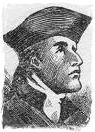 David
Brainerd (1718-1747), a missionary to the American Indians, has become
one of the most influential missionaries of all time. His personal
ministry lasted only three years, but his journal and diary, edited
and published by Jonathan Edwards, have inspired countless missionaries
over the years to reach thousands, or even millions, of souls across
the globe. His life was not an easy one; in fact, he suffered hardships
of many kinds. It was for enduring these difficulties in order to
further the gospel of Christ that he has gained such respect and
had such a far-reaching effect. He life is worthy of study for anyone
who desires to have a impact with their life on the growth of the
Kingdom of God.
David
Brainerd (1718-1747), a missionary to the American Indians, has become
one of the most influential missionaries of all time. His personal
ministry lasted only three years, but his journal and diary, edited
and published by Jonathan Edwards, have inspired countless missionaries
over the years to reach thousands, or even millions, of souls across
the globe. His life was not an easy one; in fact, he suffered hardships
of many kinds. It was for enduring these difficulties in order to
further the gospel of Christ that he has gained such respect and
had such a far-reaching effect. He life is worthy of study for anyone
who desires to have a impact with their life on the growth of the
Kingdom of God.
David was born on Sunday, April 20, 1718, in Haddam, Connecticut, to Hezekiah and Dorothy Brainerd. He came from a very notable family. His grandfather, Daniel Brainerd, had come to Connecticut at the age of eight from Essex, England, for reasons yet unknown. Daniel eventually became very influential as "the greatest landowner, a commissioner for the General Court, a justice of the peace, and a deacon in the church."2 Daniel's son, Hezekiah, followed him in public leadership as a representative in the General Assembly, Speaker of the House, and a member of the Governor's Council. In reward for his service Hezekiah was given three hundred acres of land. David's mother, Dorothy, had been the widow of Daniel Mason and came from a family heritage of ministers. She brought a son, Jeremiah Mason, into the family when she married Hezekiah in 1707, and she eventually bore nine more children, of which David was the sixth.
In addition to being influential in the community, David's family was very devout. Hezekiah has been called a man "of great personal dignity and self-restraint, of rigid notions of parental prerogative and authority, of the strictest puritanical views as to religious ordinances, of unbending integrity as a man and a public officer, and of extreme scrupulousness in his Christian life."3 Under his father's instruction, David practically grew up in the Congregational church. As young as age seven he was expressing concern for his soul. This Christian foundation probably helped him even then to endure the first major struggles of his life.
David's teenage years were, in fact, quite a struggle for him. When he was only nine, his father died. Only five years later, his mother also died. After this, he lived for four years in East Haddam with his older sister, Jerusha, her husband, Samuel Spencer, and her three children. During this time he was often depressed and lonely. He himself described this saying that from his youth he was "somewhat sober, and inclined rather to melancholy."4 Throughout his life he would be struggling against his tendency toward depression. Jonathan Edwards said that he was "by his constitution and natural temper, so prone to melancholy and dejection of spirit."5 He was soon to face even more difficult battles.
In April of 1733, after he turned nineteen, Brainerd moved to a farm in Durham, 10 miles West of Haddam, that he had inherited from his father. There, he developed a desire to obtain an education, and he became very concerned about his religion. In 1738, he moved in with Phineas Fiske, the pastor of the church at Haddam, to pursue his religious interests. After Fiske's death, he continued his pursuit with his brother, and he soon felt great distress for his soul, realizing that he was selfishly trusting in his works for salvation. Though he had not yet had a conversion experience, he made a commitment at age 20 to enter into ministry and began plans to attend Yale College. On Sunday, July 22, 1739, at age 21, he finally had a conversion experience:
I was walking again in the same solitary place, where I was brought to see myself lost and helpless... I had been thus endeavoring to pray... then, as I was walking in a dark thick grove, unspeakable glory seemed to open to the view and apprehension of my soul. I do not mean any external brightness, for I saw no such thing... Thus God, I trust, brought me to a hearty disposition to exalt Him and set Him on the throne... At this time, the way of salvation opened to me with such infinite wisdom, suitableness, and excellency, that I wondered I should ever think of any other way of salvation; was amazed that I had not dropped my own contrivances, and complied with this lovely, blessed, and excellent way before.6
Shortly after this time, in September 1739, he enrolled at Yale.
David Brainerd's sufferings were to increase during his college years. He was older than most of the students, but, as a freshman, he was still subject to hazing from the upperclassmen. He also battled against constant sickness. During his first year, he was sent home for several weeks with the measles. During his second year, he began spitting up blood and was again sent home. This was most likely an early sign of the tuberculosis that would eventually be the cause of his death.
When he returned the second time, he found that the Great Awakening and a visit from George Whitefield had drastically changed the college. Brainerd gladly joined the student body in becoming a New Light, while the administration remained staunchly Old Light. Insults and disrespect grew between the two groups. On September 9, 1741, Jonathan Edwards gave the commencement address at Yale titled "The Distinguishing Marks of a Work of the Spirit of God." To the disappointment of the administration, Edwards supported the students. This was probably the first meeting between Brainerd and the honorable Mr. Edwards.
The same day as Edwards’ address, the college trustees issued a statement saying: "If any student of this College shall directly or indirectly say, that the Rector, either of the Trustees or Tutors are hypocrites, carnal or unconverted men, he shall for the first offence make a public confession in the hall, and for the second offence be expelled."7 That winter, a freshman overheard Brainerd say in a private conversation that the tutor Chauncey Whittlesey had "no more grace than a chair." He was also reported as saying that he was surprised the Rector Thomas Clap "did not drop down dead"8 for fining students who became followers of Gilbert Tennent. Brainerd denied the latter, but refused to offer a public apology for the former, though he confessed his guilt. As a result, he was expelled from the college, though he stood at the top of his class academically.
Having been denied a Yale degree, Brainerd reevaluated the direction of his life. He moved several times, living with and being trained by Pastor Jedediah Mills, Pastor Joseph Bellamy, and the preacher Jonathan Dickinson. He spent much of his time studying and praying, seeking God for direction for his life. On July 29, 1742, he received a license to preach from the New Lights in the Association of Ministers of the East District of Fairfield County, Connecticut. With his license, he began preaching occasionally, but he still did not have a place or ministry to call his own. This transition period, however, was soon to end.
In 1741, John Sergeant, a missionary to the Indians, had visited the Forks of the Delaware River in Pennsylvania and seen their great need. He asked Scottish Society for Propagating Christian Knowledge (SSPCK) to appoint a missionary to them. On November 8, 1742, Brainerd received a letter from Ebenezer Pemberton of New York asking him to consider this ministry to the Indians, and on November 25 he accepted the commission and began what would become his life's legacy. He would now forever be known as a missionary to the American Indians.
Brainerd spent the next six months preparing for his ministry. He traveled some, visiting friends and family and viewing the mission field he would soon enter. Then, he served as a pastor for six weeks that winter in a Congregational church in East Hampton, Long Island. While there, he gained some missionary experience by preaching to the nearby Indians, who were under the care of Azariah Horton, another missionary commissioned by the SSPCK. In doing so, Brainerd became overwhelmed with the destitute position of the Indians and felt "something of flatness and deadness"9 in his spirit. His heart went out to the Indians, and he developed a greater love for them. Meanwhile, he became more aware of his inadequacies, feeling extremely vile and incompetent for the job at hand.
At the end of the winter, Brainerd was ready to travel to Pennsylvania, but the SSPCG deemed the area too dangerous. Consequently, on April 1, 1743, he instead traveled to Stockbridge, Massachusetts, and began his ministry to the Mohegan Indians at Kaunaumeek. Through the spring months, he lived with a Scottish man and slept on a bed of straw. He traveled a mile and a half each day to be able to preach to the Indians, and he struggled daily with depression, loneliness, and physical discomfort. His diary entry on May 18, 1743 remarks:
My circumstances are such, that I have no comfort on any kind but what I have in God. I live in the most lonesome wilderness; have but one single person to converse with, that can speak English. Most of the talk I hear is either Highland Scotch or Indian. I have no fellow Christian to whom I might unbosom myself or lay open my conversation about heavenly things and join in social prayer. I live poorly with regard to the comforts of life. Most of my diet consists of boiled corn, hasty-pudding, etc. I lodge on a bundle of straw, my labor is hard and extremely difficult, and I have little appearance of success, to comfort me.10
Brainerd lived alone in a wigwam through most of the summer and finally, on July 30, 1743, he moved into a hut he had built for himself.
Brainerd's year in Kaunaumeek was very eventful. In June 1743, he visited the SSPCK in New Jersey before setting up his first school for the Indians. He appointed his current interpreter, John Wauwaumpequunnaunt, as the headmaster, and found some encouragement through this new work; it was much easier to teach the Indians Christian truths after they had learned some English. Still, although they listened to him, Brainerd never thought the Indians really understood or accepted his message.
In September he visited New Haven to attend commencement at Yale, but he became very sick while he was there, again with symptoms of tuberculosis. Fortunately, friends in New Haven were able to treat him back to health. After returning to Kaunaumeek, he gave more attention to learning the Indian's language under the teaching of John Sergeant at Stockbridge; this also helped him to communicate his message more effectively. In March 1744, Brainerd was given a chance to leave the wilderness and become the pastor of the church in East Hampton, Long Island. By this time, however, his devotion as a minister to the Indians far outweighed his desire for a comfortable position, and he chose to stay. On May 1, 1744, however, he received orders from the SSPCK to move to his original commission with the Indians in Pennsylvania. Thus, the Mohegan Indian's were left to be cared for by John Sergeant, and Brainerd moved to the Forks of Delaware. Before delving deep into his work there, however, the SSPCK ordained him as a Presbyterian minister on June 12, 1744.
Upon his arrival in Delaware, Brainerd was discouraged at the state of the Indians. They had been scattered into the wilderness by land hungry whites and, though they seemed open to Christianity, they were very leery of listening to any white people. Nevertheless, he began preaching in turn to both the Indians and a nearby settlement of Irish. He lived with white people, where he had some English fellowship, and would travel each day to teach the Indians. As the word spread of this new teaching, the congregation of Indians soon grew from about twenty-five to over forty. Brainerd was somewhat encouraged by their response, as many "began to renounce their idolatry and refused to take part in the feasts during which sacrifices were offered to mysterious deities. Many became concerned about the state of their souls."11 Still, although they rejected some of their old ways, they did not put their hope in God as a savior. Brainerd was very discouraged by this and did not think that his efforts in the Forks of Delaware were any success. In an attempt to find more success and reach more Indians, he took two trips to the Susquehanna River. Although Indians there had some interest in the gospel he was preaching, Brainerd still found little tangible success in his work. In addition, he became very ill during his second journey to the Susquehannah.
During this time, Brainerd became increasingly reliant upon God's working on the Indians before he would have any success. He described this in his June 27, 1744, diary entry: "My soul seemed to rely wholly upon God for success, in the diligent and faithful use of means. Saw, with greatest certainty, that the arm of the Lord must be revealed for the help of these poor heathen, if ever they were delivered from the bondage of the powers of darkness."12 His desire to see the Indians saved grew deeper than it had ever been. On July 23 of the same summer he wrote: "Had sweet resignation for the divine will and desired nothing so much as the conversion of the heathen to God, and that His kingdom might come in my own heart and the hearts of others."13 Brainerd's Calvinistic belief in God's sovereignty was strengthened, and his dependence on God grew.
On June 19, 1745, Brainerd left the Forks of Delaware and went to Crossweeksung, New Jersey, where he would find the great success he had been searching for. As in Pennsylvania, he found on his arrival that the Indians were scattered throughout the land. Unlike before, however, they offered no objections to his preaching and began to quickly gather others to hear the message. As the Indians became increasingly interested, he began meeting with them individually to discuss the things he had been teaching.
At the end of July, during a return visit to the Forks of Delaware, a major breakthrough occurred in Brainerd's ministry: his interpreter, Moses Tautomy, and his wife were saved, coming into an "experimental" knowledge of Christianity and being baptized. This helped tremendously because Tautomy was then able to understand Christian doctrine and communicate it more clearly. In addition, other Indians were more likely to take the message seriously because of their respect for Tautomy as a landowner and leader.
When Brainerd returned to Crossweeksung in August, the Indians were eagerly awaiting him. On August 6 he described his first convert. It was a woman "who obtained comfort, I trust, solid and well grounded. She seemed to be filled with love to Christ, at the same time behaved humbly and tenderly, and appeared afraid of nothing so much as of grieving and offending Him whom her soul loved."14 That month, only six weeks after his first visit to Crossweeksung, Brainerd witnessed a spiritual awakening among the Indians. He was greatly encouraged as many came to a saving knowledge of Christ and many more traveled great distances to hear his message. He attributed this response fully to God's sovereign work in their lives:
I never saw the work of God appear so independent of means as at this time. I discoursed to the people, and spoke what, I suppose, had a proper tendency to promote convictions. But God's manner of working upon them appeared so entirely supernatural and above means that I could scarce believe He used me as an instrument, or what I spake as means of carrying on His work... God appeared to work entirely alone, and I saw no room to attribute any of this work to any created arm.15
Brainerd took this opportunity to begin discipling a new community of believers. He began baptizing those who showed evidence of their salvation, and throughout the fall he met with Indians individually to give them more teaching. On December 21, 1745, he began giving catechetical lectures to those who were ready for even deeper discipleship. On January 31, 1746, a schoolmaster arrived and began teaching children during the day and adults in the evenings. In April Brainerd began administering communion, and he taught them to pray and fast in preparation for it. That spring he took a huge step in his ministry by moving the Indians from Crossweeksung to Cranberry, New Jersey, so they could live close to one another in a permanent community and be taught easily. Less than a year after his arrival Brainerd had a congregation of over 130 Christian Indians who looked to him for guidance in both sacred and secular matters. This was the success he had been searching for:
I know of no assembly of Christians where there seems to be so much of the presence of God, where brotherly love so much prevails, and where I should so much delight in the public worship of God, in general, as in my own congregation; although not more than nine months ago, they were worshiping devils and dumb idols under the power of pagan darkness and superstition. Amazing change this! Effected by nothing less than divine power and grace!16
In the fall of 1746 Brainerd's illness began to overcome him. His diary is full of complaints about how weak he was and how hard it was to continue his ministry in his physical condition. Consequently, he left the Indians in November and traveled to New England, where he was cared for by friends. In March 1947, he returned for what would be his last visit to the Indians before his death. By this time he was very depressed by his sickness and even looked forward to death. On May 19, 1747, Brainerd moved into Jonathan Edwards' home in New Hampton, where he would spend the last nineteen weeks of his life under the care of Edwards' daughter, Jerusha. Finally, what he referred to in his diary as "that glorious day"17 came; he died of tuberculosis on October 9, 1747, at the age of 29.
It seems certain that before his death romantic interest grew between Brainerd and Jerusha. Her close attention to him, however, was costly; she died four months later, also from tuberculosis. Despite the immediate loss of his daughter, Jonathan Edwards considered it a "gracious dispensation of Providence" that Brainerd was at his home during his last days. Brainerd's life and diary had been an inspiration to the Edwards family, and in response Jonathan edited and published The Life and Diary of David Brainerd. In time, this became his most published and most read work. For over two centuries now, it has served as an inspiration to ministers and missionaries throughout the world.
Certainly Brainerd's work was extraordinary, but the question still remains: why have the records of his short ministry had such a profound and lasting impact? To answer this, several characteristics of Brainerd's ministry must be considered.
First, David Brainerd gave up his life in complete devotion to the Lord’s work. We can see a picture of this in some of his final words:
It is impossible for any rational creature to be happy without acting all for God. God Himself could not make him happy any other way... There is nothing in the world worth living for but doing good and finishing God's work, doing the work that Christ did. I see nothing else in the world that can yield any satisfaction besides living to God, pleasing Him, and doing his whole will.18
Although he was originally concerned about material comforts, Brainerd came to believe that nothing mattered except serving God. He also sought God regularly through prayer and fasting. He records days of prayer and fasting more than anything else in his diary. In fact, it was so important to him that he taught the Indians to pray and fast before he would administer communion to them. Clearly, Brainerd had a heart that was intent on seeking God and doing His will to the best of his ability.
Second, it is worthy to note that Brainerd built for the long term. Part of his mission strategy was to build schools and bring the Indians together into a close, permanent community that could be easily taught and cared for. In doing so he became not only their religious leader, or pastor, but also their secular leader. He helped the Indians to restructure their entire lives around a Christian worldview. Integral to this vision of discipleship was the time that he spent discoursing with individuals and catechizing with small groups. He was able then to have direct, personal influence in the Indians' lives. Brainerd worked to establish the Kingdom of God among the Indians in a way that would long outlive his ministry to them.
Third, he faced immense physical suffering. His sickness hounded him throughout his life. Whether he was taking breaks from school or was detained during his travels, reoccurring symptoms of tuberculosis often kept him from working at the tasks at hand. Eventually, of course, it took him completely out of his ministry and soon took his life as well. In addition to sickness, he dealt with many other physical discomforts, such as sleeping on straw, living in a wigwam, and riding full days through the rain. After growing up in an important, wealthy family, this must have been very difficult for him. Nevertheless, Brainerd forsook material pleasures for the satisfaction of doing the Lord's work.
Fourth, he often struggled with depression and loneliness. His diary is full of entries about his discouragement. Sometimes he was disappointed about the way his ministry was going, and other times he was distraught over the blackness of his soul. At least twenty-two times he longed for death as a way of escape from his depression19, and, though he had made good friends among the Indians, he longed for a soul mate, something he never found, though he might have found it in Jerusha Edwards had they survived longer.
Finally, Brainerd's ministry was deemed a success. Had his ministry ended after only his first two years of mission work, he may not have had such a great impact, because it was not until his third year that his ministry showed much fruit. It is the victories that are exalted and inspire mankind, not the failures. Thus, the far-reaching effect Brainerd has had is in large part due to his work being visibly successful in the end.
The impact of The Life and Diary of David Brainerd has come as ministers have identified themselves with Brainerd's life. It has motivated them to faithfully pursue God and His ministry through all of their physical and emotional sufferings. It has shown the great reward of serving God with complete abandonment. As John Piper wrote, "Brainerd's life is a vivid, powerful testimony to the truth that God can and does use sick, discouraged, beat-down, lonely, struggling saints, who cry to him day and night, to accomplish amazing things for his glory."20 The testimony of Brainerd's life gives hope to ministers desiring to faithfully continue Christ's work.
This, then, is the story of David Brainerd. As a man, he was unable to do the tasks set before him. As a missionary, God carried him through all his struggles in order bring the gospel to the American Indians in a personal way. Brainerd's perseverance and success has inspired many other missionaries since then to continue their work as well. Thus, his three years of faithful service to the American Indians has impacted the entire world for centuries. Knowing this, Brainerd might have said: to God be the glory, for great things He has done.
"May the Lord of the harvest send forth other laborers into this part of His harvest, that those who sit in darkness may see great light, and that the whole earth may be filled with the knowledge of Himself! Amen."21
Endnotes
1John Thornbury, David Brainerd: Pioneer Missionary to the American Indians. (Darlington, England: Evangelical Press, 1996) 298.
2 Jonathan Edwards, The Life and Diary of David Brainerd. Norman Pettit, ed. (New Haven: Yale University Press, 1985) 313.
3 Ibid. 33.
4 Jonathan Edwards, The Life and Diary of David Brainerd. Philip E. Howard, Jr., ed. (Grand Rapids: Baker Book House, 1949) 57.
5 Ibid. 46.
6 Ibid. 70.
7 Jonathan Edwards, The Life and Diary of David Brainerd. Norman Pettit, ed. (New Haven: Yale University Press, 1985) 41.
8 Ibid. 42.
9 Jonathan Edwards, The Life and Diary of David Brainerd. Philip E. Howard, Jr., ed. (Grand Rapids: Baker Book House, 1949) 116.
10 Ibid. 124.
11 John Thornbury, David Brainerd: Pioneer Missionary to the American Indians. (Darlington, England: Evangelical Press, 1996) 120.
12 Jonathan Edwards, The Life and Diary of David Brainerd. Philip E. Howard, Jr., ed. (Grand Rapids: Baker Book House, 1949) 167.
13 Ibid. 174.
14 Ibid. 214-215.
15 Ibid. 224.
16 Ibid. 277.
17 Ibid. 364.
18 Ibid. 366.
19 Ibid. 6.
20 Piper 5.
21 Jonathan Edwards, The Life and Diary of David Brainerd. Philip E. Howard, Jr., ed. (Grand Rapids: Baker Book House, 1949) 253.
Selected Bibliography of Available Resources
Chesterman, A. "The Journals of David Brainerd and of William Carey." Baptist Quarterly 19 (1961):147-156.
Conforti, Joseph. "Jonathan Edwards's Most Popular Work: The Life of David Brainerd and Nineteenth-Century Evangelical Culture." Church History 54 (June 1985):188-201.
Conforti, Joseph. "David Brainerd and the Nineteenth Century Missionary Movement." Journal of the Early Republic 5 (1985):309-329.
Conforti, Joseph A. Jonathan Edwards, Religious Tradition, & American Culture. Chapel Hill: The University of North Carolina Press, 1995.
"David Brainerd: One Continual Flame for God." Glimpses issue #79. Online. http://www.gospelcom.net/chi/glimpsef/glimpses/glmps079.shtml
"David Brainerd." Online. http://www.webzonecom.com/ccn/bio/bio08.txt
Dassow, Peter. The Life of David Brainerd: the Search for the New Light. Online. http://www.hillsdale.edu/dept/phil&rel/je/BrainerdD/Dassowp.html
Edwards, Jonathan. The Life and Diary of David Brainerd. Norman Pettit, ed. New Haven: Yale University Press, 1985.
Edwards, Jonathan. The Life and Diary of David Brainerd. Philip E. Howard, Jr., ed. Grand Rapids: Baker Book House, 1949.
Fisher, Benjamin A. As a Flame of Fire. Online. http://www.hillsdale.edu/dept/phil&Rel/JE/BrainerdD/FisherB.html
Harris, Paul. "David Brainerd and the Indians: Cultural Interaction and Protestant Missionary Ideology." American Presbyterians 72 (1994):1-9.
Pettit, Norman. "Prelude to mission: Brainerd's expulsion from Yale." The New England Quarterly 59 (Mar. 1986):28-50.
Petit, Norman. "The Life of David Brainerd: Comments on the Manuscript and Text." Yale University Library Gazette 60 (1986):137-144.
Piper, John. "Oh, that I may never loiter on my heavenly journey!" Reflections on the Life and Ministry of David Brainerd. Paper for the Bethlehem Conference for Pastors, January 31 1990. Online. http://www.desiringgod.org/online_library/onlinearticles/biographies/90Brainerd.htm
Pointer, Richard W., "'Poor Indians’ and the 'Poor in Spirit': The Indian Impact on David Brainerd." The New England Quarterly 67 (Sept. 1994):403-426.
Perdue, Theda. "Letters from Brainerd." Journal of Cherokee Studies 4 (1979):6-9.
Thornbury, John. David Brainerd: Pioneer Missionary to the American Indians. Darlington, England: Evangelical Press, 1996.
Weddle, David L. "The Melancholy Saint: Jonathan Edwards's Interpretation of David Brainerd as a Model of Evangelical Spirituality." Harvard Theological Review 81 (July 1988):297-318.
Ziff, Larzer. Writing in the New Nation: Prose, Print, and Politics in the Early United States. New Haven: Yale University Press, 1991.
>> More David Brainerd