 There
is a story told about the subject of the following sketch which may be repeated
here by way of introduction. It is said that long after he had attained to
fame and eminence in India, being Professor of oriental languages in the
college of Fort William, honoured with letters and medals from royal hands,
and able to write F.L.S., F.G S., F.A.S., and other symbols of distinction
after his name, he was dining one day with a select company at the Governor-General's,
when one of the guests, with more than questionable taste, asked an aide-de-camp
present, in a whisper loud enough to be heard by the professor, whether Dr.
Carey had not once been a shoemaker. "No, sir," immediately answered
the doctor, "only a cobbler!" Whether he was proud of it, we cannot
say; that he had no need to be ashamed of it, we are sure. He had out-lived
the day when Edinburgh reviewers tried to heap contempt on "consecrated
cobblers," and he had established his right to be enrolled amongst the
aristocracy of learning and philanthropy.
There
is a story told about the subject of the following sketch which may be repeated
here by way of introduction. It is said that long after he had attained to
fame and eminence in India, being Professor of oriental languages in the
college of Fort William, honoured with letters and medals from royal hands,
and able to write F.L.S., F.G S., F.A.S., and other symbols of distinction
after his name, he was dining one day with a select company at the Governor-General's,
when one of the guests, with more than questionable taste, asked an aide-de-camp
present, in a whisper loud enough to be heard by the professor, whether Dr.
Carey had not once been a shoemaker. "No, sir," immediately answered
the doctor, "only a cobbler!" Whether he was proud of it, we cannot
say; that he had no need to be ashamed of it, we are sure. He had out-lived
the day when Edinburgh reviewers tried to heap contempt on "consecrated
cobblers," and he had established his right to be enrolled amongst the
aristocracy of learning and philanthropy.
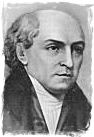
Some fifty years before this incident took place, a visitor might have seen over a small shop in a Northamptonshire village a sign-board with the following inscription:
| Second-hand Shoes Bought and Sold. WILLIAM CAREY. |
The owner of this humble shop was the son of a poor schoolmaster, who inherited a taste for learning; and though he was consigned to the drudgery of mending boots and shoes, and was even then a sickly, care-worn man, in poverty and distress, with a delicate and unsympathizing wife, he lost no opportunity of acquiring information both in languages and natural history and taught himself drawing and painting. He always worked with lexicons and classics open upon his bench; so that Scott, the commentator, to whom it is said that he owed his earliest religious impressions, used to call that shop "Mr. Carey's college." His tastes — we ought rather to say God's providence — soon led him to open a village school; and as he belonged to the Baptist community, he combined with the office of schoolmaster that of a preacher in their little chapel at Moulton, with the scanty salary of £16 a year. Strange to say, it was whilst giving his daily lessons in geography that the flame of missionary zeal was kindled in his bosom. As he looked upon the vast regions depicted on the map of the world, he began to ponder on the spiritual darkness that brooded over so many of them, and this led him to collect and collate information on the subject, until his whole mind was occupied with the absorbing theme.
It so happened that a gathering of Baptist ministers at Northampton invited a subject for discussion, and Carey, who was present, at once proposed "The duty of Christians to attempt the spread of the Gospel amongst heathen nations." The proposal fell amongst them like a bombshell, and the young man was almost shouted down by those who thought such a scheme impracticable and wild. Even Andrew Fuller, who eventually became his great supporter, confessed that he found himself ready to exclaim, "If the Lord would make windows in heaven, might this thing be?" But Carey's zeal was not to be quenched. He brought forward the topic again and again; he wrote a pamphlet on the subject; and on his removal to a more important post of duty at Leicester, he won over several influential persons to his views. It was at this time (1792) he preached his famous sermon from Isaiah 54:2,3, and summed up its teaching in these two important statements: (1) "Expect great things from God," and (2) "Attempt great things for God." This led to the formation of the Baptist Missionary Society; and Carey, at the age of thirty-three, proved his sincerity by volunteering to be its first messenger to the heathen. Andrew Fuller had said, "There is a gold mine in India; but it seems as deep as the center of the earth; who will venture to explore it?" "I will go down," responded William Carey, in words never to be forgotten, "but remember that you must hold the rope." The funds of the Society amounted at the time to £13 2s 6d.
But the chief difficulties did not arise out of questions of finance. The East India Company, sharing the jealousy against missionary effort, which, alas! at that time was to be found amongst the chief statesmen of the realm, and amongst prelates of the Established Church as well as amongst Nonconformist ministers, were opposed to all such efforts, and no one could set his foot upon the Company's territory without a special licence. The missionary party and their baggage were on board the Earl of Oxford and the ship was just ready to sail, when an information was laid against the captain for taking a person on board without an order from the Company, and forthwith the passengers and their goods were hastily put on shore, and the vessel weighed anchor for Calcutta, leaving them behind, disappointed and disheartened.
They returned to London. Mr. Thomas, who was Carey's companion and brother missionary, went to a coffee-house, when, to use his own language, "to the great joy of a bruised heart, the waiter put a card into my hand, whereon were written these life-giving words: 'A Danish East Indiaman, No. 10, Cannon Street.' No more tears that night. Our courage revived; we fled to No. 10, Cannon Street, and found it was the office of Smith and Co., agents, and that Mr. Smith was a brother of the captain's; that this ship had sailed, as he supposed, from Copenhagen; was hourly expected in Dover roads; would make no stay there; and the terms were £100 for each passenger, £50 for a child, and £25 for an attendant." This of course brought up the financial difficulty in a new and aggravated form; but the generosity of the agent and owner of the ship soon overcame it, and within twenty-four hours of their return to London, Mr. Carey and his party embarked for Dover; and on the 13th June, 1793, they found themselves on board the Kron Princessa Maria, where they were treated with the utmost kindness by the captain, who admitted them to his own table, and provided them with special cabins.
The delay, singularly enough, removed one of Carey's chief difficulties and regrets. His wife who was physically feeble, and whose deficiency in respect to moral intrepidity was afterwards painfully accounted for by twelve years of insanity in India, had positively refused to accompany him, and he had consequently made up his mind to go out alone. She was not with him when he and his party were suddenly expelled from the English ship; but she was so wrought upon by all that had occurred, as well as by renewed entreaties, that with her sister and her five children she set sail with him for Calcutta.
Difficulties of various kinds surrounded them upon their arrival in India. Poverty, fevers, bereavement, the sad illness of his wife, the jealousy of the Government, all combined to render it necessary that for a while Carey should betake himself to an employment in the Sunderbunds, where he had often to use his gun to supply the wants of his family; and eventually he went to an indigo factory at Mudnabully, where he hoped to earn a livelihood. But he kept the grand project of his life distinctly in view; he set himself to the acquisition of the language, he erected schools, he made missionary tours, he began to translate the New Testament, and above all he worked at his printing press, which was set up in one corner of the factory and was looked upon by the natives as his god.
Carey's feelings at this time with regard to his work will be best expressed in the following passage from a letter to his sisters:
"I know not what to say about the mission. I feel as a farmer does about his crop; sometimes I think the seed is springing, and then I hope; a little time blasts all, and my hopes are gone like a cloud. ...I preach every day to the natives, and twice on the Lord's Day constantly, besides other itinerant labours; and I try to speak of Jesus Christ and Him crucified, and of Him alone; but my soul is often dejected to see no fruit."
And then he goes on to speak of that department of his labour in which his greatest achievements were ultimately to be won:
"The work of translation is going on, and I hope the whole New Testament and the five books of Moses may be completed before this reaches you. It is a pleasant work and a rich reward, and I trust, whenever it is published, it will soon prevail, and put down all the Shastras of the Hindus. ...The translation of the Scriptures I look upon to be one of the greatest desiderata in the world, and it has accordingly occupied a considerable part of my time and attention."
Five or six years of patient unrequited toil passed by, and then four additional labourers were sent out by the Society to Carey's help. Two of them will never be forgotten, and the names of Carey, Marshman, and Ward will ever be inseparably linked in the history of Indian missions. Ward had been a printer; and it was a saying of Carey's, addressed to him in England, that led him to adopt a missionary's life: "We shall want you," said he, "in a few years, to print the Bible; you must come after us." Marshman had been an assistant in a London book-shop, but soon found that his business there was not to his taste, as he wished to know more about the contents of books than about their covers; so he set up a school at Bristol, mastered Greek and Latin, Hebrew and Syriac, and became prosperous in the world; but he gave up all to join Carey in his noble enterprise, and moreover, brought out with him, as a helper in the mission, a young man whom he himself had been the means of converting from infidelity. Marshman's wife was a cultivated woman, and her boarding school in India brought in a good revenue to the mission treasury. His daughter married Henry Havelock, who made for himself as great a name in the military annals of his country as his illustrious father-in-law had won for himself in the missionary history of the world.
The jealous and unchristian policy of the East India Company would not allow the newly arrived missionaries to join their brethren, and they were compelled to seek shelter under a foreign flag. Fortunately for the cause of missions, a settlement had been secured by the Danes at Serampore, some sixteen miles up the river from Calcutta, and it now proved "a city of refuge" to Englishmen who had been driven from territory which owned the British sway. The governor of the colony, Colonel Bie, was a grand specimen of his race; he had been in early days a pupil of Schwartz, and he rejoiced in knowing that the kings of Denmark had been the first Protestant princes that ever encouraged missions amongst the heathen. He gave the exiled missionaries a generous welcome and again and again gallantly resisted all attempts to deprive them of his protection, declaring that "if the British Government still refused to sanction their continuance in India, they should have the shield of Denmark thrown over them if they would remain at Serampore." Carey determined, though it was accompanied with personal loss to himself, to join his brethren at Serampore, and the mission soon was organized in that place, which became, so to speak, "the cradle of Indian missions." It possessed many advantages: it was only sixty miles from Nuddea, and was within a hundred of the Mahratta country; here the missionaries could preach the Gospel and work their printing press without fear, and from this place they could pass under Danish passports to any part of India. There was a special providence in their coming to Serampore at the time they did; for in 1801 it passed over to English rule without the firing of a shot.
They were soon at work, both in their schools and on their preaching tours. Living on homely fare and working for their bread, they went forth betimes in pairs to preach the word of the living God, now in the streets or in the bazaars, now in the midst of heathen temples, attracting crowds to hear them by the sweet hymns which Carey had composed in the native tongue, and inviting inquirers to the mission-house for further instruction. The first convert was baptized in the same year on the day after Christmas. His name was Krishnu. He had been brought to the mission-house for medical relief, and was so influenced by what he saw and heard, that he resolved to become a Christian. On breaking caste by eating with the missionaries, he was seized by an enraged mob and dragged before the magistrate, but to their dismay he was released from their hands. Carey had the pleasure of performing the ceremony of baptism with his own hands, in presence of the governor and a crowd of natives and Europeans. It was his first recompense after seven years of toil, and it soon led the way to other conversions. Amongst the rest, a high-caste Brahmin divested himself of his sacred thread, joined the Christian ranks, and preached the faith which he once destroyed. Krishnu became an efficient helper and built at his own expense the first place of worship for native Christians in Bengal. Writing about him twelve years after his baptism, Carey says, "He is now a steady, zealous, well-informed, and I may add eloquent minister of the Gospel, and preaches on an average twelve or fourteen times every week in Calcutta and its neighbourhood."
But we must turn from the other labourers and the general work of the mission to dwell upon the special work for which Carey's tastes and qualifications so admirably fitted him. We have seen that his heart was set on the translation and printing of the Scriptures, and to this from the outset he sedulously devoted himself. On the 17th March, 1800 the first sheet of the Bengali New Testament was ready for the press, and in the next year Carey was able to say, "I have lived to see the Bible translated into Bengali, and the whole New Testament printed." But this was far from being the end of Carey's enterprise. In 1806, the Serampore missionaries contemplated and issued proposals for rendering the Holy Scriptures into fifteen oriental languages, viz., Sanscrit, Bengali, Hindustani, Persian, Mahratta, Guzarathi, Oriya, Kurnata, Telinga, Burman, Assam, Boutan, Thibetan, Malay, and Chinese. Professor Wilson, the Boden Professor of Sanscrit at Oxford, has told us how this proposal was more than accomplished: "They published," he says, "in the course of about five-and-twenty years, translations of portions of the Old and New Testament, more or less considerable, in forty different dialects." It is not pretended that they were conversant with all these forms of speech, but they employed competent natives, and as they themselves were masters of Sanscrit and several vernacular dialects, they were able to guide and superintend them.
In all this work Dr. Carey (for the degree of Doctor of Divinity had been bestowed on him by a learned university) took a leading part. Possessed of at least six different dialects, a thorough master of the Sanscrit, which is the parent of the whole family, and gifted besides with a rare genius for philological investigation, "he carried the project," says the professor, "to as successful an issue as could have been expected from the bounded faculties of man." And when it is remembered that he began his work at a time when there were no helps or appliances for his studies; when grammars and dictionaries of these dialects were unknown, and had to be constructed by himself; when even manuscripts of them were scarce, and printing was utterly unknown to the natives of Bengal, the work which he not only set before him, but accomplished, must be admitted to have been Herculean. Frequently did he weary out three pundits in the day, and to the last hour of his life he never intermitted his labours. The following apology for not engaging more extensively in correspondence will be read with interest, and allowed to be a sufficient one:— "I translate from Bengali and from Sanscrit into English. Every proof-sheet of the Bengali and Mahratta Scriptures must go three times at least through my hands. A dictionary of the Sanscrit goes once at least through my hands. I have written and printed a second edition of the Bengali grammar and collected materials for a Mahratta dictionary. Besides this, I preach twice a week, frequently thrice, and attend upon my collegiate duties. I do not mention this because I think my work a burden — it is a real pleasure — but to show that my not writing many letters is not because I neglect my brethren, or wish them to cease writing to me."
Carey was by no means a man of brilliant genius, still less was he a man of warm enthusiasm; he had nothing of the sentimental, or speculative, or imaginative in his disposition; but he was a man of untiring energy and indomitable perseverance. Difficulties seemed only to develop the one and to increase the other. These difficulties arose from various quarters, sometimes from the opposition of the heathen, sometimes from the antagonism of the British Government, sometimes, and more painfully, from the misapprehensions or injudiciousness of the Society at home; but he never was dismayed. On the contrary, he gathered arguments for progress from the opposition that was made to it. "There is," he writes "a very considerable difference in the appearance of the mission, which to me is encouraging. The Brahmins are now most inveterate in their opposition; they oppose the Gospel with the utmost virulence, and the very name of Jesus Christ seems abominable in their ears." And all this is the more remarkable, when we remember that he was by nature indolent. He says of himself, 'No man ever living felt inertia to so great a degree as I do." He was in all respects a man of principle and not of impulse. Kind and gentle, he was yet firm and unwavering. Disliking compliments and commendations for himself, it was not his habit to bestow them upon others. Indeed, he tells us that the only attempt which he ever made to pay a compliment met with such discouragement, that he never had any inclination to renew the attempt. A nephew of the celebrated President Edwards called upon him with a letter of introduction, and Carey congratulated him on his relationship to so great a personage; but the young man dryly replied, "True, sir, but every tub must stand on its own bottom."
From his childhood he had been in earnest in respect to anything he undertook. He once tried to climb a tree and reach a nest, but failed, and soon came to the ground; yet, though he had to limp home bruised and wounded, the first thing he did when able again to leave the house was to climb that same tree and take that identical nest. This habit of perseverance followed him through life. One evening, just before the missionaries retired to rest, the printing office was discovered to be on fire, and in a short time it was totally destroyed. Buildings, types, paper, proofs, and, worse than all, the Sanscrit and other translations perished in the flames. Ten thousand pounds' worth of property was destroyed that night, no portion of which was covered by insurance; but under the master mind of Carey the disaster was soon retrieved. A portion of the metal was recovered from the wreck, and as the punches and matrices had been saved, the types were speedily recast. Within two months the printers were again at their work; within two more the sum required to repair the premises had been collected; and within seven the Scriptures had been re-translated into the Sanscrit language. Carey preached on the next Lord's-day after the conflagration, from the text, "Be still, and know that I am God," and set before his hearers two thoughts: (1) God has a sovereign right to dispose of us as He pleases; (2) we ought to acquiesce in all that God does with us and to us. Writing to a friend at this time, he calmly remarks that "traveling a road the second time, however painful it may be, is usually done with greater ease and certainty than when we travel it for the first time." To such a man success was already assured, and by such a man success was well deserved. And it came.
When the Government looked round for a suitable man to fill the chair of oriental languages in their college at Fort William, their choice fell, almost as a necessity, upon the greatest scholar in India, and so the persecuted missionary became the honoured Professor of Sanscrit, Bengali, and Mahratta, at one thousand rupees a month. He stipulated, however, that he would accept the office only on the condition that his position as a missionary should be recognized; and he took a noble revenge upon those who had so long opposed his work, by devoting the whole of his newly-acquired salary to its further extension. His new position served to call attention to missionary work; and by degrees a better feeling sprang up towards it both at home and abroad. Carey and his companions were at length able to preach in the bazaars of Calcutta. Fresh labourers had come to India. Corrie, Browne, Martyn, and Buchanan were stirring the depths of Christian sympathy by their work and by their appeals. Grant, Wilberforce, and Macaulay were rousing the British nation to some faint sense of duty; so that when the charter of the East India Company came to be renewed in 1813, the restrictive regulations were defeated in the House of Commons by a majority of more than two to one. In the very next year the foundations of the Indian Episcopate were laid; and in the following year Dr. Middleton, the first Metropolitan of India (having Ceylon for one archdeaconry, and Australia for another) was visiting the Serampore missionaries, in company with the Governor-General, and expressing his admiration and astonishment at their work.
Distinctions crowded fast upon the Northamptonshire cobbler. Learned societies thought themselves honoured by admitting him to membership. He had proved himself a useful citizen as well as a devoted missionary. He had established a botanic garden, and edited "The Flora Indica;" he had founded an agricultural society, and was elected its president; he suggested a plantation committee for India and was its most active member; he collected a splendid museum of natural history which he bequeathed to his college; he was an early associate of the Asiatic Society, and contributed largely to its researches; he had translated the "Ramayana," the most ancient poem in the Sanscrit language, into three volumes; he was a constant writer in the Friend of India; he founded a college of his own, and obtained for it a royal charter from the King of Denmark; and in these and other ways he helped forward the moral and political reforms which have done so much for Hindustan. He was one of the first to memorialize the Government against the horrid infanticides at Sangor, and he lived to see them put down. He was early in the field to denounce the murderous abominations of the Suttee [sati], and to oppose to them the authority even of the Hindu Vedas, and he had the satisfaction of seeing them abolished by Lord William Bentinck. He protested all along against the pilgrim tax, and the support afforded by the Bengal Government to the worship of juggernaut, and he did not die until he saw the subject taken up by others who carried it to a triumphant issue. What would have been his devout gratitude, had he lived to see the last links of connection between the Government and the idol temples severed in 1840, and Hindu and Mohammedan laws, which inflicted forfeiture of all civil rights on those who became Christians, abrogated by the Lex Loci Act of 1850! What would have been the joy of Carey, of Martyn, or of Corrie, could they have heard the testimony borne to the character and success of missions in India by Sir Richard Temple, the late Governor of Madras, at a public meeting held last year in Birmingham! He said,
"I have governed a hundred and five millions of the inhabitants of India, and I have been concerned with eighty-five millions more in my official capacity. ...I have thus had acquaintance with, or been authentically informed regarding, nearly all the missionaries of all the societies labouring in India within the last forty years. And what is my testimony concerning these men? They are most efficient as pastors of their native flocks, and as evangelists in preaching in cities and villages from one end of India to the other. In the work of converting the heathen to the knowledge and practice of the Christian religion, they show great learning in all that relates to the native religion and to the caste system. ...They are, too, the active and energetic friends of the natives in all times of danger and emergency."
So far as to the character of the missionaries. Speaking of their success, he said,
"It has sometimes been stated in the public prints, which speak with authority, that their progress has been arrested. Now, is this really the case? Remember that missionary work in India began in the year 1813, or sixty-seven years ago. There are in the present year not less than 350,000 native Christians, besides 150,000 scholars, who, though not all Christians, are receiving Christian instruction; that is, 500,000 people, or half a million, brought under the influence of Christianity. And the annual rate of increase in the number of native Christians has progressed with advancing years. At first it was reckoned by hundreds yearly, then by thousands, and further on by tens of thousands. ...But it will be asked, what is the character of these Christian converts in India? what practically is their conduct as Christians? Now, I am not about to claim for them any extreme degree of Christian perfection. But speaking of them as a class, I venture to affirm that the Christian religion has exercised a dominant influence over their lives and has made a decided mark on their conduct. They adhere to their faith under social difficulties. Large sacrifices have to be made by them. ...The number of apostates may almost be counted on the fingers. ...There is no such thing as decay in religion, nor any retrogression towards heathenism. On the contrary, they exhibit a laudable desire for the self-support and government of their Church. ...I believe that if hereafter, during any revolution, any attempts were to be made by secular violence to drive the native Christians back from their religion, many of them would attest their faith by martyrdom."
Carey was not the man to wish or to expect that Government should step out of its sphere in order to enforce Christianity upon the natives. "Do you not think, Dr. Carey," asked a Governor-General, "that it would be wrong to force the Hindus to be Christians?" "My Lord," was the reply, "the thing is impossible; we may, indeed, force men to be hypocrites, but no power on earth can force men to become Christians." Carey, however, was too clear-headed not to see, and too honest not to say, that it was one thing to profess neutrality, and another to sanction idolatry; that it was one thing to abstain from using earthly power to propagate truth, and quite another to thwart rational and scriptural methods of diffusing it. And he was too much of a statesman, as well as too much of a missionary, not to see that in respect to some tenets of the Hindu system it would be impossible for the Government eventually to remain neutral, inasmuch as they subverted the very foundations upon which all government is based.
Such was the man who in the sequel won deserved honour even from hostile critics, and earned high encomiums from even prejudiced judges. Well might Lord Wellesley, who was, perhaps, the greatest of Indian statesmen, say concerning him, after listening to the first Sanscrit speech ever delivered in India by an European, and hearing that in it Carey had recognized his noble efforts for the good of India, "I esteem such a testimony from such a man a greater honour than the applause of courts and parliaments."
Still, amidst all his labours and all his honours, he kept the missionary enterprise distinctly in view, and during the forty years of his residence in India he gave it the foremost place. Several opportunities and no small inducements for returning to his native land were presented to him, but he declined them all. "I account this my own country," he said, "and have not the least inclination to leave it;" and he never did. To the last his translations of the Scriptures and his printing press were his chief care and his chief delight. He counted it so sacred a work that he believed that a portion of the Lord's-day could not be better employed than in correcting his proof-sheets. In his seventy-third year, when weak from illness and old age, and drawing near to death, he writes, "I am now only able to sit and to lie upon my couch, and now and then to read a proof-sheet of the Scriptures; but I am too weak to walk more than across the house, nor can I stand even a few minutes without support." His last work was to revise his Bengali Bible, and on completing it he says, "There is scarcely anything for which I desired to live a little longer so much as for that."
He went back to Serampore to die; and "he died in the presence of all his brethren." It must have been a touching sight to see Dr. Wilson, the Metropolitan of India, standing by the death-bed of the dying Baptist, and asking for his blessing. It bore witness to the large-heartedness both of the prelate and of the missionary, and was a scene that did honour alike to the living and to the dying. Carey in his will directed that his funeral should be as plain as possible; that he should be laid in the same grave with his second wife, the accomplished Charlotte Rumohr, who had been a real helper to him in his work; and that on the simple stone which marked his grave there should be placed this inscription, and no more.
| WILLIAM CAREY Born August 17th, 1761; died ——. |
Loving hands filled up the blank with "the 9th June, 1834" Before he died he had the privilege of seeing three of his sons engaged in the work to which he had devoted his own life. He had aided in the establishment of more than thirty different missionary stations in various parts of India, and these were ministered to by some fifty pastors, one half of whom were natives of the country. He had seen a goodly number of converts gathered from heathenism into the Christian fold; and he had provided for them, and for multitudes who were to follow, the sacred Scriptures in their own divers tongues.
He sleeps in the mission burial ground of Serampore, beside Ward and Marshman. Ward had preceded him to the blessed rest by some eleven years, Marshman survived him by only three. They had lived and worked together in the midst of trial and opposition, for a quarter of a century, and they had learned to love one another as brothers. They had "coveted no man's silver or gold or apparel;" their "own hands had ministered to their necessities." "Marshman," says his biographer, "died like his colleagues, in graceful poverty, having devoted little short of £40,000 to the mission through a long life of privation. Their motives and their support amidst all their difficulties and dangers may be summed up in the following lines, which were written by Ward on his arrival at Serampore:
"Lord, we are safe beneath Thy shade,
And so shall be 'midst India's heat:
What should a missionary dread,
Since devils crouch at Jesus' feet?
There, blessed Saviour, let Thy cross
Win many Hindu hearts to Thee;
This shall make up for every loss,
Whilst Thou art ours eternally."
Speaking of this illustrious triumvirate, a dignitary of our Church in India has said, "There were only a few men at Serampore, but they were all giants." Other and distinguished missionaries succeeded them in their labours, but it is no disparagement to apply to them the language used concerning David's mighty men: "Howbeit [they] attained not unto the first three;" and we may add concerning Carey, what is said of the Tachmonite, "[He] sat in the seat, the chief amongst the captains."
From Modern Heroes of the Mission Field by W. Pakenham Walsh. New York: Fleming H. Revell, [n.d.]
>> More William Carey