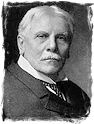
 I am to speak to you, during this conference, if God gives strength,
upon the Holy Spirit. I am glad to be permitted to speak on this
very important subject, but I do want, at the outset, to say that
I think we can very easily be too much occupied with the Holy Spirit.
The Holy Spirit in this dispensation is not in the world to occupy
us with Himself, but with the Lord Jesus Christ, and I believe
the chief characteristic of the Spirit-filled life is the heart
occupation and exaltation of our ever blessed Saviour-Lord. Nevertheless
there is in the New Testament a very important body of revelation
concerning the Spirit, and surely it is there for our learning,
and therefore we may, with glad hearts, give attention to it.
I am to speak to you, during this conference, if God gives strength,
upon the Holy Spirit. I am glad to be permitted to speak on this
very important subject, but I do want, at the outset, to say that
I think we can very easily be too much occupied with the Holy Spirit.
The Holy Spirit in this dispensation is not in the world to occupy
us with Himself, but with the Lord Jesus Christ, and I believe
the chief characteristic of the Spirit-filled life is the heart
occupation and exaltation of our ever blessed Saviour-Lord. Nevertheless
there is in the New Testament a very important body of revelation
concerning the Spirit, and surely it is there for our learning,
and therefore we may, with glad hearts, give attention to it.
I want to speak, first of all, as clearing the ground, upon the personal relationships of the Holy Spirit, and if you will turn with me to the fourteenth chapter of John and the sixteenth and seventeenth verses you will find indicated in two short words from our Lord's lips, words which may easily be fixed in the memory, two of these relationships.
You see that I am assuming something. I am assuming that you all believe that when we speak of the Holy Spirit we are speaking of a person, just as really as when we speak of the Lord Jesus Christ, the Son of God. That we are not speaking of an emanation from God, or an influence proceeding from God, nor a state of being, but we are speaking of the third person of the adorable and blessed Trinity. Our relationships with Him, therefore, are personal relationships. He is a real person, and just as we enter into various personal relationships here in the world, so is it with the Holy Spirit. He is a person, and His relationships with us are personal.
Now I ask you to turn with me to the fourteenth chapter of John, sixteenth and seventeenth verses, which I will read:
"I will pray the Father, and He shall give you another Comforter, that He may abide with you forever; Even the Spirit of truth; whom the world cannot receive, because it seeth Him not, neither knoweth Him: but ye know Him; for He dwelleth with you, and shall be in you."
Just for the present I want you to hold in your minds those two little words, with and in. "He dwelleth with you." That was a present fact. "He shall be in you." A future promise. With and in.
Now stop for a moment and ask what was the condition of these disciples of our Lord with reference to eternal life, regeneration, relationship to God? We know what it was. Answering for the others Peter had said, you know, in his great confession, "Thou art the Christ, the Son of the Living God." And our Lord, turning to Peter, said, "Blessed art thou, Simon Bar-jona: for flesh and blood hath not revealed it unto thee, but my Father which is heaven."
They had real, actual, personal faith in Jesus as the Son of God, and they were receiving Him as their Saviour, and therefore they were born again. The Holy Spirit was not yet in them, but He was with them, and they were, by the new birth, children of God.
Turn now for a moment to the last chapter of Luke, the 49th verse, "And, behold, I send the promise of my Father upon you: but tarry ye in the city of Jerusalem, until ye be endued with power from on high."
And now you have the third of the little words which indicate the personal relationships of the Holy Spirit. They are, "with," "in," and "upon."
The Holy Spirit was "with" the disciples when our Lord was speaking to them in the upper chamber these wonderful words which we have recorded by John in the twelfth, thirteenth, fourteenth, fifteenth and sixteenth chapters.
If you will turn with me to the twentieth chapter of John's gospel, nineteenth verse, you will see the fulfillment, for those disciples, of that promise, "He shall be in you."
"Then the same day at evening, being the first day of the week, when the doors were shut where the disciples were assembled for fear of the Jews, came Jesus and stood in the midst and saith unto them, Peace be unto you. And when He had so said, He shewed unto them His hands and His side. Then were the disciples glad, when they saw the Lord. Then said Jesus to them again, Peace be unto you: as my Father hath sent Me, even so send I you. And when He had said this, He breathed on them, and saith unto them, Receive ye the Holy Ghost."
I know very well there are brethren whom I honor and at whose feet as a learner I am, in most things, glad to sit, who teach concerning this act of our Lord's that it was simply symbolical; that it pre-figured Pentecost; that nothing really was done. When He breathed on them and said, "Receive ye the Holy Ghost," He did not impart to them the Holy Spirit and they did not receive the Holy Spirit to indwell them. I cannot believe it. I know of no Scripture which requires me to believe it.
I venture in all tenderness to suggest that the difficulty in the minds of the brethren who so teach, which compels them to make a mere symbol of our Lord's words and action on the evening of His resurrection arise from their failure to distinguish between the "in" and "upon" relationships — between, that is to say, the Spirit as indwelling the believer and the Spirit as baptizing the believer.
The great passage, John 7:37-39: "In the last day, that great day of the feast, Jesus stood and cried, saying, If any man thirst, let him come unto me, and drink. He that believeth on me, as the Scripture hath said, out of his belly shall flow rivers of living water. (But this spake He of the Spirit, which they that believe on Him should receive: for the Holy Ghost was not yet given; because that Jesus was not yet glorified"), refers exclusively to the "upon," or pentecostal relationship. In John 4:14 our Lord spoke of the indwelling Spirit as an upspringing fountain, "The water that I shall give him shall be in him, a well of water springing up into everlasting life"; in John 7:38 He spoke of the effect of the baptism with the Spirit as out flowing rivers. One is inner, and stands related to the believer's inner life, as we shall see later; the other has to do with his union to Christ in the one body, and to his outward life of service. "Ye shall receive power, after that the Holy Ghost is come upon you: and ye shall be witnesses," etc. (Acts 1:8).
The Bible is the most exquisitely accurate of books, because it is verbally inspired, and neither in Greek nor in English do the words "in" and "upon" mean the same thing. One might with equal propriety contend that church and kingdom mean the same thing.
Certainly the baptism with the Spirit could not be until the Head of the body should be in glory, for the first effect of the baptism with the Spirit was to unite the believers to Christ in the body, the church, and Eph. 1:22 expressly teaches that our Lord was not given to be head over the body till He had been raised from the dead and seated in glory. The word used of our Lord in the impartation of the indwelling Spirit (John 20:22) is very intense; "He breathed on them."
It will be remembered, also, that the risen Lord had before Him a forty-days' ministry to these very men (Acts 1:3), and surely it was of necessity that they should be able to spiritually discern the truth "pertaining to the kingdom of God."
Now then we have these three simple ways in which the Holy Spirit stands related to the believer; with the believer; within the believer; upon the believer. And you observe that in the case of these personal disciples of our Lord we see these relationships assumed by the Holy Spirit with an interval between. That is, He was with them before He was within them, and He was within them before He was upon them.
And so long as the Gospel was preached to Jews only — that is during the period of which Acts 1:9 gives the record — an interval of time elapsed between the act of faith and the receiving of the Spirit. For Israel the mediation of the Apostles was necessary, but, from the preaching of Peter in the house of the Gentile Cornelius to this hour, no interval intervenes between the moment when faith is exercised, and the receiving of the Spirit as indwelling and baptizing the believer. It is wholly unscriptural to tell believers to "seek the baptism" with the Spirit. Not one such injunction or exhortation can be found in the Apostolic writings. On the contrary, we are taught that "by one Spirit are we all baptized into one body" (1 Cor. 12:13).
Every believer on the Lord Jesus Christ has the Spirit with him, within him, and upon him.
Now I am afraid that I shall not carry you all with me just at once when I make that last statement. We are so constantly exhorted, all over the country, and by eminent brethren, too, and brethren greatly beloved in the Lord, to seek the baptism with the Spirit (the "upon" relationship), that the notion has come to be very widespread that one of the first duties of the Christian is to seek the baptism of the Holy Spirit. The believer is, indeed, commanded to be filled with the Spirit (Eph. 5:18), which is quite another matter, as we shall see.
The first thing with which faith has to deal is the fact that the Spirit does indwell the believer. I remember very well a dear old man in the South, a very sweet and lovely Christian, who was manifesting continually the fruit of the Spirit, and yet I never heard him pray that he did not ask the Father to give him the Spirit, and I finally said to him: "Brother, I have heard you pray many times to the Father to give you the Holy Spirit. When do you expect your prayer to be answered? Why is it not answered?"
"Well," he said, "that is a great puzzle to me; I can't understand it. I have been praying for these years to the Father to give me the Spirit, and I have not had an answer."
"Well," I said, "brother, you have been praying for something you have already, and instead of praying the Father to give you the Spirit you should be thanking the Father that He has given you the Spirit." And so we went to the Word to see about that.
And now let us, you and I, see whether the Scripture justifies my statement that if we are believers on the Lord Jesus Christ the Spirit does indwell our bodies.
I take you, first of all, to 1 Corinthians, the sixth chapter and nineteenth verse:
"What? know ye not that your body is the temple of the Holy Ghost which is in you, which ye have of God, and ye are not your own?"
But you will say, perhaps, that this was addressed to believers of the Apostolic day, to a superlative kind of thoroughly sanctified believers. No, indeed. The Apostle blames these Corinthian saints for everything that could be faulty in the life of a Christian. They are carnal, and walk as men; they are running after human leaders, Paul, Apollos, Cephas. They are going to law with one another before the world, and they are permitting a shocking condition of immorality in their assembly. And yet they were Christians. They were believers, but they were carnal believers, and to these the Apostle addressed this question: "What? know ye not that your body is the temple of the Holy Ghost which is in you, which ye have of God, and ye are not our own?"
They were living on a very low level indeed, but they were real believers on the Lord Jesus Christ, and therefore the Spirit of God dwelt in their bodies, making them temples.
That is a tremendous and transforming fact — the Holy Spirit indwells us. He is not going away. He is there to stay. I say it is a transforming fact, but we must begin by believing it. If, upon the alone testimony of the word of God, you will simply believe that the Spirit has already taken up His abode in your mortal bodies, you will find a transformation beginning, and very possibly some things that you now allow will no longer be allowed if that is really believed.
We must take things from the Word of God first, and then when we believe them we have an answering experience. I turn again to the eighth of Romans, and ninth verse:
"But ye are not in the flesh, but in the Spirit, if so be that the Spirit of God dwell in you. Now if any man have not the Spirit of Christ, he is none of His."
The word rendered "have" here is over and over again rendered "possess." If any man possesses not the Spirit of Christ he is none of His. The words "Spirit of Christ" do not mean to be like-minded with Christ. It is the Holy Spirit who is spoken of here. Therefore, if we are believers at all, dear friends, I repeat it, we have the Spirit.
But what a difference it makes when we come really to believe that within this wonderful temple of the body the mighty Spirit of God dwells, the Holy Spirit. Did you ever think why He is so constantly called holy? Surely He is no more holy than the Father or the Son. There is no preeminence of holiness in any one of the persons of the adorable Trinity. I have thought that perhaps it is because He enters so intimately into relationships with us as indwelling us. Perhaps God would remind us that He who dwells within us is, first of all, holy. Well, now if we come to believe that, dear friends, I repeat, there will come a change of life. I have seen it again and again.
I remember when I was a young man I was one of a house party at a country house, the home of a young friend of ours; and we were having what we called a good time, playing cards, and dancing, and all worldly amusements of that kind, when at dinner one evening the butler handed our host a telegram.
The face of our host, as he read the telegram, was a study. He appeared glad and he appeared confused, and presently he said, "My dear old mother will be here in an hour, on the next train, and all this dancing and card playing has got to stop. Why," he said, "I would not have her grieved by our doing any of these things in this house where she has lived for so many years for anything." And he told the butler to get every card in the house and burn it up. Presently she came; a dear, sweet-faced old saint, and we all fell in love with her at once, and as the evening drew to its close she told her son to bring the family Bible, and she said, "You read and I will pray." I noticed it took him a long time to find the place, but at last he did find it, and then she knelt down and prayed. Well, we remained there about a week after that, and the whole life of that house from that moment was keyed to the fact that this Godly old saint had come among us. Everything took color from her presence.
My friends, if we really believed that the Holy Spirit dwelt within these bodies of ours, how long do you think we could allow many things about which we are so careless today?
Here for the present we leave this most important subject. The Holy Spirit has taken up His abode in our mortal bodies! That is quite enough for us to meditate upon now. Just as God turned the house which Solomon built into a temple by filling it with the shekinah glory, so that it became sacred for Jehovah's abode in the midst of Israel, so the Spirit's indwelling should make unholiness of thought or word a horror and a shame to us.
The Work of the Indwelling Spirit.
We continue this evening the subject of the Holy Spirit. You will remember that we saw very clearly from the Word of God that if we are believers on the Lord Christ the Spirit of God dwells in our mortal bodies. It is a very beginning of days when a Christian really accepts that fact. When, instead of seeking the Spirit, we believe that He is already within.
And you will remember that we had begun to look together at the purposes of His indwelling — the work He seeks to do, and that we found as a primary result of His indwelling that the body becomes a temple. We speak sometimes of meeting houses as sacred places because they have been set apart for holy uses, but, ah, how infinitely more holy and sacred is this wonderful temple of the body by reason of the fact that the Holy Spirit dwells in it. You know that when Solomon's temple was built it was given over to God. The ark was brought into the most holy place, and then the priests went out, and the glory of the Lord filled the house, and from that moment it was a temple. It was a temple in intent and purpose all the while Solomon was building it, but when God by the Shekinah glory took possession of it, then it became God's temple.
Well that is just true of us, dear friends, of these bodies of ours only in a far more wonderful sense, for God Himself dwells in these temples by His Spirit. It is a serious fact.
And next I ask you to note that the Spirit indwells the believer to give victory over the flesh, and oh, dear friends, how important that is. The old self life is there; the old Adam nature is there. In a very real sense the believer on the Lord Jesus Christ, who has been born of the Spirit and made a partaker of the divine nature, is two persons. More accurately he has within his one personality two natures. The divine nature imparted by the Spirit of God in the new birth and the old Adam nature. You will remember how, in an experimental way, this is brought out by the seventh chapter of Romans. There you have a renewed man, a believer on the Lord Jesus Christ; a justified believer, and knowing himself to be such, but he is destitute of either rest or victory. He is in constant inner strife, and his experience is one of constant defeat. It is one of the saddest and most tragic passages of the Word of God, and yet one is constrained to believe that it describes an average Christian experience. But the seventh of Romans is immediately followed by the eighth, and there the same man gives us quite a different aspect of Christian life and Christian experience. Indeed, the great apostle to the Gentiles illustrates in himself the only three possible phases of religious and Christian experience. First, as a Jew, he was a very religious man, intensely religious, working day and night at his religion: far more zealous in the religion of his fathers than many of his equals in his own nation, profiting more in it than they, — intensely religious, perfectly self-satisfied — but lost.
And then he met Jesus on the way to Damascus and was saved, and then he was miserable, for, as we discover by the seventh of Romans, he was trying to go on as a Christian under the law, and that is always misery, and always defeat.
And then Paul passed into a third phase of experience, of which Romans 8:2 is the expression: "The law of the Spirit of life in Christ Jesus hath made me free from the law of sin and death." The conflict of the seventh of Romans had passed into victory — not by the method of law-works and self-determination, but by the power of the Spirit indwelling him.
Now, I believe that the professing church illustrates continually these three phases of experience. Hosts are in Paul's first state; religious churchgoers, church members. They are very diligent in the outward things of religion, and they are quite contented with themselves, but when you speak of inward struggles or any vital Christian experience, they wonder what you are talking about.
I was preaching once on Romans 7:18, where the apostle, going back in his experience, tells of the time when to will was present with him, but how to perform that which was good he found not.
One of my hearers came to me when the sermon was ended and said, "I cannot understand what was the matter with Paul. Why, it seems the easiest thing in the world to be good. I don't have any difficulty about being good." I asked my friend — a very faithful church member — what he thought the apostle Paul meant by being good. "Why," said he, "to be honest, pay your debts, be kind to your family, abstain from worldly amusements, stay away from theaters, and let cards alone, and that kind of thing." Said he, "I don't find any difficulty in that."
"Now," I answered, "let me give you my idea of what Paul meant," and I turned to some of the exhortations of the epistles concerning the Christian walk. I turned back to the beatitudes, "Blessed are the meek." I said, "Did you ever try to be meek?" Well, he could not say that he ever had. Didn't know that he admired meekness especially.
"Well," said I, "that is just it. You try to be meek once, and you will soon come upon Paul's difficulty. You can act meekly, of course, for awhile, until somebody angers you, or something arouses your pride. What the Apostle Paul agonized for was to be the beatitudes, and he could not accomplish it, though he was saved, a justified man.
Then, other multitudes, like Paul in the seventh of Romans, are saved but without victory over the self-life, striving to please God by law-works, and to get peace of conscience by religiousness. They are like Israel in the wilderness, restless, murmuring, often lusting after the things of Egypt, and, finally, a few, knowing the blessed purpose and power of the indwelling Spirit, quietly reckon upon Him for victory.
Some one said, "I hear a great deal of talk about the Pope of Rome, but the pope who troubles me most is Pope Myself." Oh, dear friends, that is it, the real enemy is in us. When conscience, under the searchlight of Scripture, accuses us of failure, we straightway blame Satan. But read Mark 7:20-23, and remember that all that is latent within.
I beg you to note the apostle's secret of victory. He opens the secret to us at once: "The law of the Spirit of life in Christ Jesus hath made me free from the law of sin and death" (Romans 8:2). The law of sin which is in his members, the law of death written and engraved in stones. The man is delivered. He is made free. By what? By new resolutions? By more prayer? By getting up earlier in the morning, and keeping the morning watch? Oh, he had gone through all that kind of thing when he was a Jew. What he wants is reality now, and he has got reality. Now a new law, a new power, a new enablement has come in and delivered the man; that is what he is telling us. And then he was working so hard in the seventh of Romans to perfect a character which God could approve, and now he finds the wonderful truth — the righteousness of the law is fulfilled in (not by) those who walk not after the law but after the Spirit; and so it goes on, one continuous shout of victory from the beginning to the end of the chapter, all based on the perfect work of Christ, but made into actual experience by the Holy Spirit dwelling in the believer.
Turn upon that point to one other passage, the fifth of Galatians, sixteenth and seventeenth verses: "This I say, then, walk in the Spirit, and ye shall not fulfill the lusts of the flesh." Why? "For the flesh lusteth against the Spirit, and the Spirit against the flesh." The omnipotent Spirit of God dwelling in the believer and the flesh in the believer are contrary the one to the other, but the Spirit has power, as we walk in Him, perfectly to keep in the place of death the deeds of the body, the flesh and its motions. So that we are utterly without excuse if we are saying: "Well, I was angry this morning, but I am naturally high-tempered, but it is just a flash, and it is all over; I am not one of those who hold malice." Oh, yes, it is just a flash, as you turn on your doorstep to go to work in the morning, and your wife suffers over it all day long, and you let yourself off by pleading your nature. God help you!
Observe, it is not you and the Holy Spirit. It is the Holy Spirit. He does not ask any of your help in that. He asks only one thing, that you shall walk in Him. Now what is it to walk in the Spirit? Why, it is to walk in yieldedness to the Spirit.
You read that Jesus returned in the Spirit unto Galilee. He had, so far as we know, nothing to do that day but take a walk; but He was "in the Spirit" — a Spirit-guided Man that day. All His whole nature and being were consciously yielded up to the control of the Spirit. That is walking in the Spirit. Now here is an imperative promise: "Walk in the Spirit and ye shall not fulfill the lusts of the flesh." It is one of the divine imperatives. Ye shall not. God means that. And then He explains why ye shall not: "For the flesh lusteth against the Spirit, and the Spirit against the flesh: and these are contrary the one to the other: so that ye cannot do the things that ye would" (Galatians 5:17).
Oh, what a wonderful, wonderful office! What a wonderful privilege! The strife goes on, but it is the Spirit against the flesh. Omnipotence against the old Adam nature, and you, the new man, are out of the conflict, and in peace, and you are asked to do but one thing — walk in yieldedness to Him. What a privilege! What a marvelous privilege!
I would say again, that the Spirit of God dwells in the believer to produce that thing that we hear so much — if you will allow me to so put it — twaddle about — Christian character. It is the great talk of the modern preachers — character, character, character. One gets tired of the word. One feels some sense of relief that the word is not in the Bible. We are to be saved by character, we are to make character, and to build character.
I suppose the idea is that we are to practice sedulously some grace of the Christian life until it has become a kind of habit, and then we take up another, and build up, at last, a complete character. That is the seventh of Romans again.
What of Christian character? How does it come? Let me read (Galatians 5:22,23).
"The fruit of the Spirit is love, joy, peace, longsuffering, gentleness, goodness, faith, meekness" [ah, it is possible then to be meek!], "temperance: against such there is no law."
There are the nine beautiful elements of real Christian character, and how are they produced? "The fruit of the Spirit." It carries one back in thought to our Lord's vital presentation, that intensely vital presentation of the great truth of our oneness with Him. "I am the vine, ye are the branches." "He that abideth in me, and I in him, the same bringeth forth much fruit." How does the branch bear fruit? It has no roots of its own, but because it is in the vine the life energies of the vine fill the branch and it grows, and blossoms, and at last there come the rich clusters of grapes, and the energy of the vine in the branch has produced that. The branch has not been worried over the fruit bearing. The branch has done nothing in the world but just abide in the vine. That is all.
These are the fruits; these are the graces which are not possible to be produced by any manner of self-effort. By no manner of effort can you make yourself loving, by no manner of effort can you ever have peace; no mere will power will ever make you longsuffering. Nothing will give you gentleness, goodness, faith, meekness, temperance, but the Spirit of God.
The Spirit of God by His own power and energy produces these things in the believer who walks in the Spirit, and the believer who walks in the Spirit rests on the divine imperative that he shall not fulfill the lusts of the flesh.
Then the Spirit gives discernment of truth. I will read you just one passage. 1 Corinthians, second chapter: "The natural man receiveth not the things of the Spirit of God: for they are foolishness unto him: neither can he know them, because they are spiritually discerned," and therefore I do not care how learned in the learning of mankind any theologian or critic may be, if he without renewal and without spirituality is examining the word of God I will just ask him to please let me pass on and not take my time, because it is impossible for him to help me, and his authority as a critic, a scholar, I thank God, does not awe me. I would just as soon think of reading a long book about the color of a rose, written by a blind man who had never seen a rose, as I would a long criticism upon the Bible by a mere professional professor in some theological school; but now observe, "He that is spiritual judgeth all things."
Oh, that is it. It is by the Spirit that the truth of God is made actual to us, and ceases to be to us a dead word, and becomes to us the living word, which it surely is, the Spirit Himself marvelously interpreting it.
Now I beg you to note most carefully that another classification comes in here; "And I, brethren, could not speak unto you as unto spiritual, but as unto carnal, even as unto babes in Christ" (1 Cor. 3:1).
And they were Christians, and the Spirit was dwelling in them! But, dear friends, the Spirit indwelling is not a mechanical thing. Do not imagine that because you can take by faith unhesitatingly the fact that the Spirit does dwell in you that therefore you are of necessity spiritual. You may be very carnal. You may be grieving the Spirit and quenching the Spirit every conscious moment of your lives! It is the fact that you are yielding to the Spirit, walking in the Spirit, the Spirit having His sovereign way within, that makes the believer spiritual. Then, one may have a great deal of knowledge, and only be puffed up by it, and one may have very little knowledge, and yet be very spiritual, and, in the sphere of his capacity, very helpful in the things of God. For it is too often true that knowledge puffeth up, love buildeth up.
Then, finally, — and with this I shall release you — that it is the Spirit who renews and nourishes the spiritual life.
Look at our Lord's beautiful figure in the fourth chapter of John's Gospel, "whosoever drinketh of the water that I shall give him shall never thirst; but the water that I shall give him shall be in him a well of water springing up into everlasting life."
But what a picture of renewal, what a picture of vitality; what a figure of vigor and freshness in the inner life. I believe that the great trouble with Christian people to-day is what might be called "low vitality." They have life, but they have not the life more abundantly.
I remember going once with a friend to speak a little to some poor weak ones who were in a convalescent home near London. And this friend said, "Won't you go out there and speak to those poor ones? They are very weak, and you must give them milk. They cannot concentrate their minds very well, but do come and just give them a little simple word; it may be a blessing to them."
I was never in a place where my heart was more touched and yet, remember, all those people there had been discharged by the doctor. They were all pronounced cured, or they could not be there, but there was something so pathetic in the weakness and irritability and lack of power of those poor people.
Why, as I look at the present day church statistics, it seems to me that many of them are little more than convalescent retreats. They have life, perhaps. They have had the touch of the Great Physician, but how ineffective they are. How unable they are to go on with anything in the work of the Lord. How little they apprehend even the possibilities that lie latent in Christian life. What do they need? They need to be drinking at the fountain. They need to be filled. What a picture of renewal that is. If a fountain is to be upspringing it must continually be fed from a source higher than itself, and the inlet must be kept open, and the outlet must be kept open, and then the fountain sends forth its crystal waters, and in its way sings a song of praise to God.
The water is there, but the difficulty is that the inlet and the outlet are both very much obstructed. We are obstructing the inlet when we grieve the Spirit of God, and we certainly obstruct the outlet when we quench the Spirit of God.
But there He is with all these possibilities of glorious and abundant life within. It is not power for service that I am speaking of now. That you get in the seventh chapter of John, the out flowing rivers of living water. It is the inner life which is before the mind of the Lord Jesus here when He speaks of the upspringing fountain of living water; or in Paul's phrase, "strengthened with might by His Spirit in the inner man."
Oh, there is the great arena where all spiritual victories must be gained. We hear so much to-day about power for service, and we are told to be "seeking" power for service.
Why, read the fourteen Epistles of Paul, and note that he never tells the believer to seek power for service — a strange omission, if these brethren are right. Not one single exhortation or command to seek the baptism of the Spirit or to seek power in all these Epistles. The power is waiting for us, but what we have here is not power; it is the inner life, — strengthened with might by His spirit in the inner man.
Now let us think of it, dear friends, just a little personally. The Spirit of God, with all these precious possibilities, latent in the fact, dwells in you and me. We may walk in victory — are we walking in victory? We may be faithful — are we faithful?
Have you noticed — and this is the last word — that in that parable of the vine and the branches there are three degrees of fruit-bearing? "Fruit," "more fruit,"' "much fruit," and never until we reach much fruit do we glorify the Father. "Herein is my Father glorified, that ye bear much fruit." Oh, the religious world can imitate a poor little sort of fruit-bearing. Anyone can do the convenient things. There are a great many nice people in the world, but they cannot be holy. It is impossible. The world cannot be spiritual, but we may, and we may produce those lovely graces which are the fruit of the Spirit, refreshing to ourselves and a testimony unanswerable to all who know us.
From Things Old and New... by C. I. Scofield. New York: Publication Office "Our Hope," ©1920.
>> More C. I. Scofield