Among the elements of success in personal work may be mentioned:
1. Tact.
 "Tact," according to the dictionary, "is a quick or intuitive
appreciation of what is proper, fitting or right; the mental ability of doing
and saying the right thing at the right time so as not to unjustly offend or
anger."
"Tact," according to the dictionary, "is a quick or intuitive
appreciation of what is proper, fitting or right; the mental ability of doing
and saying the right thing at the right time so as not to unjustly offend or
anger."
In other words, tact is nothing more or less than skill and facility in dealing with men. Tact has been called the life of the five senses: it is the open eye, the quick car, the judging taste, the keen smell, the lively touch. Tact knows what to do and when and how to do it.
Christ manifested great tact in His reply to the unreasonable question of the Pharisees, when He called for a coin, and in reply to the captious question of His enemies, said: "Render to Caesar the things which are Caesar's, and to God the things which are God's."
Paul showed tact when, brought before the tribunal, perceiving that his audience was divided on the question of the resurrection of the dead — the Pharisees believing it, and the Sadducees disbelieving it — he cried out: "Of the hope and resurrection of the dead I am called in question." His tact won the day; for we read, that, immediately following this appeal, there "arose a dissension between the Pharisees and the Sadducees: and the multitude was divided." In writing to the Corinthians, Paul says: "Being crafty, I caught you with guile."
A Salvation Army lass was once accosted by a young dude whom she asked to buy a War Cry for five cents. "Give me ten cents' worth of prayer," said the foolish youth. Instantly the lassie knelt down before the young man and the young ladies who were accompanying him, and prayed for the fellow. And so earnestly did the lassie pray that that young man sought her a few days later and asked her to point him to a Saviour who could save him from his waywardness and sin. That young lassie had tact.
Philip the evangelist had tact, and manifested it in dealing with the Ethiopian eunuch (Acts 8). Instead of blurting out, as many Christian workers do today: "Are you a Christian? if not, you are going to hell; repent, or you will be damned," he approached him with the question, quite natural to a man who was engaged in reading, "Understandest thou what thou readest?" The result of such tactful dealing was that the eunuch invited the evangelist to ride with him and explain to him the way of salvation. Ultimately the man found Jesus Christ as his Saviour, and went on his way rejoicing. Many an untactful man would have spoiled that magnificent opportunity.
Fishermen teach us the value of tact in their choice and use of various kinds of bait, and in the different methods pursued in catching different kinds of fish.
Tact supplies the lack of many talents; indeed, the lack of it is oftentimes fatal. A little tact and wise management very often gain a point which could be gained in no other way.
It is fortunate for the Christian worker that this element of success in personal work is at his command. It comes from God in answer to prayer. If a man does not have it by nature, he may have it by grace. God will give it in answer to prayer. "If any of you lack wisdom [tact], let him ask of God, that giveth to all men [and women alike] liberally, and upbraideth not; and it shall be given him" (James 1:5). Compare 1 John 2:29; Acts 13:9,10.
2. Contact.
Contact is defined as the coming together of two bodies in space. It means, in personal work, the coming into touch with your man. Contact is button-holing, "tackling" your man. A man may have all the tact in the world, but it will be useless unless he gets into contact with men. Contact is tact put into practice.
Samson had strength sufficient to pull down the great temple of the Philistines; but it was of no avail until he was put into contact with, and his arms enclosed, the mighty pillars which supported the massive temple. Of what use is all our knowledge of methods, if we do not go after men and deal with them individually?
Of what use is the sword if there is no battle to be fought, no cause to be defended, no victory to be won? You may have the finest fishing tackle that money can buy in the cupboard in your home, but it will not catch fish for you until you bring it into contact with the fish in the water. So a Christian worker may have fine tackle for spiritual fishing — a knowledge of the habits of men and a good knowledge of the various Scripture passages to use in catching them — and yet be utterly futile and useless as a personal worker unless he comes into contact with men.
There are two things to remember about contact: first, we must have contact with God; second, we must have contact with men. We must be heart-foremost with God if we would be head-foremost with men. Jacob is a good illustration of this. First, he wrestled with God, and then, as a result, he had power with men. Witness his victory over his brother Esau.
3. Ability.
Ability is defined as the power of bringing things to pass. Ability was characteristic of the life of Jesus. Again and again do we find the words, "And it came to pass."
(a) We need ability to read and understand men.
Jesus knew men. We are told in John 2:24,25, that "Jesus knew all men ... he knew what was in man." Just as the successful fisherman must understand the habits of fish, so must the successful personal worker understand the ways, reasonings, disputings, and methods of men. Different temperaments need to be dealt with in different ways.
(b) We need ability in the handling of the Bible.
We should be able to handle our Bibles and turn to the desired location as expertly as the book agent turns to his prospectus and the life insurance man to his book of tables.
Philip the evangelist would have lost a magnificent opportunity if he had not been able to find the place in the Scriptures where it is written. We must be experts in the handling of the Word of God. Sometimes to hesitate means to lose the case you are dealing with. See how quickly Jesus turned to just the place he wanted when he was called upon to read in the synagogue at Nazareth (Luke 4:17): "And when he had opened the book, he found the place where it was written." Ability to find the place where it is written inspires confidence in the inquirer, whereas hesitancy is a barrier to effective dealing. We need ability in handling the Bible, for three reasons:
First: To show men from the Word of God that they are sinners.
It need hardly be said that all men do not concede that they are sinners. In order to convince them of this fact, we need words that are divine. No words of ours can produce conviction of sin: God's Word alone can do that. It is the "sword of the Spirit" alone that can prevail in such a conflict as this, and the sword of the Spirit is the Word of God (Eph. 6:17).
Secondly: To point men who are convicted of sin to Jesus Christ, who is the Sin-bearer.
This can only be done by directing the thought of the inquirer to those passages of Scripture which set forth the death of Christ as the propitiation for the sins of men. No words of ours can give peace and assurance to souls that are burdened with the knowledge and guilt of sin. God must speak if men are to hear the words, "Go in peace; thy sins are forgiven thee."
Thirdly: We must use the Bible in order to establish men in the faith, and to direct them to the means of growth in the Christian life.
It is not enough that we get men saved. We must show them how to make a success of the Christian life; we must show them how to "grow in grace, and in the knowledge of our Lord and Saviour Jesus Christ" (2 Peter 3:18).
(c) Again, we need ability to bring about decisions.
Many Christian workers find themselves unable to bring the inquirer beyond a certain point. They can bring the inquirer to acknowledge his sinfulness and express his desire to accept Christ as his Saviour, but cannot get him to really DO IT; and so the earnest, anxious inquirer goes away unsaved, simply because the personal worker did not have the ability to bring things to a final issue. Anyone who has had any experience whatever in fishing knows that there is a world of difference in having a fish nibble at your hook and in catching it, and landing it right in the boat. To have a fish nibble at your hook is a good thing; to be able to lift it out of the water is a better thing; to land it right in the boat is the best thing of it all. So it is in spiritual fishing — in the catching of men. It is good to find an inquirer; it is better to be able to show him the way of life; it is best to be able to get him to definitely accept Christ as his personal Saviour.
Ability, as all the other essential factors of successful soul-winning, is something within the reach of the humblest child of God. It, too, is a gift from God, and comes in answer to prayer. We are told in 1 Peter 4:11 that there is such a thing as "the ability which God giveth." Then let us ask God in prayer to grant us this power so that we shall be able to bring things to pass for Him.
4. The appreciation of opportunities. (Eph. 5:16.)
An opportunity is defined as a time with favoring or propitious circumstances; a favorable chance.
The personal worker must be an opportunist; he must believe in opportunism. The buying up of opportunities for Christ is not to be understood as an effort to save hours which we might be tempted to waste from idleness, but the effort to so control our time that we shall not allow any selfish motive, any cowardly timidity, to stand in the way of our doing good. The Christian worker must emulate the merchant who is quick to seize every bargain that is passing before him. As he buys up goods, so we must buy up opportunities for doing good, and especially those opportunities which are afforded us of speaking to men about their souls.
Paul tells us to redeem the time. By that he seems to indicate that every moment has its opportunity assigned to it in the way of doing good. By doing duty at the moment of opportunity we make a purchase of it, and thus not only make gain for good and for Christ's kingdom, but also take away that time from the evil one, and thus reduce the power of his dominion. When we let an opportunity to speak to a soul go by we let Satan take the time from us, and thus we contract a debt. Much is said in market circles of "getting a corner on the market." Let us get a corner on time and buy up every opportunity for Christ.
Two or three things may be said in this connection:
(a) Do not force opportunities.
Force is the opposite of opportunity. If you are in constant and continual communion with God, He will direct you in this matter. The question may be asked, "Must we not then speak to people unless we are moved to do so?" Possibly the best answer to this question is, that if you are in continual fellowship with God, you will be moved whenever the opportunity is presented to you.
(b) Then again, We should see to it that we miss no opportunities.
As men in the gold fields are constantly on the lookout for gold veins, so should the personal worker be on the lookout for souls. Wherever we are, whatever we may be doing, wherever we may be going, we should be on the lookout for opportunities for personal dealing. Much, oh, how much depends upon the wise use of the opportune moment! "There is a season when it is good to take occasion by the hand."
(c) Finally, The wise use of opportunities implies good planning of time.
Many of us waste much time because we have no definite plan for that time. Again, many opportunities are lost because we do not give the proper relative value to time. Put first things first, the essential before the non-essential, the primary before the secondary.
Two reasons are given in the Scriptures for the wise use of time and opportunities: First, because the days are few, because the daytime is working time, and the night cometh — oh, how soon it cometh — when no man can work. We must work while it is day (Gal. 6:10). Second, because "the days are evil": that is to say, the times and circumstances of life do not lend themselves to such spiritual use of time. The world seems to be wholly occupied with the enjoyment of sin and selfish pleasure. Such a world is not a great encouragement to definite soul-winning work for God.
5. An absolute conviction of truth.
What is truth? The truth as it is in Christ Jesus — the truth as Jesus taught it, and as it is expressed in the Bible. The truth regarding man, his lost condition, and his salvability; the truth regarding the redemptive work of Jesus Christ and the possibilities of fallen man because of it; the truth regarding the future: that whosoever believeth shall be saved, and whosoever believeth not shall be condemned.
Doubt and indecision in the worker beget doubt and indecision in the inquirer. If you are not sure that men are lost, then there is not much use in your trying to save them. If there is no wreck, there is no use in putting out the lifeboat. If there is no one drowning, what is the use of throwing out the lifeline? If your neighbor's house is not on fire, what is the use of going to his house in the dark of the night, and arousing him and his family, and warning him of the danger? But if there is a shipwreck, if there is a man overboard, if your neighbor's house is on fire, then quickly and earnestly man the lifeboat, throw out the lifeline, give your neighbor warning. The personal worker must be fully assured of some things; and these are some of the things: that all men are sinners, and as such will be lost, unless Jesus saves them; that Jesus died to save them, and by faith in Him, and that alone, they can be saved; that outside of the redemption that is in Christ Jesus all men are lost; that in Him men are saved. These are some of the truths concerning which the personal worker must not be in doubt if he is to be successful in winning men for Christ.
6. A faith that never despairs.
We must be able to see the germ of the saint in the chief of sinners, the fairest flower in Christ's garden in the outcast woman of the street. We must believe, as the genealogies of Jesus teach us, that Jesus came through all sorts of people in order that He might save all sorts of people. We must see all men, not as they are in themselves, but as they may be in the light of the cross of Christ. This is what Paul meant when he said he was determined to know no man after the flesh * * * If any man was in Christ Jesus, he was (or became) a new creature. (2 Cor. 5:17.) We are told that a very beautiful face of the Christ was once painted on a very soiled linen handkerchief. So can the image of Christ be painted upon the worst of men. Such men as John B. Gough and John G. Woolley, the gutter drunkards, and Jerry McAuley, the river pirate, may, yea, have become the great temperance orators, the successful mission workers. We must believe in a gospel of hope — not too quick to believe that there is such a thing as being past redemption point in the matter of salvation. "Is anything too hard for the LORD?" (Gen. 18:14) — this must be the watchword of the successful personal worker. We are to despair of no man.
7. Infinite patience.
The personal worker must be able to endure the "contradiction of sinners against themselves," the senseless arguments of those who oppose themselves, the treachery and deceit of those who follow Christ for "the loaves and fishes." He will deal patiently with men who are weak and who backslide easily. He will be called upon to lift them up after they have fallen more than once or twice. Judson, in Burmah, unable to tell of conversions in his first report, said: "Permit us to labor in obscurity for twenty years, and you shall hear from us again." And he was heard from.
8. A deep sense of responsibility.
Every personal worker ought to read often the third and thirty-third chapters of Ezekiel. Possibly no part of the whole Bible sets forth the responsibility of one man for another as do these chapters. It may not be our responsibility to bring every individual to Christ; but it is our responsibility to see that Christ is brought to every individual. Every man may not want Christ; but Christ wants every man, and it is our business to let every man know that Christ wants him. God has appointed me "my brother's keeper," whether I will it or not. "When I say unto the wicked, O wicked man, thou shalt surely die; if thou dost not speak to warn the wicked from his way, that wicked man shall die in his iniquity; but his blood will I require at thine hand. Nevertheless, if thou warn the wicked of his way to turn from it; if he do not turn from his way, he shall die in his iniquity; but thou hast delivered thy soul" (Ezek. 33:8,9).
Daniel Webster was once asked what was the most solemn thought he had ever entertained. In reply, he said: "My personal responsibility to God." Can there be any more solemn thought than this for a Christian worker?
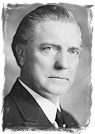
From Personal Soul-winning by William Evans. Chicago: The Bible Institute Colportage Association, 1910. Photo courtesy of Moody Bible Institute Archive.
>> More Personal Soul-winning