treasures of old
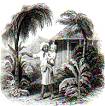 Henry
L---- was born at Dinapore, in the East Indies. His father was an officer
in the Company's service, and was killed in an attack upon a mud fort belonging
to a zemeendar, [a landholder] a few months after the birth of his
son. His mother also died before he was a year old. Thus little Henry was
left an orphan when he was a very little baby: but his dying mother, when
taking her last farewell of him, lifted up her eyes to Heaven, and said, "O
God, I leave my fatherless child with thee, claiming thy promise in all humility,
yet in full confidence that my baby will never be left destitute; for in
thee the fatherless find mercy." The promise to which she alluded is to be
found in Jeremiah 49:11. "Leave thy fatherless children, I will preserve
them alive; and let thy widows trust in me."
Henry
L---- was born at Dinapore, in the East Indies. His father was an officer
in the Company's service, and was killed in an attack upon a mud fort belonging
to a zemeendar, [a landholder] a few months after the birth of his
son. His mother also died before he was a year old. Thus little Henry was
left an orphan when he was a very little baby: but his dying mother, when
taking her last farewell of him, lifted up her eyes to Heaven, and said, "O
God, I leave my fatherless child with thee, claiming thy promise in all humility,
yet in full confidence that my baby will never be left destitute; for in
thee the fatherless find mercy." The promise to which she alluded is to be
found in Jeremiah 49:11. "Leave thy fatherless children, I will preserve
them alive; and let thy widows trust in me."
After Henry's mother had died, a lady who lived at that time in a large puckah [brick or stone] house near the river between Patna and Dinapore came and took little Henry, and gave him a room in her house, giving strict orders to her servants to provide him with every thing that he wanted. But as she was one of those fine ladies who will give their money (when they have any to spare) for the relief of distress, but have no idea how it is possible for any one to bestow all his goods to feed the poor, and yet lack charity; she thought that when she had received the child, and given her orders to her servants, she had done all that was necessary for him. She would not afterward suffer Henry to give her the least trouble, nor would she endure the smallest inconvenience on his account: and thus the poor child, being very young, and unable to make known his wants, might have been cruelly neglected, had it not been for the attention of a bearer, [a servant whose work is to carry a palanquin, but who is frequently employed to take care of children] who had lived many years with his father, and had taken care of Henry from the day that he was born.
When Henry was a very little baby, Boosy (for that was the bearer's name) attended him night and day, warmed his pap, rocked his cot, dressed, and undressed, and washed him, and did every thing for him as tenderly as if he had been his own child. The first word that little Henry tried to say was Boosy; and when he was only ten months old, he used to put his arms round his neck, and kiss him, or stroke his swarthy cheek with his delicate hand.
When Henry was carried to the lady's house, Boosy went with him, and for some years the little child had no other friend than his bearer. Boosy never left his choota sahib, [little master] except for two hours in the twenty-four, when he went to get his khauna [food]. At night he slept on his mat at the foot of the child's cot; and whenever Henry called, he was up in a moment, and had milk or toast-and-water ready to give him to drink. Early in the morning, before sunrise, he took him out in a little carriage which was provided for him, or carried him in his arms round the garden. When he brought him in, he bathed him and dressed him, and gave him his breakfast, and put him in his cot to sleep: and all the day long he played with him; sometimes carrying him in his arms or on his shoulder, and sometimes letting him walk, or roll upon the carpet. Everybody who came to the house noticed the kindness of Boosy to the child, and he got presents from many people for his goodness to Henry.
When Henry was two years old, he had a dreadful illness: so alarming indeed was it, that for many days it was thought he would die. He had another very severe illness when he was four years old, for he was never a very healthy child. During the height of these sicknesses his bearer never left him; nor would he take any rest, even by the side of his bed, till he thought the danger was over.
These things considered, it cannot be a matter of wonder that this little boy, as he grew older, should love his bearer more than all the world besides; for his bearer was almost his only friend, no one else taking much thought about him. Henry could not speak English, but he could talk with Boosy in his language as fast as possible; and he knew every word, good or bad, which the natives spoke. He used to sit in the verandah [an open gallery or passage] between his bearer's knees and eat sweetmeats. He wore no shoes or stockings; but was dressed in panjammahs [trousers] and had silver bangles [ornaments] on his ankles. No one could have told by his behaviour or manner of speaking that he was not of Indian origin; but his delicate complexion, light hair, and blue eyes at once showed his parentage.
Thus his life passed till he was five years and a half old: for the lady in whose house he lived (although he was taught to call her mamma) paid him no kind of attention; and it never occurred to her that it was right to give him any religious instructions. He used to see his bearer and the other natives performing poojah, [ceremony - offering] and carrying about their wooden and clay gods; and he knew that his mother sometimes went to church at Dinapore: so he believed that there were a great many gods, and that the God to whom his mother had prayed at Dinapore was no better than the gods of wood, and stone, and clay which his bearer worshipped. He also believed that the river Ganges was a goddess, and called Gunga; and that the water of the river could take away sins. He believed, too, that the Mussulmauns were as good as Christians; for his mother's khaunsaumaun [a kind of house-steward] had told him so. Henry was moreover taught by the servants many things which a little boy should not know: but the servants, being heathens, could not be expected to teach him any thing better; and therefore they were not so much to be blamed as the lady who had undertaken the charge of him, who might have been ashamed to leave the child of Christian parents under the care of such persons.
When Henry was five years old, a young lady who had just arrived from England, came to reside for a while with his mamma. She was the daughter of a worthy clergyman in England, and had received from him a religious education. She had brought with her from home a box of Bibles, and some pretty children's books and pictures. When she saw poor little Henry sitting in the verandah, as his custom was, between his bearer's knees, with many other native servants surrounding him, she loved him and was very sorry for him for indeed it is a dreadful thing for little children to be left among people who know not God. So she took some of the prettiest coloured pictures she had, and spread them on the floor of the room, the door of which opened into the verandah near the place where the little boy usually sat. When Henry peeped in and saw the pictures, he was tempted by them to come into the room; but at first he would not venture in without his bearer. Afterward, when he got more accustomed to the lady, he was contented that his bearer should sit at the door, while he went in. And at last he quite lost all fear, and would go in by himself: nay, he never was more happy than when he was with this lady; for she tried every means to gain his love, in order that she might lead him to receive such instructions as the time of her intended stay with his mother would allow her to give him.
She was very sorry when she found that he could not speak English: however, she was resolved not to be checked by this difficulty. She taught him many English words by showing him things represented in the coloured pictures, telling him their English names; so that in a short time he could ask for any thing he wanted in English. She then taught him his letters in one of the little books she had brought from home, and from his letters she proceeded to spelling: and so diligent was she that before he was six years old he could spell any words, however difficult, and could speak English quite readily.
While this young lady was taking pains, from day to day, to teach little Henry to read, she endeavoured, by word of mouth, to make him acquainted with such parts of the Christian religion as even the youngest ought to know, and without the knowledge of which no man can be a Christian: and she did not like to wait until Henry could read his Bible before she would instruct him in subjects of so much importance.
The first lesson of this kind which she strove to teach him was, that there was only one true God, and that all things were made by him: namely, the glorious heaven, to which those persons go, who have been made the children of God on earth; and the dreadful hell, prepared for those who die in their sins; the world, and all things in it; the sun, the moon, the stars, and all the heavenly bodies. And she was going to teach him the following words from Colossians 1:16. "For by him were all things created that are in heaven, and that are in earth--" but no sooner did little Henry understand that she meant to teach him that there is but one God, than he got very angry, and told her that she did not speak a true word; for his mother had a God, and his bearer had a god, and there were a great many gods besides: and he ran out into the verandah, and told his bearer what the chootee beebee [young lady] had said; and down he sat between his bearer's knees, and would not come again to her that day, although she brought out her finest pictures and a new book on purpose to tempt him.
The young lady did not fail to pray very earnestly for little Henry that night, when she had withdrawn to her room, and her door was shut. And her Father, on whom she called in secret, in the name of his beloved Son, heard her prayer; for the next day little Henry came smiling into her room, having quite forgotten his ill-humour; and she was now enabled to talk to him with advantage on the same subject. And she made him kneel down, and pray to God to give him sense to understand the truth. She had also provided herself with one of the Hindoo gods, made of baked earth; and she bade him look at it, and examine it well: she then threw it down upon the floor, and it was broken into a hundred pieces. Then she said, "Henry, what can this god do for you? it cannot help itself. Call to it, and ask it to get up. You see it cannot move." -- And that day the little boy was convinced by her arguments.
The next discourse which the young lady had with Henry was upon the nature of God. She taught him that God is a Spirit: that he is everywhere; that he can do every thing; that he can see every thing; that he can hear every thing; that he knows even the inmost thoughts of our hearts; that he loves that which is good, and hates that which is evil; that he never had a beginning, and never will have an end. She also taught him, that in this one only and true God, there are three Persons, namely, God the Father, God the Son, and God the Holy Ghost; and that these three Persons, although none is before or after the other, perform different works or offices for man.
Henry now began to take pleasure in hearing of God, and asked many questions about him. He next learned that God made the world in six days, and rested from his work on the seventh: and that he made man and woman innocent at first. He then was taught how our forefather Adam was tempted, with Eve his wife, to eat the forbidden fruit: and how by this means sin entering into the world, and the nature of Adam becoming sinful, all we his children, being born in his likeness, are sinful also.
Henry here asked what sin is?
"Sin, my child," answered the lady, "is whatever displeases God. If your mamma were to desire you to come into her room, or to do something for her, and you were to refuse, would she not have reason to be displeased with you?"
"Yes; I suppose so."
"Or, if you ask Boosy to fan you, or to carry you in your palanquin, and Boosy does something quite different; or if you desire him to carry you one way, and he carries you another: would he not do wrong?"
"Yes; to be sure."
"Well, then; whatever you do contrary to the commands of God, displeases him, and is sin."
But the lady still found great difficulty in making Henry understand the nature of sin: for he had been so neglected that he did not know right from wrong. He did not consider a lie sinful; nor feel ashamed of stealing, unless it was found out. He thought, also, that if people hurt him, it was right to hurt them in return. After several days, however, she made the subject clear to him; and then farther explained how sin has corrupted all our hearts; and she made him repeat the following words till he could say them quite well: "The Lord looked down from heaven upon the children of men, to see if there were any that did understand, and seek God. They are all gone aside, they are altogether become filthy: there is none that doeth good, no not one." Psalm 14:2,3.
She next made the little boy understand that eternal death, or everlasting punishment, is the consequence of sin: and he soon could repeat two or three verses to prove this: one was, "Know ye not that the unrighteous shall not inherit the kingdom of God," I Corinthians 6:9a; and another, "They shall go forth, and look upon the carcasses of the men that have transgressed against me: for their worm shall not die, neither shall their fire be quenched; and they shall be an abhorring unto all flesh." Isaiah 66:24.
And now the lady had brought Henry to know that he and all the world were sinners, and that the punishment of sin is eternal death; and that it was not in his power to save himself, nor for any thing on the earth to wash him from his sins; and she had brought him several times to ask her with great earnestness what he must do to be saved, and how his sins could be forgiven, and his heart freed from evil tempers -- her next lesson, therefore, was to explain to him what the Lord Jesus Christ had done for him: how "God was manifest in the flesh, justified in the Spirit, seen of angels, preached unto the Gentiles, believed on in the world, received up into glory;" I Timothy 3:16: and how "we have redemption through his blood ... [he] having made peace" for us "through the blood of his cross." Colossians 1:14-20.
Little Henry was particularly pleased whenever he heard of our Saviour: and, by Divine grace, his heart seemed to be wonderfully filled with love for his Redeemer; and he was so afraid of offending him, that he became careful of every word he said, and of every thing he did; and he was always asking the young lady if this was right? and if that was right? and if God would be angry with him if he did this or that? so that in a short time his whole behaviour was altered. He never said a bad word, and was vexed when he heard any other person do it. He spoke mildly and civilly to everybody. He would return the salam [health : salutation] of the poorest coolie [a low caste of men, who have no trade, but work at any kind of common employment] in the bazar. If anybody gave him a rupee [a silver coin of the value of half a crown], he would not spend it in sweetmeats or playthings; but he would change it into pice [pence] and give it to the fakeers [beggars] who were blind or lame, or such as seemed to be in real distress, as far as it would go.
One day Henry came into the lady's room and found her opening a box of books. "Come," said she, "Henry, help me to unpack these books, and to carry them to my bookcase." Now, while they were thus busy, and little Henry was much pleased to think that he could make himself useful, the lady said, "These books have different kinds of covers, and some are larger than others, but they all contain the same words, and are the book of God. If you read this book, and, with God's help, keep the sayings written in it, it will bring you to heaven; it will bring you to where your beloved Redeemer is, to the throne of the Lamb of God, who was slain for your sins."
"Oh! I wish," said Henry, "that I had one of these books! I will give you all my playthings, ma'am, and my little carriage, for one of them."
The lady smiled, and said, "No, my dear, keep your playthings, and your little carriage too: you shall have any one of these books you like best."
Henry thanked the lady with all his heart, and called Boosy in to give his advice whether he should choose a book with a purple morocco cover, or one with a red one. When he had fixed upon one, he begged a bit of silk of the lady, and carried it to the tailor to make him a bag for his new Bible; and that same evening he came to the lady to beg her to teach him to read it. So that day he began; and he was several days over the first chapter of Genesis; but the next chapter was easier, and the next easier still; till, very soon, he was able to read any part of the Bible without hesitation.
With what joy and gratitude to God did the young lady see the effect of her pious labours! She had, in the space of a year and a half, brought a little orphan from the grossest state of heathen darkness and ignorance to a competent knowledge of those doctrines of the Christian religion which are chiefly necessary to salvation. She had put into his hand the book of God, and had taught him to read it: and God had, in an especial manner, answered all her prayers for the dear child.
The time was now coming on very fast, when she must leave little Henry; and the thoughts of this parting were very painful to her. Some days before she set out on her journey, she called him into her room, and questioned him concerning the things she had taught him: directing him, as often as he could, to give his answers from the Bible. Her first question was, "How many Gods are there?"
HENRY. "There is one God; and there is none other but he." Mark 12:32.
LADY. Do we not believe that there are three Persons in this one God?
HENRY. "There are three that bear record in heaven; the Father, the Word, and the Holy Ghost: and these three are one." 1 John 5:7.
LADY. What do you mean by the Word?
HENRY. The Word is the Lord Jesus Christ.
LADY. Do you know that from the Bible?
HENRY. Yes: for St. John says, in the first chapter of his gospel, "In the beginning was the Word, and the Word was with God, and the Word was God. He was in the world, and the world was made by him, and the world knew him not."
LADY. Did God make man good at first?
HENRY. Yes; for in the first chapter of the Bible, the last verse, it is written, "God saw every thing that he had made, and, behold, it was very good."
LADY. Are men very good now? Can you find me one person that deserves to be called good?
HENRY. I need not look into the Bible to answer that question. I need but just get into the palanquin, [a conveyance formerly used in eastern Asia especially for one person that consists of an enclosed litter borne on the shoulders of men by means of poles] and go into the bazar, and show you the people there: I am sure I could not find one good person in all the bazar.
LADY. But I think, Henry, you might spare yourself the trouble of going into the bazar to see how bad human creatures are: could you not find proofs of that nearer home?
HENRY. What, our servants you mean? Or, perhaps, the ladies who are in the hall with my mamma? they laughed at the Bible at breakfast; I knew what they meant, very well; and my mamma laughed too: I am sure nobody can say that they are good.
LADY. No, my dear; those poor ladies are not good: it would be misleading you to say that they are. But as we cannot make them better by speaking ill of them in their absence, it would be as well not to mention them at all, unless it were in prayer to God that he would turn their hearts. But to return to my question -- You need not go so far as the hall for an answer to it. There is a little boy in this very room, called Henry: can he be said to be a good boy? A very few months ago, that little boy used to tell lies every day: and only yesterday I saw him in a passion, because the sais [A servant who has the charge of a horse] would not let him go on the back of one of the coach-horses; and I think, but I am not sure, that he gave the sais a blow.
HENRY. I know it was very wicked and I hope I did not hurt him. I hope God will give me grace never to do so again. I gave the sais all that I had left of my rupee, this morning; and I told him that I was very sorry.
LADY. I mentioned it, my dear, that you might know where to look for an answer to my question.
HENRY. Oh! I know that I am not good. I have done many, many naughty things, which nobody knows of; no, not even Boosy. And God only can know the naughtiness of my heart.
LADY. Then you think yourself a sinner?
HENRY. A very great one.
LADY. Where do sinners go when they die?
HENRY. "The wicked shall be turned into hell, and all the nations that forget God." Psalm 9:17.
LADY. If all wicked people are turned into hell, how can you escape?
HENRY. If I believe in the Lord Jesus Christ, I shall be saved. Stay one moment, and I will show you the verse. "Believe on the Lord Jesus Christ, and thou shalt be saved." Acts 16:31.
LADY. What if you believe in the Lord Jesus Christ, shall you go to heaven with all your sins? Can sinful creatures be in heaven?
HENRY. No; to be sure not. God cannot live with sinners. He is "of purer eyes than to behold evil." Habakkuk 1:13. But if I believe in the Lord Jesus Christ, he will take away my sin; for His "blood cleanseth from all sin:" 1 John 1:7. and he will give me a new heart, and make me a new creature, and I shall be purified as he is pure. 1 John 3:3.
Now the lady was pleased with little Henry's answers: and she thanked God in her heart for having so blessed her labours with the poor little boy. But she did not praise him, lest he should become proud: and she well knew that "God resisteth the proud, but giveth grace unto the humble." James 4:6. So she refrained from commending him; but she said, "What do you mean, my dear, by being made quite new again?"
HENRY. Before I knew the Lord Jesus Christ, I used to think of nothing but naughty things. I loved myself more than anybody else. I loved eating fruit and sweetmeats; and was so greedy of them, that I would have told a hundred lies, I do think, for one mouthful of them. Then I was passionate and proud. I used to be so pleased when anybody bowed to me, and said, Sahib [Master, or gentleman]. And you cannot think how cruel I was to all kinds of little creatures I could get hold of, even the poor cockroaches: I used to kill them just for my own pleasure. But now I do think my heart is beginning to change a little, I mean a very little, for I gave all my last sweetmeats to the matre's [a sweeper: a person of low caste] boy. But still I know that my heart is far from being clean yet; but God can make it white and clean when he pleases.
LADY. You must pray every day, and oftentimes in the day, and in the night when you are awake, my dear child; that God will send his Holy Spirit into your heart, to make it clean and pure, and to lead and direct you in all you do. Blessed are those, my dear child, who love the Lord Jesus Christ: for unto them "the Spirit of truth" is given, to dwell with them and be in them. John 14:17.
She then shut the door of the room; and she and the little boy knelt down together, and prayed to God, that he would, for his dear Son's sake, create a clean heart in the child, and renew a right spirit within him. Psalm 51:10. When the young lady arose from her knees, she kissed little Henry, and told him, not without many tears, that she must soon go away from him.
When Henry heard this news, for some moments he could not speak; at length he cried out, "What shall I do, when you are gone? I shall have nobody to speak to but my bearer, for my mamma does not love me; and I shall spend all my time with the servants. I shall never more hear anybody talk of God. Oh! I very much fear that I shalt become wicked again."
"My poor child," said the lady, "do not doubt the power of God. When our Saviour was going to leave his disciples, he said, 'I will not leave you [orphans]: I will come to you.' John 14:18. And do you think, my child, after the blessed Lord God has made himself known unto you, and adopted you as a dear son, that he will leave you comfortless? Think how good he was to call you from the paths of destruction, and from the way of hell. You knew not so much as his holy name, and were living altogether among the heathen. It was by his providence that I came here; that I remained here so long; that I loved you, and endeavoured to teach you; and that I had a Bible to give you. 'Faithful is he,' my beloved child, 'who called you.' 'He will preserve your whole spirit and soul and body blameless unto the coming of the Lord Jesus.'" 1 Thessalonians 5:23, 24. She then sang a verse of a hymn to him; which he often repeated, and would try to sing, when she was far away from him.
Jesus sought me, when a stranger,
Wandering from the fold of God;
He, to save my soul from danger,
Interpos'd his precious blood.
Now it would take more time than I have to spare to repeat the several conversations which this lady had with little Henry before she went away. He cried sadly the day she went. He followed her down to the river side; for she was going down to Berhampore, where she was soon afterward married to a very pious young man of the name of Baron.
Henry went on board the budgerow, [a kind of barge] to take leave of her. She kissed him many times before they parted; and gave Boosy, who was with him, four rupees, as as backshish, [a present] that he might continue to behave well to his little sahih. The last words almost that she said to Henry were these, "You must try, my dear child, with the grace of God, to make Boosy a Christian; that he may be no longer numbered among the heathen, but may he counted among the sons of God."
When the budgerow was ready to sail, little Henry took his last leave of the lady, and came on shore; where he stood under the shade of a Braminee fig-tree [a tree, that takes root downward from it branches], watching the boat as it sailed down the broad stream of the Ganges, till it was hidden by the winding shore. Then Boosy, taking him up in his arms, brought him back to his mamma's house: and from that time he was as much neglected as he had been before this good young lady came; with this difference (and that indeed was a blessing for which I doubt not he will thank God to all eternity), that he was now able to read the book of God; whereas, before, he knew not even God's holy name. And he was a child of God through believing in God's Son, the Lord Jesus.
Sometimes his mamma would let him eat his tiffin [luncheon] with her: but, as she always employed herself at table (when not actually eating) in smoking her hookak, [a kind of pipe, the smoke of which is drawn through water] and as most of her visitors did the same, the tiffin-time was very stupid to the little boy; for, instead of pleasant and useful discourse, there was in general nothing to be heard at these meals but the rattling of plates and knives and forks, the creaking of the punkah, [a large fan suspended from the ceiling] and the gurgling of the water in the hookah; unless his mamma (which not unseldom happened) occasioned a little variety by scolding the servants and calling them names in their own language.
So poor little Henry found no better companion than his bearer; and he never was more pleased than when he was sitting by him in the verandah, reading his Bible to himself.
And now the young lady's last words returned to his mind, namely, "You must try to make Boosy a Christian." But he did not know how to begin this work; it seemed to him that the heart of poor Boosy could only be changed by the immediate interference of God; so fond was he of his wooden gods and foolish ceremonies, and so much was he afraid of offending his gooroo [a religious teacher]. And in this respect Henry judged rightly; for no one can come to God without the help of God: yet he has pointed out the means by which we must endeavour to bring our fellow-creatures to him; and we must, in faith and humility, use these means, praying for the Divine blessing to render them effectual.
The first step which Henry took towards this work was to pray for Boosy. After some thought, he made a prayer, which was much to this purpose: "O, Lord God, hear the humble prayer of a poor little sinful child. Give me power, O God, for thy dear Son's sake (who died for us upon the cross), to turn the heart of my poor bearer from his wooden gods, and to lead him to the cross of Jesus Christ." This prayer he never failed to repeat every night, and many times a day: and from time to time he used to talk to Boosy, and repeat to him many things which the young lady had taught him. But although Boosy heard him with good-humour, yet he did not seem to pay much heed to what the child said; for he would argue to this purpose "There are many brooks and rivers of water, but they all run into the sea at last; so there are a great many religions, but they all lead to heaven: there is the Mussulmaun's way to heaven, and the Hindoo's way, and the Christian's way; and one way is as good as another." He asserted, also, that if he were to commit the greatest sin, and were to go immediately afterward and wash in the Granges, he should be quite innocent. And a great many other foolish things he had to say to the same purpose, so that he sometimes quite out-talked the child. But Henry was so earnest in the cause he had undertaken, that, although he might be silenced at one time, yet he would often (after having said his prayer and consulted his Bible) begin the attack again. He would sometimes get close to him, and look in his face, and say, "Poor Boosy! poor Boosy! you are going the wrong way, and will not let me set you right: there is but one way to heaven; our Saviour, the Lord Jesus Christ, is the way to heaven; and no man cometh unto God but by him." John 14:6. Then he would try to explain who the Lord Jesus Christ is: how he came down to the earth; that he took man's nature upon him; suffered and died upon the cross for the sins of men; was buried, and arose again on the third day, and ascended into heaven; and is now sitting at the right-hand of God, from whence he will come to judge the quick and the dead.
In this manner the little boy proceeded from day to day: but Boosy seemed to pay him little or no attention; nay, he would sometimes laugh at him, and ask him why he was so earnest about a thing of so little consequence? However, to do Boosy justice, he never was ill-humoured or disrespectful to his little sahib.
Now it happened, about this time, that Henry's mamma had occasion to go to Calcutta; and as she went by water, she took Henry and his bearer in the budgerow [a kind of barge] with her. Henry had not been well, and she thought the change of air might do him good. It was at the end of the rains; at that season of the year when India is most green and beautiful, although not most healthy. When the budgerow came to anchor in the evening, Henry used to take a walk with his bearer; and sometimes they would ramble among the fields and villages for more than a mile from the river. Henry had all his life been confined to one spot; so, you may be sure, he was well pleased to see so many different countries, and asked many questions about the things which he saw. And often during these rambles, he used to have an argument with Boosy concerning the great Creator of all things: and Henry would say to his bearer, that the great God who made all things, could not be like the gods which he believed in, which, according to his accounts of them, were more wicked and foolish than the worst men.
Once in particular, it was in one of those lovely places near the Raja-mehal hills; Henry and his bearer went to walk. Henry's mamma had during the day been very cross to him, and the poor little fellow did not feel well, although he did not complain; but he was glad when he got out of the boat. The sun was just setting, and a cool breeze blew over the water, with which the little boy being refreshed, climbed without difficulty to the top of a little hill where was a tomb. Here they sat down: and Henry could not but admire the beautiful prospect which was before them. On their left-hand was the broad stream of the Ganges winding round the curved shore, till it was lost behind the Raja-mehal hills. The budgerow, gayly painted, was fastened to the shore just below them; and with it many lesser boats, with thatched and sloping roofs. The dandies [boatmen] and native servants, having finished their day's work, were preparing their khauna, [food] in distinct parties, according to their several castes, upon the banks of the river: some grinding their mussala [a general name for spices, salt, medicine, etc.], some lighting their little fires, some washing their brass vessels, and others sitting in a circle upon the ground smoking their cocoa-nut hookahs. Before them, and on their right hand, was a beautiful country, abounding with corn-fields, topes of trees, thatched cottages with their little bamboo porches, plantain and palm trees; beyond which the Raja-mehal hills were seen, some bare to their summits, and others covered with jungle, [uncultivated waste land, overrun with brushwood or weeds] which even now affords a shelter to tigers, rhinoceroses, and wild hogs.
Henry sat silent a long time. At last he said "Boosy, this is a good country: that is, it would be a very good country if the people were Christians. Then they would not be so idle as they now are; and they would agree together, and clear the jungles, and build churches to worship God in. It will be pleasant to see the people, when they are Christians, all going on a Sunday morning to some fair church built among those hills, and to see them in an evening sitting at the door of their houses reading the shaster [Hindoo religious books] -- I do not mean your shaster, but our shaster, God's book."
Boosy answered, that he knew there would be a time when all the world would be of one religion, and when there would be no caste; [all the Hindoos are divided into classes, such as priests, soldiers, labourers, etc. and these classes are called Castes. --The distinction of caste is perpetual; to whatever class a man belongs, his son, and his grandson, and all his descendants must belong to the same.] but he did not know when that would be, and he was sure he should not live to see it.
"There is a country now," said Henry, "where there are no castes; and where we all shall be like dear brothers. It is a better country than this: there are no evil beasts; there is no more hunger, no more thirst; there the waters are sure; there the sun does not scorch by day, nor the moon smite by night. It is a country to which I sometimes think and hope I shall go very soon: I wish, Boosy, you would be persuaded either to go with me, or to follow me."
"What!" said Boosy, is sahib going to Willaet?" [country: but generally applied to Europe]. And then he said, he hoped not; for he could never follow him through the black water, as the Hindoos call the seas.
Henry then explained to him, that he did not mean England, but heaven. "Sometimes I think," said he, "when I feel the pain which I did this morning, that I shall not live long: I think I shall die soon, Boosy. Oh, I wish! I wish I could persuade you to love the Lord Jesus Christ!" And then Henry, getting up, threw his arms around Boosy's neck, and begged him to be a Christian. "Dear Boosy," he said, "good Boosy, do try to be a Christian." But poor little Henry's attempts were yet quite ineffectual.
In little more than a month's time from their leaving Dinapore, they reached Calcutta, and were received into the house of a worthy gentleman of the name of Smith. When Henry's mamma was settled in Mr. Smith's house, she found less inclination, if possible, than ever, to pay any attention to Henry. According to the custom of India, she must pay the first visit to all her acquaintance in Calcutta. Her dresses, too, having all been made at Dinapore, did not agree with the last European fashions which were come out: these were all to be altered, and new ones bought; and it was a good deal of trouble to direct the tailor to do this properly. Her hair was not dressed in the fashion: and her ayah [a waiting maid] was very stupid; it was many days before she could forget the old way, and learn the new one. So poor Henry was quite forgotten in all this bustle: and, although he was for several days very ill, and complained to his bearer that his side gave him great pain, yet his mamma never knew it.
Mr. and Mrs. Smith once or twice remarked, when they looked at Henry, that the child was very pale, and that his eyes were heavy: but his mamma answered, "O, this is nothing; the child is well enough; children in India, you know, have that look."
It happened one afternoon, as Mr. and Mrs. Smith and Henry's mamma were in the drawing-room after tiffin, while the ladies were giving their opinion upon a magazine, which contained an account of the last European fashion of carriages and dresses, &c. (for I am sorry to say, that Mrs. Smith, although she had the best example in her husband, had still to learn not to love the world) Mr. Smith, half angry with them, and yet not knowing whether he should presume to give them a check, was walking up and down the room with a rather hasty step; when his eye, as he passed the door, caught little Henry sitting on the mat at the head of the stairs, between his bearer's knees, with his Bible in his hand. His back being turned towards the drawing-room door, Mr. Smith had an opportunity of observing what he was about without being seen; he accordingly stood still, and listened; and he heard the gentle voice of Henry, as he tried to interpret the sacred book to his bearer in the bearer's own language.
Mr. Smith at first could scarcely believe what he saw and heard: but, at last, being quite sure he was not dreaming, he turned hastily towards the ladies, exclaiming, "Twenty-five years have I been in India, and never have I seen any thing like this. Heaven be praised! truly is it written, 'Out of the mouth of babes and sucklings thou hast perfected praise.' Matthew 21:16. For shame! for shame! Mrs. Smith, will you never lay aside your toys and gewgaws? Do give me that book, and I will let the cook have it to light his fire with. -- Here are two persons, who have been nearly fifty years in the world, sitting together talking of their finery and painted toys; while a little creature, who eight years ago had not breathed the breath of life, is endeavouring to impart divine knowledge to the heathen. 'But God hath chosen the foolish things of the world to confound the wise; and God hath chosen the weak things of the world to confound the things which are mighty.'" 1 Corinthians 1:27.
"My dear," cried Mrs. Smith, "surely you forget yourself! What can you mean? -- Toys and finery -- my dear, my dear, you are very rude!"
"Rude!" said Henry's mamma, "rude, indeed! Mr. Smith -- and pray, sir, what do you mean by saying, 'Fifty years?' Do you suppose that I am fifty years old? -- Extraordinary indeed!"
"I beg pardon," said Mr. Smith; "I did not mean to offend -- but there is that little boy trying to explain the Bible to his bearer."
"But, surely," said Henry's mamma, "you do not think that I am fifty years of age? -- you are mistaken by twenty years."
MRS. SMITH. O! my dear madam, you must excuse my husband. Whenever he is a little angry with me, he tells me that I am getting old. But I am so used to it that I never mind it.
MR. SMITH. Well, my dear; leave me, if you please, to speak for myself. I am not a man that disguises the truth. Whether I speak or not, time runs on, death and eternity approach. I do not see why it should be a matter of politeness to throw dust in each other's eyes -- but enough of this, and too much. I want to know the meaning of what I but now saw: a little English child of seven years of age endeavouring to explain the Bible to his bearer. I did not even know that the child could read.
"O," said Henry's mamma, "this matter is easily explained. I had a young lady in my house at Patna, some time since, who taught the child to read: for this I was obliged to her. But she was not satisfied with that alone; she made a Methodist, a downright canting Methodist of the boy. I never knew it till it was too late."
MR. SMITH. A Methodist! -- What do you mean, madam?
"Indeed," said Henry's mamma, "the child has never been himself since. Captain D----, of the ---- native infantry, when they were quartered at Dinapore, used to have such sport with him. He taught him, when he was but two years old, to call the dogs and the horses, and to swear at the servants in English -- but I shall offend Mr. Smith again," she added; "I suspect him a little of being a Methodist himself. Am I right, Mrs. Smith?" And she laughed at her own wit. But Mrs. Smith looked grave; and Mr. Smith lifted up his eyes to heaven, saying, "May God Almighty turn your heart!"
"O, Mr. Smith," said Henry's mamma, "you take the matter too seriously: I was only speaking in jest."
"I shall put that to the trial, madam," said Mr. Smith. "If you really feel no ill-will against religion, and people who call themselves religious, you will not refuse to let me consider Henry as my pupil while you remain in my house; which I hope will be as long as you can make it convenient. You have known me some years (I will not say how many, lest you should be angry again), and you will make allowances for my plain dealing."
"Well," said Henry's mamma, "we know you are an oddity: take your own way, and let me take mine." So she got up to dress for her evening airing on the course: and thus this strange conversation ended in good-humour; for she was not, upon the whole, an ill-tempered woman.
The same evening, his mamma being gone out, Mr. Smith called Henry into his own room; and learned from him all that he could tell of his own history, and of the young lady who had taught him to read his Bible, and had advised him to try to make Boosy a Christian. I will relate to you the last part of this discourse which passed between Mr. Smith and Henry.
MR. SMITH. Do you think that Boosy's heart is at all turned towards God?.
HENRY. No, I do not think that it is; although for the last half year I have been constantly talking to him about God; but he still will have it, that his own idols are true gods.
MR. SMITH. It is almost dangerous, my dear little boy, for a child like you to dispute with a heathen: for although you are in the right, and he is in the wrong, yet Satan, who is the father of lies, may put words into his mouth which may puzzle you; so that your faith may be shaken, while his remains unchanged.
HENRY. Oh! sir; must I give up the hope of Boosy's being made a Christian. Poor Boosy! he has taken care of me ever since I was born.
MR. SMITH. But suppose, my dear boy, that I could put you in a better way of converting Boosy: a safe way to yourself, and a better way for him? Can Boosy read?
HENRY. Only a very little, I believe.
MR. SMITH. Then you must learn to read for him.
HENRY. How, sir?
MR. SMITH. If I could get for you some of the most important chapters in the Bible, such as the first chapters of Genesis, which speak of the creation of the world and the fall of man, with the first promise of the Saviour, and some parts of the gospel translated into Boosy's language, would you try to read them to him? I will teach you the letters, or characters as they are called, in which they will be written.
HENRY. O! I will learn them with joy.
MR. SMITH. Well, my boy, come every morning into my study, and I will teach you the Persian characters; for those are what will be used in the copy of the chapters I shall put into your hands. Some time or other, the whole Bible will be translated in this manner.
HENRY. Will the words be Persian, sir? I know Boosy does not understand Persian.
Mr. SMITH. No, my dear child; the words will be the same as those you speak every day with the natives. When you have as much of the Bible as I can get prepared for you in this manner, you must read it to your bearer every day; praying continually that God will bless his holy Word to him. And never fear, my dear, but that the Word of God will do its work; "For as the rain cometh down, and the snow from heaven, and returneth not thither, but watereth the earth, and maketh it bring forth and bud, that it may give seed to the sower, and bread to the eater: so shall my word be that goeth forth out of my mouth: it shall not return unto me void, but it shall accomplish that which I please, and it shall prosper in the thing whereto I sent it." Isaiah 55:10,11. -- "But do not, my dear boy," added Mr. Smith, "argue and dispute with your bearer about religion; you are not yet able. Only read the Bible to him, and pray for him continually; leaving the rest with God."
But, not to make my story too long; while Henry's mamma remained at Calcutta, which was more than a year, Henry received a lesson every day from Mr. Smith in his study; and Mr. Smith taught him the Persian characters, and provided him with as many chapters in the Bible in Hindoostanee as he could get properly prepared in a short time: these he had bound together in red morocco, and presented them to Henry, not without asking the blessing of God upon them.
How delighted was Henry when he received the book, and found that he could read it easily! He was in his place on the mat between Boosy's knees in a minute, and you might have heard him reading from one end of the house to the other, for he could not contain himself for joy. Nor was he contented with reading it himself, he must make Boosy learn to read it too. And this was brought about much sooner than you would have supposed it possible for as Henry learned the Persian letters from day to day of Mr. Smith, he was accustomed afterward to write them on a slate, and make Boosy copy them as they sat together; and so, by degrees, he taught them all to his bearer before he was in possession of the Hindoostanee copy of the chapters.
"Now, my boy," said Mr. Smith, "you are in the safe way of giving instruction, in an ancient path cast up by God. Jeremiah 18:15. Do not trust to the words of your own wisdom, but to the Word of God. Hold fast to the Scripture, dear boy, and you will be safe. And be not impatient, if the seed you sow should not spring up immediately: something tells me that I shall see Boosy a Christian before I die; or if I do not see that day, he that outlives me will."
Now the time arrived, when Henry's mamma was to leave Calcutta. Indeed, she had staid much longer there than she had at first proposed; but there were so many amusements going forward; so much lively company; so many fashionable dresses to purchase; that she could not find in her heart to leave them, although she was heartily tired of Mr. Smith's company. She respected him indeed, as an old friend and worthy man; but he had such particular ways, she said, that sometimes she had difficulty to put up with them.
She proposed, as she went up the country, to stop at Berhampore, to see Mrs. Baron. When Henry heard of this, he was greatly pleased; yet, when he came to take leave of Mr. Smith, he cried very much.
As they went up the river, Henry took every opportunity of reading his chapters to his bearer, when his mamma could not overhear him: and he had many opportunities early in the morning, and in the afternoon when his mamma was asleep, as she always slept for an hour after tiffin [luncheon; midday meal]. He proceeded very well indeed, Boosy daily improving, at least, in his knowledge of the Bible: till the weather suddenly becoming excessively hot, Henry was seized with a return of violent pain in his side, and other very bad symptoms. He became paler and thinner, and could not eat. His mamma, having no company to divert her, soon took notice of the change in the child, and began to be frightened; and so was his bearer. So they made all the haste they could to Berhampore, that they might procure advice from the doctors there, and get into a cool house, for the boat was excessively hot: but, notwithstanding all the haste which they made, there was a great change in the poor little boy before they reached Berhampore.
When they had come within a day's journey of the place; they sent a servant forward to Mrs. Baron's; so that, when the budgerow stopped the next day near the cantonments, Mrs. Baron herself was waiting on the shore with palanquins ready to carry them to her house. As soon as the board was fixed from the boat to the bank of the river, she jumped out of her palanquin, and was in the budgerow in a minute, with little Henry in her arms. "O, my dear, dear boy!" she said, "my dear, dear boy! She could say no more, so great was her joy: but, when she looked at him, and saw how very ill he appeared, her joy was presently damped; and she said, in her haste, to his mamma, "Dear madam, what is the matter with Henry? he looks very ill."
"Yes," said his mamma, "I am sorry to say that he is very ill; we must lose no time in getting advice for him."
"Do not cry, dear Mrs. Baron," said little Henry, seeing the tears running down her cheeks; "we must all die, you know we must, and death is very sweet to those who love the Lord Jesus Christ."
"O, my child," said his mamma, "why do you talk of dying? you will live to be a judge yet, and we shall see you with seven silver sticks before your palanquin."
"I do not wish it, mamma," said Henry.
The more Mrs. Baron looked at Henry, the more she was affected. For some moments she could not speak, or command her feelings at all; but after drinking a little water, she became more composed; and proposed that they should all immediately remove to her house. And when she found herself shut up in her palanquin, she prayed earnestly to God, that whether the sweet baby lived or died, he might not be taken from her in his sickness; but that she might, with the help of God, administer holy nourishment to his immortal soul, and comfort to his little weak body.
When they had arrived at Mrs. Baron's house, she caused Henry to be laid on a sofa by day in the sitting room, and at night in a room, close by her own. The chief surgeon of the station was immediately sent for, and every thing was done for little Henry that the tenderest love could suggest.
Berhampore happened at that time to be very full; and Henry's mamma, finding many of her old acquaintances there, was presently so deeply engaged in paying and receiving visits, that she seemed again almost entirely to forget Henry, and lost all her concern about him: comforting herself, when she was going to a great dinner or ball, that Mrs. Baron would be with him, and he would be well taken care of. But it is a poor excuse to make for our neglect of duty, and one I fear that will not stand at the day of judgment, to say that there are others that will do it as well for us.
Notwithstanding all the surgeon could do, and all the care of Mrs. Baron, Henry's illness increased upon him; and every one had reason to think that the dear little fellow's time on earth would soon come to an end. Mr. and Mrs. Baron were by turns his almost constant attendants: when one left him, the other generally took the place by his couch. It was very interesting, and rather uncommon, to see a fine lively young man, like Mr. Baron, attending a little sick child; and sometimes administering to him his food or medicine, and sometimes reading the Bible to him -- for Mr. Baron feared God.
When Henry first came to Berhampore, he was able to take the air in the evening in a palanquin, and could walk about the house; and two or three times he read a chapter in the Hindoostance Bible to Boosy: but he was soon too weak to read, and his airings became shorter and shorter; he was at last obliged to give them quite up, and to take entirely to his couch and bed, where he remained until his death.
When Boosy saw that his little sahib's end was drawing on, he was very sorrowful, and could hardly be persuaded to leave him night or day, even to get his khauna. He did every thing he could think of to please him: and, more as he afterward said, to please his dying master than his God, he began to read his chapters with some diligence; and little Henry would lie on his couch, listening to Boosy as he read (imperfectly indeed) the Word of God in Hindoostanee. Often he would stop him, to explain to him what he was reading; and very beautiful sometimes were the remarks which he made, and better suited to the understanding of his bearer than those of an older or more learned person would have been.
The last time that his bearer read to him, Mrs. Baron sitting by him, he suddenly stopped him, saying, "Ah, Boosy, if I had never read the Bible, and did not believe in it, what an unhappy creature should I now be! for in a very short time I shall 'go down to the grave to come up no more;' Job 7:9. that is, until my body is raised at the last day. When I was out last, I saw a very pretty burying ground with many trees about it. I knew that I should soon lie there; I mean that my body would; but I was not afraid, because I love my Lord Jesus Christ, and I know that he will go down with me unto the grave: I shall sleep with him, and 'I shall be satisfied, when I awake, with [his] likeness.' Psalm 17:15. He then turned to Mrs. Baron, and said, 'I know that my Redeemer liveth, and that he shall stand at the latter day upon the earth: and though after my skin worms destroy this body, yet in my flesh I shall see God.' Job 19:25,26. O kind Mrs. Baron! who when I was a poor sinful child, brought me to the knowledge of my Redeemer; anointing me with sweet ointment (even his precious blood) for my burial, which was so soon to follow."
"Dear child!" said Mrs. Baron, hardly able to preserve her composure, "dear child! give the glory to God."
"Yes, I will glorify him for ever and ever," cried the poor little boy; and he raised himself up in his couch, joining his small and taper fingers together "yes, I will praise him, I will love him. I was a grievous sinner; every imagination of the thought of my heart was evil continually; I hated all good things; I hated even my Maker; but he sought me out; he washed me from my sins in his own blood; he gave me a new heart; he has clothed me with the garments of salvation, and hath put on me the robe of righteousness; he "hath abolished death, and hath brought life and immortality to light." 2 Timothy 1:10. Then turning to his bearer he said, "O my poor bearer! what will become of you, 'if you neglect so great salvation?'" Hebrews 2:3. "O Lord Jesus Christ," he added, "turn the heart of my poor bearer!" This short prayer, which little Henry made in Hindoostanee, his bearer repeated, scarcely knowing what he was doing. And this, as Boosy afterward told Mr. Smith was the first prayer he had ever made to the true God -- the first time he had ever called upon his holy name.
Having done speaking, little Henry laid his head down on his pillow, and closed his eyes. His spirit was full of joy indeed, but his flesh was weak and he lay some hours in a kind of slumber. When he awoke, he called Mrs. Baron, and begged her to sing the verse of the hymn he loved so much, "Jesus sought me, &c." which she had taught him at Dinapore. He smiled while she was singing, but did not speak.
That same evening, Boosy being left alone with his little master, and seeing that he was wakeful and inclined to talk, said, "Sahib, I have been thinking all day that I am a sinner, and always have been one; and I begin to believe that my sins are such as Gunga cannot wash away. I wish I could believe in the Lord Jesus Christ!"
When Henry heard this, he strove to raise himself up, but was unable, on account of his extreme weakness; yet his eyes sparkled with joy: he endeavoured to speak, but could not; and at last he burst into tears. He soon however became more composed, and pointing to his bearer to sit down on the floor by his couch, he said, "Boosy, what you have now said makes me very happy; I am very, very happy to hear you call yourself a sinner, and such a one as Gunga cannot make clean. It is the Spirit of God through Jesus Christ which has made this known to you; he has called you to come unto him. Faithful is he that calleth you. I shall yet see you, my poor bearer, in the 'general assembly and church of the first-born.'" Hebrews 12:23. "You were kind to me when my own father and mother were dead. The first thing I can remember is being carried by you to the Mangoe tope near my mamma's house at Patna. Nobody loved me then but you; and could I depart in peace, and leave you behind me in the way to hell! I could not bear to think of it! Thank God! thank God! I knew he would hear my prayer; but I thought that perhaps you would not begin to become a Christian till I was gone. When I am dead, Boosy," added the little boy, "do go to Mr. Smith at Calcutta. I cannot write to him, or else I would; but you shall take him one lock of my hair (I will get Mrs. Baron to cut it off, and put it in paper), and tell him that I sent it. You must say, that Henry L----, who died at Berhampore, sent it, with this request, that good Mr. Smith will take care of his poor bearer when he has lost caste for becoming a Christian." [Caste. The Hindoos are divided into various castes or classes, of different degrees of rank. To lose their caste, is reckoned by this people the lowest degradation; this punishment is the inevitable consequence of renouncing their religion]. Boosy would have told Henry that he was not quite determined to be a Christian, and that he could not think of losing caste; but Henry guessing what he was going to say, put his hand upon his mouth. "Stop! stop!" he said; "do not say words which will make God angry, and which you will be sorry for by-and-by: for I know you will die a Christian. God has begun a good work in you, and I am certain that he will finish it."
While Henry was talking to his bearer, Mrs. Baron had come into the room; but not wishing to interrupt him, she had stood behind his couch; but now she came forward. As soon as he saw her, he begged her to take off his cap, and cut off some of his hair, as several of his friends wished for some. She thought that she would endeavour to comply with his request. But when she took off his cap, and his beautiful hair fell about his pale sweet face; when she considered how soon the time would be when the eye that had seen him should see him no more; she could not restrain her feelings; but, throwing down the scissors, and putting her arm round him, "O my child! my dear, dear child!" she said, "I cannot bear it! I cannot part with you yet!"
The poor little boy was affected: but he gently reproved her, saying, "If you love me, you will rejoice, because I go to my Father." John 14:28.
There was a considerable change in the child during the night; and all the next day till evening he lay in a kind of slumber: and when he was roused to take his medicine or nourishment, he seemed not to know where he was, or who was with him. In the evening he suddenly revived, and asked for his mamma. He had seldom asked for her before. She was in the house; for she was not so hard-hearted (thoughtless as she was) as to go into merry company at this time, when the child's death might be hourly expected. She trembled much when she heard that he asked for her. She was conscious, perhaps, that she had not fulfilled her duty by him. He received her affectionately, when she went up to his bedside, and begged that everybody would go out of the room, saying that he had something very particular to speak about to her. He talked to her for some time, but nobody knows the particulars of their conversation though it is believed that the care of her immortal soul was the subject of the last discourse which this dear little boy held with her. She came out of his room with her eyes swelled with crying, and his little well-worn Bible in her hand (which he had probably given to her, as it had hitherto always lain on his bed by him), and shutting herself in her room, she remained, without seeing any one, till the news was brought that all was over. From that time she never gave her mind so entirely to the world as she had formerly done; but became a more serious character, and daily read little Henry's Bible.
But now to return to little Henry. As there are but few persons who love to meditate upon scenes of death, and too many are only able to view the gloomy side of them, instead of following, by the eye of faith, the glorious progress of the departing saint; I will hasten to the end of my story. The next day at twelve o'clock, being Sunday, he was delivered from this evil world, and received into glory. His passage was calm, although not without some mortal pangs. May we "die the death of the righteous, and may our last end be like his!" Numbers 23:10.
Mr. and Mrs. Baron and his bearer attended him to the last moment, and Mr. Baron followed him to the grave.
Some time after his death, his mamma caused a monument to be built over his grave, on which was inscribed his name, Henry L----, and his age, which at the time of his death was eight years and seven months. Underneath was a part of his favourite verse, from 1 Thessalonians 5., altering only one word. "Faithful is he that calleth me." And afterward was added, by desire of Mr. Smith, this verse, from James 5:20. "He which converteth the sinner from the error of his way shall save a soul from death, and shall hide a multitude of sins."
When I first visited Berhampore, I went to see little Henry's monument. It was then white and fair, and the inscription very plain: but I am told, that the damp of that climate has so defaced the inscription and blackened the whole monument, that it cannot now be distinguished from the tombs which surround it. But this is of little consequence, as all who remember Henry L---- have long ago left Berhampore; and we are assured that this dear child has himself received "an inheritance ... that fadeth not away." 1 Peter 1:4. "The world passeth away, and the lust thereof: but he that doeth the will of God abideth for ever." 1 John 2:17.
Every person who reads this story will, I think, be anxious to know what became of Boosy. Immediately after the funeral of his little sahib, having received his wages, with a handsome present, he carried the lock of hair, which Mrs. Baron sealed up carefully, with a letter from her to Mr. Smith. He was received into Mr. Smith's family, and removed with him to a distant part of India; where, shortly after, he renounced caste and declared himself a Christian. After due examination, he was baptized; and continued till his death (which happened not very long after) a sincere Christian. It was on the occasion of the baptism of Boosy, to whom the Christian name of John was given, that the last verse was added to the little monument of Henry.
From Mrs. Baron and Mr. Smith I gathered most of the anecdotes relative to the history of Henry L----.
Little children in India remember Henry L----, and go and do ... likewise. Luke 10:37. For "they that be wise shall shine as the brightness of the firmament; and they that turn many to righteousness, as the stars for ever and ever." Daniel 12:3
From The Works of Mrs. Sherwood... New York: Harper & Brothers, 1834.
>> More Treasures of Old