 Among
the most eccentric preachers of the last century may be named the great Welsh
preacher, Christmas Evans, who was the son of a poor shoemaker. He was born
at Esgairwen, in the parish of Llandysul, Cardiganshire, on Christmas day
— hence his Christian name — in the year 1766. While he was yet
a child his father died, and so poor was his widowed mother that she willingly
allowed her brother, James Lewis, to take Christmas under his care at his
farm in the parish of Llanfihangel-ar-Arth. Here he remained six years, doing
what he could on the farm, his wages being his food and clothing; and here
he had an early and deep draught of hardship and suffering. So cruel was
his selfish and drunken uncle, that Christmas used to say of him in after
years, "It would be difficult to find a more unconscionable man than
James Lewis in the whole course of a wicked world."
Among
the most eccentric preachers of the last century may be named the great Welsh
preacher, Christmas Evans, who was the son of a poor shoemaker. He was born
at Esgairwen, in the parish of Llandysul, Cardiganshire, on Christmas day
— hence his Christian name — in the year 1766. While he was yet
a child his father died, and so poor was his widowed mother that she willingly
allowed her brother, James Lewis, to take Christmas under his care at his
farm in the parish of Llanfihangel-ar-Arth. Here he remained six years, doing
what he could on the farm, his wages being his food and clothing; and here
he had an early and deep draught of hardship and suffering. So cruel was
his selfish and drunken uncle, that Christmas used to say of him in after
years, "It would be difficult to find a more unconscionable man than
James Lewis in the whole course of a wicked world."
So ignorantly was Christmas brought up, that at the age of 17 he could not read a word, and during the whole of that time he was surrounded by the worst of examples. During his stay on his uncle's farm he had several narrow escapes of being killed: at one time he was stabbed, at another he was nearly drowned, at another he fell, knife in hand, from a high tree; and at another time a horse ran away with him, passing at full speed through a narrow passage; but out of all the Lord delivered him, having important work for him to do in later life.
During a revival which broke out in the Presbyterian Church at Llwynrhydowain, under the pastorate of the Rev. David Davies, young Evans, with several others, got converted; and so anxious did they become to learn to read, that they spent what money they could spare out of their scanty earnings in Bibles and candles; and for months they met in a poor barn and pored over the Word of God until they could read it in their mother tongue.
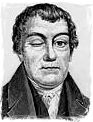
A great trial now awaited the poor lad. So exasperated were some of his former companions in sin at his conversion, that six of them, one dark night, beat him with sticks so unmercifully that he lost the sight of one of his eyes.
By borrowing books, and by applying himself closely to the study of them, he soon managed to pick up a little English. Six months schooling, under the tuition of his pastor, enabled him to go through his Latin Grammar, and so rapidly did he grow in knowledge and in grace that he soon became anxious to try to preach; but the loss of an eye, and certain fearful dreams which he had about this time, greatly discouraged him. In course of time, however, an opportunity presented itself, and his first sermon, taken from Beveridge's "Thesaurus Theologicus" and committed to memory, was delivered in a cottage. Among his hearers was an intelligent man, by the name of Davies, who soon after discovered the sermon in the work above mentioned; and but for the excellency of Evans's prayer as well as that of the sermon, the preacher's reputation would have been nipped in the bud; but it so happened that the prayer, too, had been committed to memory from a collection of prayers by a well-known clergyman, of this Mr. Davies knew nothing, or the young man's way as a preacher might have been for ever blocked.
Before he was twenty-one he joined the Baptist Church at Aberduar, and was baptized by its pastor, the Rev. Timothy Thomas, a man of firm faith and great zeal. This Timothy Thomas, was a very eccentric minister, of whom many interesting anecdotes are told. While out riding one day with his wife he was set upon by four ruffians; but he soon settled the matter with them by knocking two of them down, and breaking his walking-stick over the head of the third, which so frightened the fourth that he ran away. On another occasion one of his hearers was brought before him charged with having knocked down an Unitarian. "Let us hear all about it," said the pastor. "To tell all the truth about it, sir," said the culprit, "I met Jack, the miller, at the sign of the Red Dragon, and there we had a single glass of ale together." "Stop a bit," said the minister, "I hope you paid for it." "I did, sir." "That is in your favour, Thomas," said the pastor, "I cannot bear those people who go about tippling at other people's expense. Go on, Thomas." "Well, sir, after a little while we began quietly talking about religion, and about the work of Jesus Christ. Jack said that he was only a man, and then he went on to say shocking things — things that it was beyond the power of flesh and blood to bear." "I daresay,'' said the minister, "but what did he say?" "He actually said, sir, that the blood of Christ had no more power in it than the blood of a beast. I could not stand that any more, so I knocked him down.'' "Well, brother," said the minister, "I cannot say that you did the right thing, but I quite believe that I should have done so too. Go, and sin no more.''
Having preached his first sermon in a cottage, Evans now, with much fear and trembling, began to occupy some of the village pulpits in the neighbourhood; and so popular did he become, that an Association of Baptists held in Brecknockshire, in the year 1790, appointed him to act as missionary in the obscure hamlet of Lleyn; and here, under the preaching of this one-eyed young man of twenty-four, a great many people were gathered into the churches. In a little while, however, his health failed, and to recruit it he set off on a preaching tour through several of the adjoining counties, preaching two or three times a day, and always three times on Sunday. By this means he became widely known and very popular.
But as a preacher, his reputation became fully established at an association meeting held in the neighbourhood of Llanelly. A great concourse of people were assembled in the open-air; the conductor was unable to find a preacher to lead off; all who were asked, with a shake of the head, refused; at last Timothy Thomas, before mentioned, was applied to; he, too, refused; but added, "Why not ask the one-eyed lad from the North? I hear he preaches quite wonderfully." Christmas Evans, a tall, bony, haggard young man, uncouth and ill-dressed, was at this moment moving about on the outskirts of the crowd. He was asked, and instantly consented; and as he made for the stand, some of the preachers held down their heads with shame, others said, "Surely that absurdity has not been asked to preach!" To pass the time away till the turn of the big men came, some went to get refreshments, others to lounge under the shady hedges, and all hoped this rough-looking specimen of humanity would have sense enough to preach short; but he had not been on many minutes before all within the sound of his voice began to draw nearer and nearer to the stand. People came up quickly from under the trees and hedges, and seeing the crowd clustering round, the preachers and others hastened back from the refreshment booths. As the preacher warmed up to his subject the crowd became more dense, till presently not a straggler was to be seen; all became greatly excited; such language, such figures of speech, such imagery the people had not listened to for many a day; the preachers were dazzled, the people were spellbound, the preacher had caught the "hwyle," and he had caught his hearers as well. As he went dashing along the excitement became greater and greater, lips began to quiver, tears began to flow, and in a little while loud shouts of "Gogoniant! Gogoniant!" (Glory! Glory!) burst forth from melted hearts all over the assembly. When the excitement was at its height the sermon closed, and the preacher sat down. From that day Christmas Evans was one of the most popular preachers Wales ever saw.
On Christmas Day, his birthday, 1792, Evans, having taken Catherine Jones as his wife, and being in the 26th year of his age, started off for Anglesea on horseback, with his wife behind him. "The way was long, the wind was cold," the roads were rough and covered with snow, but having no encumbrances in the form of household goods, on they cantered as cheerful and as hopeful as a couple could be. On arriving at Llangefui, the place of their future residence, they found the Manse, which stood at the end of a little old chapel, situated in a very bleak place, consisted of a small one-roomed cottage, in a very dilapidated condition, and so low that the preacher, who measured a little over six feet in height, could not stand upright in it. Outside of the cottage he was expected to "walk uprightly," but inside of it was impossible. This one-roomed cottage, with its tin-patched door, divided from the stable by a thin partition, served as kitchen, parlour, bedroom, and study; and here, on a salary of £17 per year, for which he served all the Baptist churches in Anglesea, and he never asked for more, this great man and his cheerful little wife, Catherine, spent twenty years of their married life, without a murmur and without a frown. And here the one-eyed preacher, who at seventeen could not read a word, made himself master of Hebrew and Greek; so good a Grecian was he, that on being sneered at by a University man in a bookseller's shop, he soon put the learned swell to flight by proving himself to be the better scholar of the two. And what sermons were made in that one-roomed cottage! sermons that shook the hearts of thousands, and that filled the country with his fame. He had few books, but the few he had were very select.
Christmas Evans was a man much given to prayer, and herein to a great extent lay the secret of his success. On his way from Dolgelly to Machynlleth, while climbing up Cadair Idris, he stepped aside and spent three long hours in wrestling with God for an outpouring of the Spirit; in his supplications he embraced all the churches in Anglesea and all the ministers he knew; a mighty revival of religion followed. "In two years," says the Rev. Paxton Hood, "his ten preaching places increased to twenty, and over 600 converts were added to the churches."
With the growth of societies, chapels had to be built, and Christmas Evans was held responsible for the costs; consequently pastors, consisting mostly of intelligent tradesmen, had to be appointed to take the oversight of these churches, while Christmas went off on begging tours. By the pastors thus appointed, Christmas was looked up to as a kind of bishop or moderator. He always presided at their meetings, and in a very colloquial manner he would sometimes pull speakers up with such remarks as these— "William, my boy, you have spoken before, have done with it;" "Richard, bach, you have forgotten the question before the meeting, hold your tongue;" "Sit down, David, sit down;" but by all these under shepherds he was highly respected and much beloved.
Forty times he travelled on horseback, sometimes through snow and rain, from North to South Wales, for the purpose of raising money for his chapels. He preached every day in the week and often three times on Sundays. At some places he was not very hospitably entertained. After preaching at a place where the people were anything but liberal, an old lady said to him, "Well, Christmas, bach, you, have given us a wonderful sermon, and I hope you will be paid in the resurrection." "Yes, yes,'' responded Evans, "no doubt of that; but what am I to do till I get there? and there is the old white mare that carries me, what will she do? for her there will be no resurrection." At one place he learnt that a great deal of sheep-stealing had been going on for some time; of this circumstance he took advantage, by supposing that in so great a crowd some of the sheep-stealers would be present, whom he earnestly admonished to give nothing to the collection. The collection that day was large, for every one gave, though some had to borrow to do so.
His chapel debts caused him great trouble. As a minister of the Gospel, Christmas Evans, in appearance, was one of the roughest of the rough. No man could be less careless about his toilet. His scanty salary of £17 per year, his early life as a farm lad, his one-roomed cottage home, and his general habits of thinking, riding, &c., were not at all conducive to pulpit dandyism; still he always appeared clean, and his clothes, though often thread-bare, were not patched; his hat, however, on one occasion was so exceedingly shabby that his wife, Catherine, was very much concerned about it, and managed, on his setting off to preach, to provide him with a new one; but imagine her consternation on his return home on seeing the hat so much disfigured that it appeared as if it had been worn for years. It turned out that on the journey his old white mare, Lemon, was thirsty, and on coming to a stream where there was no trough, and no house within sight, he had used his hat as a bucket for Lemon to drink out of!
Everywhere Christmas Evans was known as the "one-eyed man of Anglesea;" but his one eye was of greater service to him than two are to some men. Speaking of Evans, a jesting preacher once said in the hearing of Robert Hall, "And he only has one eye." "Yes, sir," replied Hall, "but that's a piercer an eye, sir, that could light an army through a wilderness in a dark night."
Among the great sermons preached by Christmas Evans, may be named— "The World as a Graveyard," "The Hind of the Morning," "The Demoniac of Gadara," and several others. The first of these was put into English and published by the late Rev. Dr. Raffles, of Liverpool, which greatly extended the fame of this wonderful man amongst English readers.
Poor Evans' greatest trouble came upon him in the 60th year of his age, in the death of his beloved Catherine. This melancholy event took place in 1823; she had been a true help-meet to him, often accompanying him on some of his longest journeys through wind and rain, snow and hail; blessed with a penetrating mind, and being a keen observer of character, her advice at times was of great service to him. She was thoughtful, prayerful, frugal, hopeful, and always cheerful. Her little cottage was always open to poor preachers who passed that way. With her own hands and out of her scanty means she managed to make up certain articles of clothing, &c., for those who were poorer than herself; and out of her little, many a hungering child was fed. To her husband she was a great treasure. Years after her death, the good man with deeply affected feelings would say, "If there happened to be on our table one thing better than another, she would modestly, but cheerfully and earnestly resist all importunity to partake of it until she ascertained that there was enough for both." This was a good thing for him, for he had an excellent appetite; but what a light such a sentence throws upon her character!
Then came other troubles: the Anglesea Churches which he had been the means of raising, became so restive and self-willed that he left that place, accepting an invitation to the Baptist Church of Tronyvelian, Caerphilly. Here he earnestly prayed to be kept from under the proud feet of members and deacons, worldly greatness and riches, and also from the strife of tongues.
At Caerphilly he was as blessed with peace and prosperity. Several of his great sermons were preached here to large and admiring congregations. On being persuaded by a friend to offer his hand to a well-to-do lady in this neighbourhood, he laughingly replied, "Ho! ho! I tell you, brother, it is my firm opinion that I am never to have any property in the soil of the world until I have a grave." But being lonely and wanting a companion, he sent to Anglesea for an old servant, recommended to him by a ministerial friend, whom he married, and who made him a good wife the remainder of his days.
In the spring of 1838, in the 72nd year of his age, and the 53rd year of his ministry, he and his wife set off in their gig, on a begging tour through Tredegar, Cardiff, Cowbridge, Bridgend, and Neath, reaching Swansea on Saturday, July 14th, preaching as he went, and taking up collections for the reduction of the Caernarvon Chapel debt; and in no period of his ministerial life was the "old one-eyed man of Anglesea," as he was termed, more popular than now. But he was getting very feeble, and his work was nearly done. On Sunday, July 15th, he preached twice; in the evening of the following day he preached in English, from the words "Beginning at Jerusalem." The sermon was of a colloquial character, and of the following strain:— "At Jerusalem, Lord?" "Yes," "Why, Lord, these are the men who crucified Thee; we are not to preach to them?" "Yes, preach it to all." "To the man who plaited the crown of thorns and placed it on Thy head?" "Yes, tell him from My degradation he may obtain a crown of glory." "Suppose we meet the very man that nailed Thy hands and feet to the cross, the very man that pierced Thy side, that spat in Thy face?" "Preach the Gospel to them all; tell them all that I am the Saviour; that all are welcome to participate in the blessings of My salvation. I am the same Lord over all, and rich unto all that call on Me."
At the close of the sermon, on reaching the foot of the pulpit stairs, he was heard to say, "This is my last sermon!" and so it was; from that hour he gradually sank. At two o'clock on the following Friday morning, at the house of his host, the Rev. D. Davies, after repeating a favourite Welsh hymn, the old mountain days of travel seemed to have crossed his memory; waving his hand to those about him, he said, "GOOD-BYE! DRIVE ON!" They tried to arouse him, but he had gone! Up over the everlasting hills in heaven's chariot, and by heavenly postmen, to his home in the skies, this faithful old servant of God was driven, in the seventy-third year of his age, and the fifty-fourth of his ministry. Four days afterwards his remains were interred in the burying-ground attached to the Baptist Chapel, in Swansea, in the presence of one of the largest crowds of mourners ever seen in the Principality.
From Life Stories of Remarkable Preachers by John Vaughan. London: James B. Knapp; Passmore & Alabaster, 1892.
>> More Christmas Evans