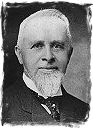
 There
is scarcely a place on earth where civilization has pushed its way that the
influence of Dr. Doane has not been felt...
There
is scarcely a place on earth where civilization has pushed its way that the
influence of Dr. Doane has not been felt...
It is one of the marvellous things of this age that the work of man, if it be meritorious, may have an influence on the whole world. If he invents a valuable tool or machine, its use is not limited to any one country. If he writes a beautiful story or song, it is translated into many languages, and its echoes go from lip to lip "the earth around."
Thus it is with the music that Dr. Doane has written; it has been carried to all lands where music is enjoyed, and translated into almost all tongues. While some of the millions who sing his music may not know his name, yet the consciousness on his part that he has added to their happiness, and furnished to their emotions wings on which are borne their praises and petitions to our common Father, should be glory enough for him. Almost any of us would be content to say, "Now lettest Thou Thy servant depart in peace," could we take such a view of the influences of our work.
William Howard Doane was born February 3, 1832, in Preston, Connecticut. His father was head of the firm of Doane & Treat, cotton manufacturers. At the early age of fourteen years he was the chosen leader of the choir of Woodstock Academy, a Congregational school, where he had been placed by his father. During the last year of his stay there he was converted. His mother being a Baptist, he united with that church at Norwich, Connecticut.
In 1847, he became a clerk in his father's office, and three years later engaged himself with the firm of J. A. Fay & Co., manufacturers of woodworking machinery, whose principal office was then at Norwich, Connecticut. In 1860 he became the managing partner of the firm, with headquarters in Cincinnati, where he has since resided. At the death of the senior partner, the firm became an incorporated company, of which he was made president. It is one of the most extensive businesses in its line, having connections in many of the principal mercantile centers of the world. With such large business interests in his charge it would seem remarkable that he should have gained such eminence in music. But music was in him and it must find expression. It would not be smothered, hence at every stage of his career we find it asserting itself.
He composed his first piece of music in his sixteenth year. In 1852 he was conductor of the Norwich Harmonic Society. In 1862 his first book appeared, entitled, "Sabbath School Gems," followed in 1864 by "Little Sunbeams," and in 1867 came that notable book, "Silver Spray," which perhaps was the most popular Sunday-school book of its day. Then followed, in 1868, "Songs of Devotion," for use in churches, which was very popular.
He then became associated with Rev. Robert Lowry in many musical works, most of which were issued by Messrs. Biglow & Main, New York.
Dr. Doane is justly celebrated on account of his Christmas cantatas. He fairly popularized the Christmas cantata business by the issue of one entitled, "Santa Claus," some years ago. The circulation of books bearing his name has been world-wide, and the copies sold are counted by the millions.
Dr. Doane is of medium height, nervous temperament, and rapid in all of his movements; always cheerful, warm-hearted and generous. Coupled with his educational attainments and ripe business experience he is a lover of home, church, and country that has endeared him to lovers of American institutions wherever he is known.
He has a beautiful residence on Mount Auburn, one of the Cincinnati hills, where he lives in happiness with the wife of his youth (she being the daughter of his father's former partner), and two accomplished daughters.
His study, or music room, is a unique feature of his home. It is as complete in all respects as taste, culture, research, and money can make it. As you enter it, over the door in the transom is wrought in ground glass in musical characters the opening strains of "Home, Sweet Home." On the ceiling inside, at various points, are frescoed bits of celebrated musical compositions beautifully and artistically arranged. Fine pictures, mostly of musical subjects, adorn the walls, with a most extensive collection of antique instruments from Egypt, Mexico, Burmah, Japan, Africa, Russia, Turkey, and Syria, some of which are said to be several hundred years old. And there is a grand pipe organ, run by a water motor, and over the organ, in fresco, four measures of the "Hallelujah Chorus."
There are also pianos, a cabinet organ, harp and all modern instruments. The library is exceptionally fine, and one of the largest in the country, containing vellum manuscript dating from the eighth century, facsimiles of the original score of Handel's Messiah, and original manuscript and autographs of nearly all the old masters, including Beethoven, Mendelssohn, Mozart, Handel, Meyerbeer, and also Dr. Lowell Mason, Dr. Thomas Hastings, Wm. B. Bradbury, Dr. Geo. F. Root, P. P. Bliss, Rev. Robert Lowry, and other American composers.
Dr. Doane is an active member of the Mount Auburn Baptist Church, Cincinnati, and for several years has been superintendent of its flourishing Sunday-school, one of the largest in the city. Some time since he and his family spent nearly two years in Europe, visiting the Holy Land, the occasion being the exhibiting of some of his machinery at an European exposition, on which, by the way, he took the highest award. The Mount Auburn Sunday-school gave a "welcoming" service on his return. It was a splendid affair. The schoolroom was tastefully decorated, and on the platform sat a large floral ship named the "Majestic," in honor of the one that had brought the Doctor and his family over the ocean on their return, and when he came in they all — little and big — gave him the Chautauqua salute, and proceeded with a specially prepared service that was unique and beautiful. The demonstrations were universal and hearty, and showed that their superintendent had a warm place in their hearts.
Dr. Doane is a liberal man. Among his benefactions are "Doane Hall" and Doane Academy of Denison University; and he and the late Mr. John Church, of the John Church Co., donated from the receipts of the "Silver Spray" money to purchase the large pipe organ in the Y.M.C.A. Hall in Cincinnati. The organ is called "Silver Spray." Dr. Doane is an active member of the Y.M.C.A., and one of its active supporters.
He writes his music at home [in the] evenings. Yet he carries his little note-book with him, so as to be prepared to note down, wherever he may be, the inspirations that may come to him. His style of music is peculiarly his own, and shows great versatility of talent.
Dr. Doane has compiled some forty books, and has written about twenty-three hundred songs, ballads, cantatas, etc., also a number of vocal and piano pieces in sheet form. Some of his most popular pieces are: "Safe in the Arms of Jesus," "The Old, Old Story," "Pass Me Not," "A Few More Marchings," "More Love to Thee, O Christ," "Every Day and Hour," "Rescue the Perishing," "Near the Cross," "Draw Me Nearer," "Will He Find Us Watching," and many others.
In 1875, Denison University bestowed upon him the title of Doctor of Music.
While the Doctor is well advanced in years, he is still active and enthusiastic. May he live long to fill his important place at home, and to contribute of his talent and genius to his larger field — the world. [Dr. Doane died in 1915.]
From Biography of Gospel Song and Hymn Writers by J. H. Hall. New York: Fleming H. Revell, ©1914.
>> More William Doane