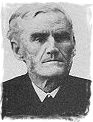
 The
subject of this sketch, William Orcutt Cushing, was born in Hingham, Massachusetts,
[United States], December 31, 1823. His parents were Unitarians, and his
early training was along these lines, having studied with the Unitarian minister
at his home town. William was a most noble and thoughtful boy, and when he
became old enough to read the Bible and think for himself, he joined the
Christian Church.
The
subject of this sketch, William Orcutt Cushing, was born in Hingham, Massachusetts,
[United States], December 31, 1823. His parents were Unitarians, and his
early training was along these lines, having studied with the Unitarian minister
at his home town. William was a most noble and thoughtful boy, and when he
became old enough to read the Bible and think for himself, he joined the
Christian Church.
When eighteen years of age he decided to prepare for the ministry, feeling that he had a call from God to that work. After completing his education he entered upon the work for his Master. Mr. Cushing's first pastorate was at Searsburg, N.Y. While here he became acquainted with Miss Hena Proper, and was married to her February 4, 1854. She proved to be a great help to him in his gospel work. After serving at Searsburg for several years, he was at different times pastor at Auburn, Brooklyn, Buffalo, and Sparta, N.Y. During these years of faithful work, Mrs. Cushing's health failed; they then returned to Searsburg, where he again served as pastor for several years.
After a long illness through which he cared tenderly for her, Mrs. Cushing died July 13, 1870. Soon after her death, creeping paralysis seized upon Mr. Cushing, and he was compelled to retire from the ministry.
As a pastor, he was very successful, and dearly beloved by both old and young; he was also a great worker in the Sunday-school. After being incapacitated for active ministerial work, his prayer was, "Lord, still give me something to do for Thee!" In answer to this prayer he was permitted to write many of the world's best known gospel poems. Rev. W. O. Cushing wrote over three hundred hymns that have been set to music by some of the most distinguished composers of this country, including Dr. Geo. F. Root, Rev. Robert Lowry, Ira D. Sankey, H.P. Main and others. Perhaps the most widely known of his hymns are the following: "Ring the Bells of Heaven," "We are Waiting, We are Watching," "When He Cometh," " Hiding in Thee," "Do They Know?" "There'll Be No Dark Valley," "When Jesus Comes," "Down in the Valley," "Beautiful Valley of Eden," "I am Waiting by the River," "The Name of Jesus," "Fair is the Morning Land," "Gathering Home to the Silent Shore." His hymns have added a rich contribution to American hymnology, and are sung wherever the gospel in song may be found.
Mr. Cushing was a most noble, sweet spirited Christian gentleman. To know him was to love him. He was ever mindful of the suffering of others, but was oblivious to his own. It was a characteristic of his life to minister to the wants of others, and trust the Lord to supply his own. At one time he gave a thousand dollars, which was all he had, to a blind girl that she might secure an education. He was instrumental in the erection of the Seminary at Starkey, N.Y., and also gave material aid to the school for the blind at Batavia.
Mr. Cushing was poor in purse, but rich in spirit; homeless, but not friendless. The last thirteen years of his life were spent in the home of Rev. and Mrs. E. E. Curtis, Lisbon Center, N.Y. While living with these good people, he united with the Wesleyan Methodist Church. He died October 19, 1902. His life was an inspiration to all who knew him, and his death was that of the righteous.
From Biography of Gospel Song and Hymn Writers by J. H. Hall. New York: Fleming H. Revell, ©1914.
>> More William Cushing